Free vs. Paid Web Hosting Calculator
● Your Website Details
● Monthly Cost Comparison
Enter your details and click calculate to see the hidden costs.
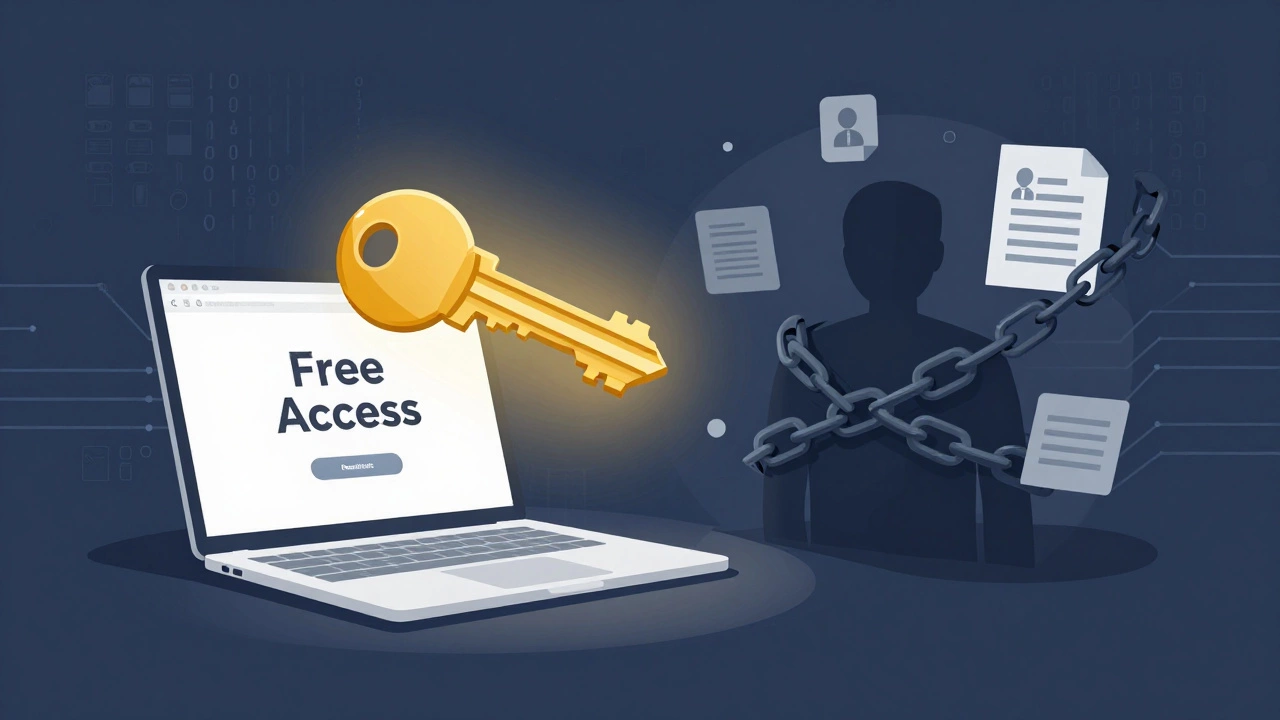
You’ve heard the phrase a thousand times: "Free web hosting." It sounds like the holy grail for anyone trying to launch their first portfolio, a hobby blog, or a side project without spending a dime. But here is the hard truth that most marketing emails won’t tell you: in the world of technology, nothing is truly free. Someone is always paying the bill.
When you sign up for a "free" service, you aren't getting a gift. You are becoming the product. Your data, your attention, or even your server's processing power becomes the currency used to pay for the electricity, hardware, and maintenance required to keep your site online. Understanding this dynamic is crucial before you commit your domain name to a free provider.
The Economics Behind "Free" Hosting
To understand why free web hosting is a service that allows individuals and organizations to make a website accessible via the World Wide Web exists, we have to look at the math. Running a server costs money. Every byte of data stored on a hard drive requires physical space in a data center. Every time someone visits your site, that data travels over cables, through routers, and across networks, consuming bandwidth and electricity.
Data centers charge landlords rent. They pay for cooling systems to prevent servers from overheating. They employ engineers to fix broken drives and update software. If a hosting company offers you unlimited storage and bandwidth for $0, they must be making their money elsewhere. Usually, this happens through one of three models:
- Advertising Injection: The host forces ads onto your site. You cannot remove them. This ruins the user experience and makes your site look unprofessional.
- Upselling: The free tier is so limited (slow speeds, tiny storage) that you are forced to upgrade to a paid plan within weeks to actually use the site.
- Data Monetization: Some providers scan your content or sell access to your traffic patterns to third parties.
In 2026, with rising energy costs and stricter privacy regulations like GDPR in Europe, the margin for error is smaller than ever. A company offering truly unlimited resources for free is likely cutting corners on security or stability.
Major Providers and Their "Free" Tiers
Not all free hosts are created equal. Some offer legitimate static site hosting for developers, while others trap beginners in slow, ad-riddled environments. Let’s look at the major players currently offering free tiers.
| Provider | Best For | Storage/Bandwidth | Key Limitation |
|---|---|---|---|
| GitHub Pages | Static sites, portfolios | 1 GB / 100 GB/mo | No server-side code (PHP/Python) |
| Netlify | Jamstack projects | 100 GB/mo bandwidth | Build minutes limit on free tier |
| InfinityFree | Dynamic PHP sites | Unlimited disk (soft cap) | Ads may appear; no email included |
| Oracle Cloud Always Free | Advanced users/VPS | 4 ARM CPUs, 24 GB RAM | Complex setup; approval required |
GitHub Pages is a static site hosting service provided by GitHub remains the gold standard for developers who know how to code. It is fast, secure, and reliable because it is backed by Microsoft. However, it only serves static files (HTML, CSS, JavaScript). If you need a database or want to run WordPress, GitHub Pages won't work.
On the other hand, services like InfinityFree try to mimic traditional shared hosting. They allow you to install WordPress and use PHP databases. But the catch? Your site will likely load slowly during peak hours because thousands of other free users are sharing the same overloaded servers. One bad neighbor can bring down your entire site.
The Hidden Costs: Security and Performance
The price tag of $0.00/month is misleading when you factor in the hidden costs. These aren't monetary costs you pay directly; they are costs you pay in frustration, lost visitors, and potential data breaches.
1. Slow Load Times Kill Conversions
Google has made it clear: speed matters. In 2026, Core Web Vitals are a significant ranking factor. Free hosts often throttle bandwidth. If your site takes more than three seconds to load, nearly half of your mobile visitors will leave immediately. You might save $5 a month on hosting, but lose hundreds of dollars in potential sales or leads due to bounce rates.
2. No Customer Support
When your paid hosting goes down, you call support. When free hosting goes down, you post on a forum and hope someone replies. Most free hosts do not offer 24/7 support. If your site gets hacked or crashes on a Friday night, you are on your own until Monday morning-or longer.
3. Security Risks
Security updates require manpower. Paid hosts dedicate teams to patching vulnerabilities in Apache, Nginx, or PHP. Free hosts often lag behind. This makes your site an easy target for hackers. Worse, some free hosts inject malicious scripts into your code to mine cryptocurrency or redirect traffic to spammy sites. You could find your domain blacklisted by Google without ever knowing why.
4. Domain Name Restrictions
Most free hosts force you to use a subdomain, like `yourname.freehost.com`. This looks amateurish. It hurts your brand credibility and makes it harder to build trust with visitors. While some allow custom domains, they often restrict DNS settings, making it difficult to set up professional email addresses (like `[email protected]`).

Who Should Actually Use Free Hosting?
Despite the risks, free hosting isn't useless. It has a specific place in the tech ecosystem. You should consider using a free tier if:
- You are learning to code: If you are building your first HTML page or testing a React component, free platforms like CodePen, JSFiddle, or GitHub Pages are perfect. You don't need a database yet.
- You have a static portfolio: Designers and developers showcasing their work can use Netlify or Vercel for free. These services are robust, fast, and don't inject ads.
- You are prototyping: Before launching a full business, test your idea on a free tier. If it gains traction, migrate to paid hosting. Just remember that migration can be painful if you don't plan ahead.
If you are running an e-commerce store, a client-facing agency site, or a blog where SEO is critical, free hosting is a bad investment. The risk of downtime and poor performance outweighs the savings.
When to Upgrade to Paid Hosting
The moment you start treating your website as a business asset, you need paid hosting. Here are the signs it’s time to upgrade:
- You need a custom domain: Visitors trust `.com` or `.ie` addresses far more than subdomains.
- You require email hosting: Professional communication requires reliable SMTP servers, which free hosts rarely provide securely.
- You expect traffic: Even 100 daily visitors can overwhelm a free shared server.
- You handle sensitive data: If you collect names, emails, or payments, you have a legal and ethical obligation to secure that data. Free hosts often lack SSL certificates or firewalls.
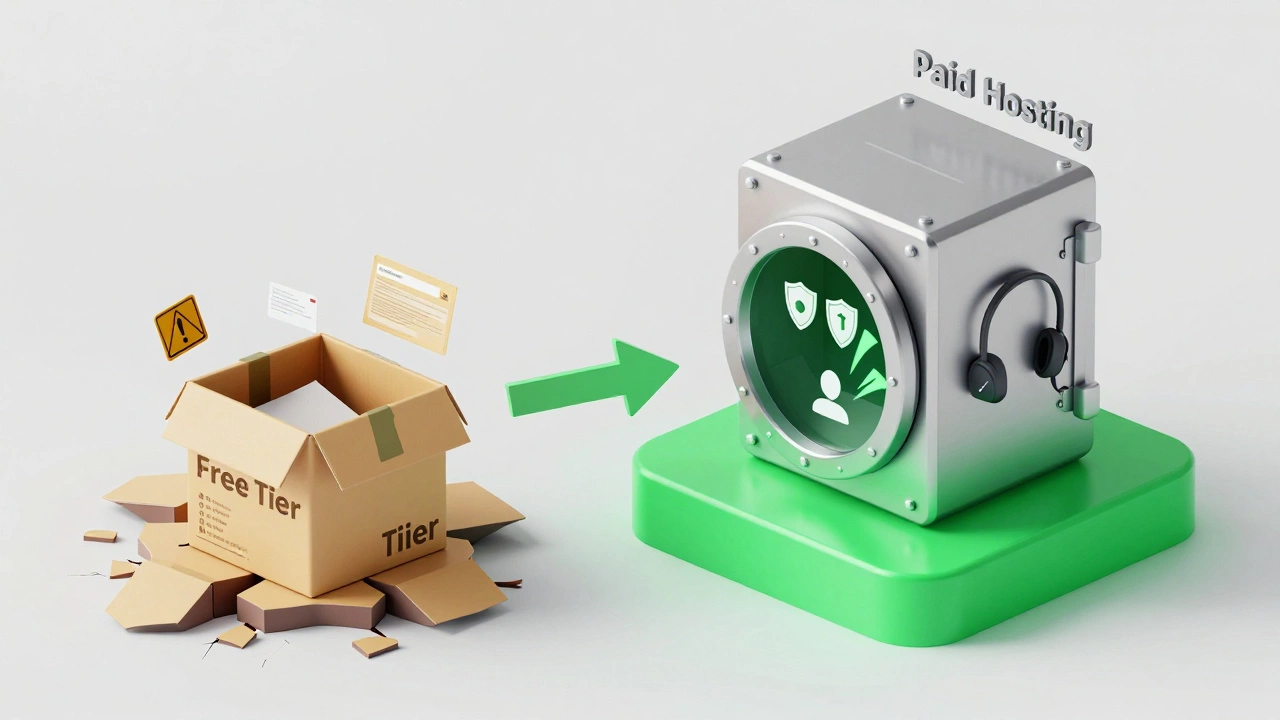
In 2026, managed WordPress hosting or lightweight VPS plans can cost as little as $3-$5 per month. For less than the price of a coffee, you get speed, security, support, and peace of mind. That is a bargain compared to the cost of rebuilding a hacked site or losing customers to a slow competitor.
Alternatives to Traditional Free Hosting
If you want to avoid monthly fees but still need better performance than typical free hosts, consider these alternatives:
Student Packs: If you are enrolled in university, check if your institution provides free access to Adobe Creative Cloud, AWS Educate, or Azure for Students. These programs often give you credits to use cloud services for free for a year.
Local Development: Tools like LocalWP or XAMPP allow you to run a fully functional website on your own computer. You can share your local IP address with friends for testing, though it won't be publicly accessible on the internet. This is great for development but not for public launch.
Community Servers: Some open-source communities maintain servers for educational projects. Look for groups related to your specific framework (e.g., Django community servers). These are often more stable than commercial free hosts because they are maintained by enthusiasts who care about quality.
Making the Right Choice in 2026
The question "Is there such thing as free web hosting?" has a simple answer: Yes, but it comes with strings attached. The technology exists, and companies provide it, but the model is fundamentally different from paid hosting. You trade control, speed, and security for zero upfront cost.
For hobbyists and learners, this trade-off is acceptable. For businesses and professionals, it is a liability. As you grow your online presence, view hosting not as an expense to minimize, but as infrastructure to invest in. A fast, secure, and reliable site builds trust. Trust brings visitors. Visitors bring revenue. Don't let a $5 monthly fee become the bottleneck that stops your growth.
Start small if you must, but have a migration plan ready. Choose a provider that makes it easy to move your data later. Avoid locking yourself into proprietary formats that make leaving difficult. And always, always back up your data locally. Whether you pay $0 or $100 a month, your content belongs to you, not the host.
Can I use free hosting for an online store?
No, you should never use free hosting for an e-commerce store. Online stores require high security (SSL), reliability (uptime), and speed to process transactions. Free hosts often lack proper security protocols, increasing the risk of credit card theft. Additionally, slow load times will cause customers to abandon their carts, costing you more in lost sales than you save on hosting fees.
Does free hosting include a free domain name?
Most free hosting providers do not include a free custom domain name (like .com or .org). Instead, they force you to use a subdomain (e.g., yoursite.freehost.com). Some may offer a free subdomain for the first year, but you will eventually need to purchase a domain separately to look professional. Note that "free" domains often come with renewal fees that are higher than standard registrars.
Is my data safe on free web hosting?
Your data is at higher risk on free hosting. Free providers often lack advanced security features like DDoS protection, malware scanning, and automated backups. Furthermore, some shady providers may scan your files for keywords or sell access to your server. Always assume that anything hosted on a free platform is public and potentially vulnerable to hacking.
What is the best free hosting for WordPress?
There is no truly "good" free hosting for WordPress because WordPress requires significant server resources (PHP and MySQL). Services like InfinityFree or 000webhost offer free WordPress installation, but they are extremely slow and unstable. For a serious WordPress site, it is better to spend $3-$5 a month on managed WordPress hosting. If you must go free, consider using a static site generator instead of WordPress.
Can I upgrade from free to paid hosting easily?
It depends on the provider. Some companies make it easy to upgrade within their own ecosystem. However, migrating from a free host to a completely different paid provider can be difficult. You may need to manually export your database and files. To make this easier, always keep local backups of your site files and database exports regardless of your hosting plan.
Why is Oracle Cloud's free tier considered better?
Oracle Cloud's "Always Free" tier is unique because it offers virtual private server (VPS) resources, including ARM-based processors with up to 4 cores and 24GB of RAM. This is powerful enough to run complex applications, databases, and multiple websites simultaneously. However, it requires technical knowledge to set up and manage, making it unsuitable for beginners who just want to click "install WordPress."