
PHP Framework Suitability Calculator
Select your priorities to find the best fit for your next project.
Recommendation
Adjust Sliders
Move the sliders above to calculate the best framework for your needs.
Here is a hard truth: if you open your browser right now, you are likely using PHP without even knowing it. Despite the constant chatter about JavaScript eating the world or Rust replacing everything, PHP is a server-side scripting language designed for web development that powers approximately 75% of all websites with a known server-side technology. In 2026, the question isn't whether PHP is "dead"-it never was-but whether it remains relevant for modern developers and businesses.
The short answer is yes. The long answer involves understanding how the ecosystem has matured from the messy spaghetti code of the early 2000s into a robust, typed, and performant powerhouse. Let’s look at why this legacy language refuses to fade away.
The Performance Leap: PHP 8.4 and Beyond
A few years ago, complaining about PHP's speed was a valid critique. Today, it is outdated. With the release of PHP 8.4 is the current major version of PHP featuring significant performance improvements via the JIT compiler and enhanced type safety, the language has undergone a radical transformation.
The introduction of the Just-In-Time (JIT) compiler in earlier versions laid the groundwork, but recent updates have optimized memory usage and execution speed to levels that rival many compiled languages for typical web workloads. When you run a standard CRUD application today, PHP handles requests with minimal latency. For high-traffic scenarios, tools like RoadRunner is an application server for PHP that allows running scripts in long-running processes to boost performance keep the interpreter warm, eliminating the startup overhead that used to plague fast-cgi setups.
This means that if you are building an API or a dynamic website, you no longer need to sacrifice speed by choosing Go or Node.js solely for performance reasons. PHP is fast enough for 99% of use cases.
The Framework Ecosystem: Laravel and Symfony
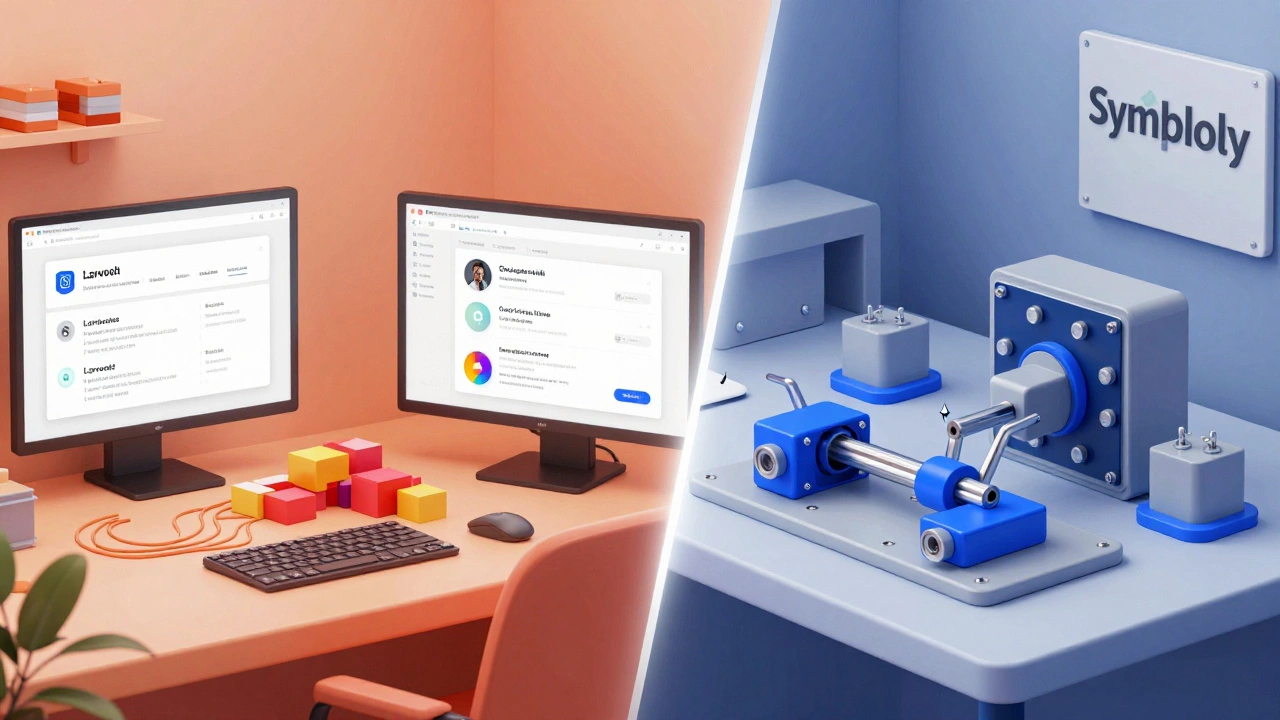
Raw PHP is rarely used in professional settings anymore. Instead, developers rely on mature frameworks that enforce structure, security, and best practices. The two titans here are Laravel is a popular PHP web framework known for its elegant syntax and comprehensive feature set including ORM, routing, and authentication and Symfony is a robust PHP component library and web framework widely used for enterprise applications and as the foundation for other projects.
Laravel has become the default choice for startups and mid-sized businesses. Its developer experience is unmatched; features like Eloquent ORM, Blade templating, and Artisan CLI allow teams to ship products rapidly. In 2026, Laravel continues to innovate with better support for real-time features and microservices architectures.
Symfony, on the other hand, remains the backbone of enterprise software. Many large-scale applications, including parts of the WordPress core and Drupal, rely on Symfony components. If you are working in a corporate environment with strict coding standards and complex requirements, Symfony provides the stability and modularity needed to maintain codebases over decades.
| Feature | Laravel | Symfony |
|---|---|---|
| Learning Curve | Moderate | Steep |
| Best For | Rapid Development, Startups | Enterprise, Large Scale Apps |
| Community Size | Very Large | Large |
| Flexibility | High (Convention over Configuration) | Very High (Component-based) |
WordPress and the CMS Dominance
You cannot discuss PHP's utility without addressing WordPress is a content management system built on PHP that powers over 40% of the entire internet. Even if you hate PHP, you cannot ignore the economic reality that millions of businesses run on WordPress. This creates a massive demand for developers who can customize themes, build plugins, and optimize performance.
In 2026, WordPress has evolved significantly with the Full Site Editing (FSE) capabilities and block editor. While some argue that headless CMS solutions are taking over, most small-to-medium businesses still prefer the integrated admin panel that WordPress offers. This ensures that PHP skills remain highly employable in the freelance and agency sectors.
Job Market and Economic Reality
From a career perspective, PHP is a safe bet. Unlike niche languages that come and go, PHP has deep roots. Legacy systems do not disappear overnight. Banks, government agencies, and established e-commerce platforms built their infrastructure on PHP ten or fifteen years ago. They need maintenance, updates, and gradual modernization.
Furthermore, the barrier to entry for PHP hosting is low. Shared hosting providers universally support PHP out of the box. This makes it the preferred choice for budget-conscious clients and small businesses. As a developer, being able to deploy a PHP app anywhere gives you flexibility that containerized Node.js or Python apps sometimes lack in simpler environments.

When Should You Avoid PHP?
While PHP is useful, it is not the silver bullet for every problem. There are specific scenarios where other technologies might be a better fit:
- Real-time Applications: If you are building a multiplayer game server or a high-frequency trading platform, the event-driven nature of Node.js or the concurrency model of Go/Erlang will serve you better than PHP's request-response cycle.
- Mobile Backend: While PHP can power APIs for mobile apps, dedicated backend-for-frontend (BFF) layers using lighter frameworks in other languages might offer lower latency for mobile-specific optimizations.
- Data Science and AI: PHP is not designed for heavy mathematical computations or machine learning pipelines. Python dominates this space for good reason.
However, for the vast majority of web applications-e-commerce stores, blogs, SaaS dashboards, and internal business tools-PHP remains an excellent, cost-effective choice.
The Future Outlook: Stability Over Hype
The tech industry loves hype. Every year, a new language promises to revolutionize web development. Yet, PHP persists because it solves problems reliably. The community is active, the package manager (Composer is the standard dependency manager for PHP that simplifies installing and updating libraries) works flawlessly, and the documentation is comprehensive.
In 2026, PHP is not trying to be the coolest language. It is trying to be the most practical one. And for many developers and businesses, practicality wins every time.
Is PHP still worth learning in 2026?
Yes, absolutely. PHP powers a significant portion of the web, including major platforms like WordPress and Facebook (historically). Learning PHP opens doors to numerous job opportunities in maintaining legacy systems and building new applications with frameworks like Laravel. Its ease of deployment and strong community support make it a valuable skill for any web developer.
What is the difference between PHP and JavaScript?
PHP is primarily a server-side language, meaning it runs on the web server to generate HTML before sending it to the browser. JavaScript, while also capable of server-side tasks (via Node.js), is traditionally used for client-side interactivity in the browser. In modern stacks, they often work together: PHP handles data processing and database interactions, while JavaScript manages user interface dynamics.
Is Laravel better than Django?
It depends on your needs. Laravel (PHP) is known for its rapid development capabilities, elegant syntax, and extensive ecosystem for web applications. Django (Python) is praised for its security features, scalability, and integration with data science tools. If you are building a content-heavy site or e-commerce store, Laravel might be faster to implement. For data-intensive applications, Django could be more suitable.
Can PHP handle high traffic?
Yes, with proper optimization. While raw PHP scripts can struggle under extreme load, using application servers like RoadRunner, implementing caching strategies (Redis/Memcached), and leveraging efficient frameworks like Laravel or Symfony allows PHP applications to handle millions of requests per day effectively. Many high-traffic sites successfully run on PHP.
What are the main uses of PHP today?
Today, PHP is primarily used for server-side web development. Key use cases include powering Content Management Systems (like WordPress, Joomla, Drupal), building custom web applications with frameworks (Laravel, Symfony), creating RESTful APIs for mobile apps, and developing e-commerce platforms (Magento, WooCommerce). It remains the backbone of much of the public internet.