
Web Developer Stress Assessment
How Stressful Is Your Web Development Career?
This assessment helps identify your stress levels based on real-world developer challenges. Answer honestly to get personalized recommendations.
Ever scroll through social media and see someone bragging about their $120K salary as a web developer, then wonder if it’s worth the cost? You’re not alone. The idea of becoming a web developer sounds glamorous-work from anywhere, solve puzzles for a living, build stuff that people actually use. But behind the screen, a lot of developers are quietly drowning in stress. Not because they hate coding. But because the job doesn’t give them space to breathe.
Deadlines That Never Stop Moving
One of the biggest sources of stress? Constant deadline pressure. Clients change their minds. Product managers add "just one more feature" the day before launch. Agile sprints turn into marathons with no finish line. I’ve seen junior devs pull all-nighters because a button color was changed at 8 p.m. on a Friday. That’s not rare-it’s routine in many shops.
It’s not just about working late. It’s about never feeling like you’re done. A website you built last month? It’s already outdated. New frameworks pop up every quarter. Browser updates break things. Your "finished" project might need a rewrite in six months. That kind of instability wears people down.
The Learning Curve That Never Ends
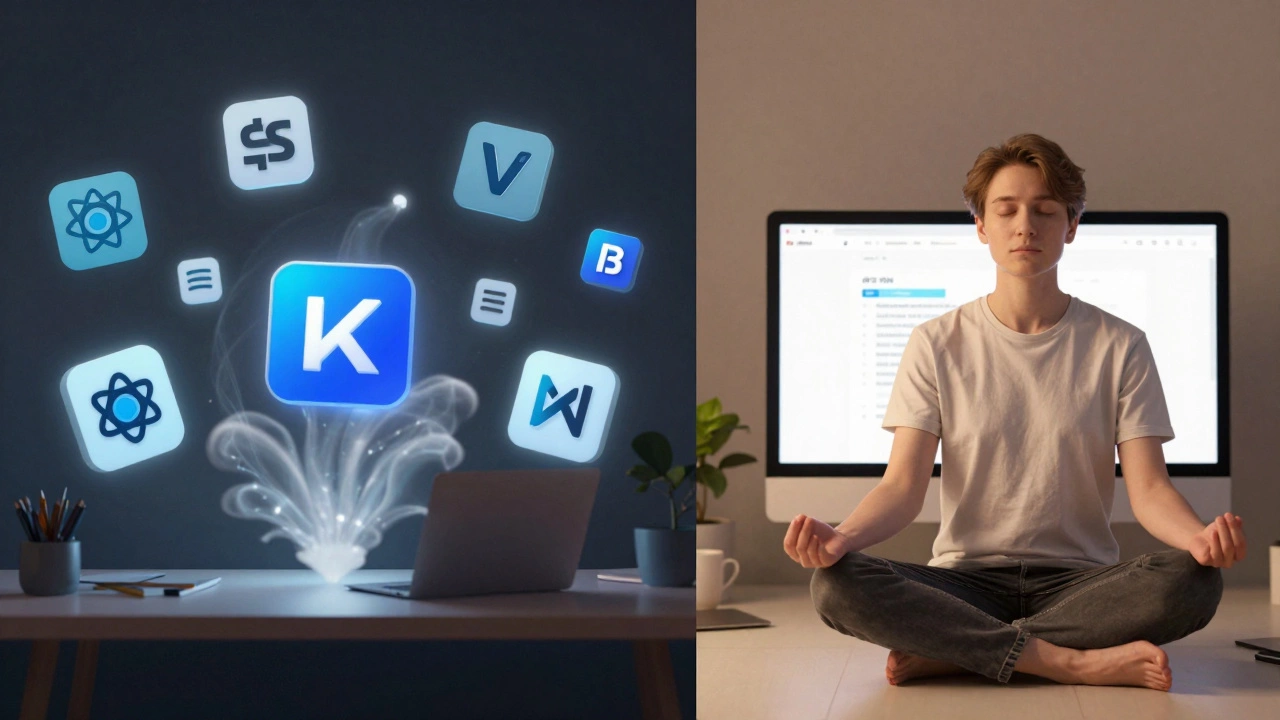
Web development isn’t like plumbing. You don’t learn the tools, fix a few pipes, and call it a day. In web dev, the tools change faster than your phone model. Five years ago, jQuery was everywhere. Now? It’s mostly legacy. React dominated. Then came Svelte. Now, Astro and Next.js are climbing. And don’t forget the backend-Node.js, Python, PHP, Go. The frontend stack alone can feel like trying to catch smoke.
That’s why so many people who start web development courses feel overwhelmed. They think they’ll learn HTML, CSS, JavaScript, and be done. But that’s just the starting line. Real developers spend 10-20% of their time just keeping up. That’s not coding. That’s studying. And it’s exhausting.
Imposter Syndrome Is Everywhere
You’d think after five years in the field, you’d feel confident. But most senior devs still feel like they’re faking it. Why? Because the field is so broad. One person specializes in accessibility. Another knows every edge case in CSS grid. A third can optimize a database query in under 30 seconds. Meanwhile, you’re still figuring out why your flexbox isn’t centering.
And the internet doesn’t help. Every blog post reads like someone’s a genius who coded an AI that runs on quantum computers. The truth? Most of us Google the same errors over and over. Stack Overflow isn’t a resource-it’s a lifeline. But when you’re stuck and everyone else seems to know the answer, it’s easy to feel like you don’t belong.
Remote Work Isn’t Always Freedom
People think remote work means flexibility. For some, yes. For many others, it means being available 24/7. Time zones don’t care if you’re in Dublin or Delhi. If your client is in New York, your workday starts at 6 a.m. and ends at midnight. Slack notifications ping at 11 p.m. because "it’s urgent." And if you don’t reply fast enough, you’re "not a team player."
There’s no separation between work and home. Your couch is your desk. Your bedroom is your office. You don’t have a commute to mentally reset. So when the day ends, your brain doesn’t shut off. It just keeps running.
What Actually Helps? Real Strategies
It’s not all doom and gloom. Many developers find balance. But it doesn’t happen by accident. Here’s what works:
- Set hard boundaries. Turn off work notifications after 7 p.m. Block your calendar for lunch. Say no to meetings that don’t need you.
- Build in learning time. Don’t wait until a new framework drops to start learning. Spend 30 minutes a week exploring something new. Small steps prevent overwhelm.
- Work on projects you care about. Freelance gigs for nonprofits, open-source contributions, or personal side projects keep you connected to why you started.
- Find a mentor or peer group. Talking to someone who’s been there cuts the isolation. You realize everyone’s struggling-even the ones who seem perfect.
- Use tools to reduce noise. Automate repetitive tasks. Use linters, formatters, and testing tools. The less manual work you do, the less mental energy you burn.

Web Development Courses Aren’t the Fix
A lot of people sign up for web development courses thinking they’ll learn how to code and then the stress will disappear. But courses teach skills, not survival. They don’t show you how to push back on unreasonable deadlines. They don’t teach you how to say no to scope creep. They don’t prepare you for the emotional toll of constant change.
The best courses? Those that include real-world scenarios: client communication, managing expectations, handling feedback, and setting boundaries. If a course only teaches React and Bootstrap, it’s giving you half the job.
Who Thrives in This Career?
Not everyone. But some people thrive. They’re not the ones who love coding the most. They’re the ones who love solving problems-and who know when to walk away from a bad situation.
They treat their mental health like part of their job. They take breaks. They unplug. They don’t measure their worth by how many lines of code they wrote. They know that a clean, working site is better than a perfect, broken one.
And they’re okay with not knowing everything. They’ve learned that being a good developer isn’t about memorizing syntax. It’s about asking the right questions, staying curious, and knowing when to ask for help.
Is It Worth It?
Yes-if you go in with your eyes open. The pay is good. The flexibility can be amazing. You get to build things that matter. But the stress is real. And if you’re looking for a calm, predictable job, this isn’t it.
But if you’re okay with chaos, if you enjoy learning constantly, if you can set boundaries and protect your time-then web development can be one of the most rewarding careers out there.
It’s not about being the best coder. It’s about being the one who shows up, stays sane, and keeps building-even when the code breaks, the client yells, and the deadline moves again.
Is web development more stressful than other tech jobs?
It’s not necessarily more stressful than other tech roles, but the stress looks different. Developers face constant change in tools and expectations, while roles like data science or DevOps might deal with high-stakes systems or long debugging cycles. Web devs often juggle design, functionality, client feedback, and performance-all at once. That’s a unique kind of pressure.
Can you avoid burnout as a web developer?
Absolutely, but it takes action. Burnout doesn’t happen overnight. It builds from skipped breaks, ignored fatigue, and never saying no. The key is consistency: take real lunch breaks, disconnect after work hours, and schedule time off. Many developers who avoid burnout treat their mental health like a daily habit-not something to fix when it breaks.
Do senior developers still feel stressed?
Yes. Senior devs often carry more responsibility: leading teams, making architecture decisions, handling client escalations. The stress shifts from "I don’t know how to do this" to "I’m responsible if this fails." But they usually have better tools to manage it-boundaries, delegation, and experience knowing when to step back.
Are web development courses enough to prepare you for the stress?
No. Most courses teach technical skills, not emotional resilience. You won’t learn how to handle a client who changes requirements daily, or how to push back on unrealistic deadlines. The best courses include modules on communication, time management, and setting expectations-not just coding.
Should I quit if I’m feeling overwhelmed?
Not necessarily. Feeling overwhelmed is a signal, not a sentence. Take a step back. Are you working too many hours? Are you taking on too many projects? Are you comparing yourself to influencers online? Adjust your workload, find a mentor, or try a short break. Many developers return stronger after a pause. Quitting should be a last resort-not a first reaction.