
Full Stack Developer Salary Estimator (2026)
Your Profile
Estimated Annual Base Salary
Based on 2026 Market Data
Base Level: $90,000
Location Adj: +$10,000
Skills Bonus: +$5,000
Money talks. If you are looking at a career in full stack development, you want to know exactly what that skill set is worth in the current market. The short answer? It pays very well. But the long answer depends on where you live, what technologies you master, and how many years of experience you have under your belt.
In 2026, the average base salary for a full stack developer in the United States hovers around $115,000 to $130,000 per year. However, this number can swing wildly. A junior dev in a low-cost-of-living area might start at $75,000, while a senior engineer in San Francisco or New York City could easily clear $180,000 plus stock options. Understanding these variables is crucial if you want to negotiate effectively or plan your career path.
Breaking Down the Numbers: Experience Levels
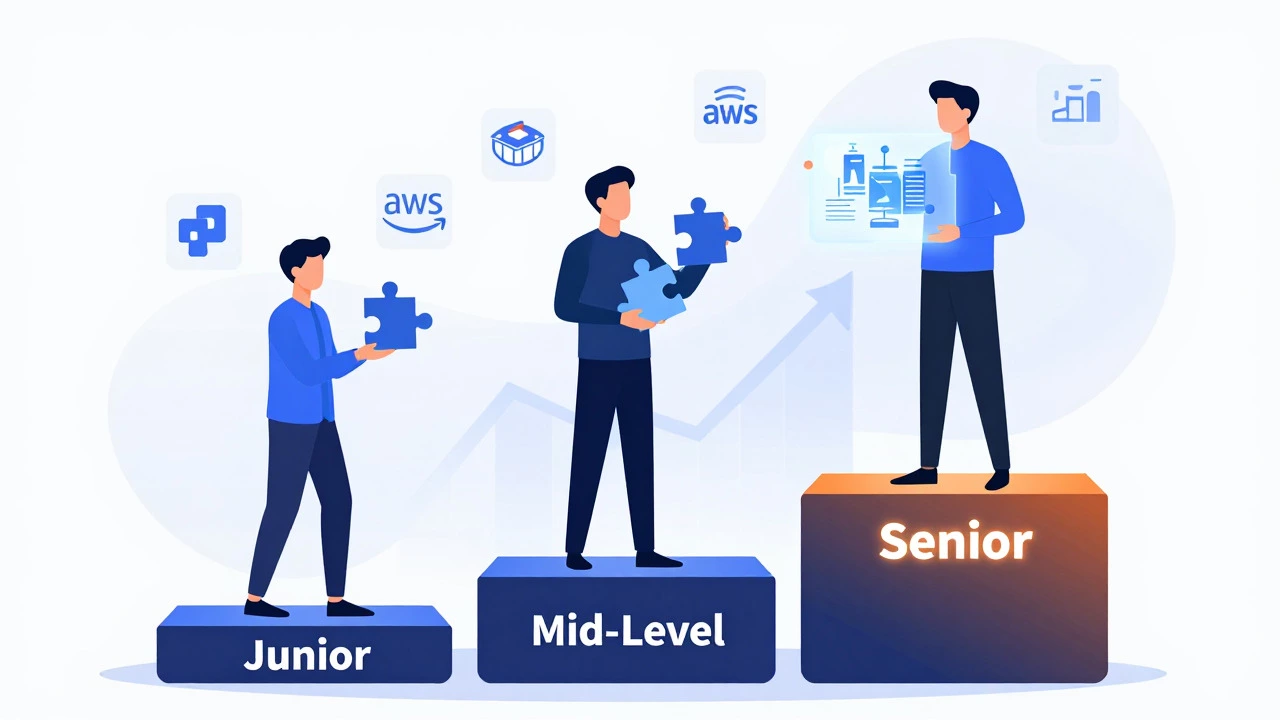
Your years of experience act as the biggest multiplier for your paycheck. Companies pay for proven ability to solve complex problems without constant supervision. Let's look at how the compensation ladder typically looks across different stages of your career.
- Junior Full Stack Developer (0-2 years): Expect a range between $70,000 and $95,000. At this stage, you are learning the company's codebase and best practices. You are valuable because you can handle both front-end bugs and back-end tasks, but you aren't leading architecture decisions yet.
- Mid-Level Full Stack Developer (3-5 years): This is the sweet spot for many developers, with salaries ranging from $100,000 to $140,000. You are now autonomous. You can design features, write clean code, and mentor juniors. Your value lies in speed and reliability.
- Senior Full Stack Developer (5+ years): Salaries here jump significantly, often landing between $140,000 and $190,000+. Senior devs don't just write code; they make architectural choices that affect the entire product. They optimize performance, ensure security, and guide technical strategy.
- Lead/Staff Engineer: Once you move into leadership or highly specialized individual contributor roles, base salaries can exceed $200,000, especially when combined with equity packages.
The gap between mid-level and senior is often wider than people expect. Moving from "can do the job" to "can design the system" is a massive leap in value for employers.
Location Matters More Than You Think
If you work remotely for a US-based company, your location might not matter as much, but if you are based in the US, geography dictates your cost of living and, consequently, your salary. Tech hubs pay more because the competition for talent is fierce and rent is astronomical.
| City / Region | Average Base Salary | Cost of Living Index* |
|---|---|---|
| San Francisco Bay Area, CA | $150,000 - $210,000 | Very High |
| New York City, NY | $140,000 - $195,000 | Very High |
| Seattle, WA | $135,000 - $185,000 | High |
| Austin, TX | $110,000 - $150,000 | Moderate-High |
| Chicago, IL | $105,000 - $140,000 | Moderate |
| Nashville, TN | $95,000 - $130,000 | Moderate-Low |
*Cost of Living Index is relative to the national average (100). Higher means more expensive.
Notice the difference between Austin and San Francisco? While SF pays nearly double Nashville in some cases, your disposable income might be similar after taxes and rent. When evaluating offers, always calculate your real wage-what you can actually save or spend after housing costs.
Tech Stack Influence on Pay
Not all full stack developers are created equal. The specific technologies you use can impact your earning potential. Some stacks are in higher demand due to enterprise adoption, while others are niche but critical.
Developers proficient in JavaScript ecosystems like React, Node.js, and TypeScript remain the most sought-after. These skills allow companies to hire one person who can build the entire user interface and server logic, reducing overhead.
However, knowing backend-heavy languages like Python (Django/Flask) or Java (Spring Boot) often commands higher salaries in enterprise environments. Why? Because these systems usually handle complex financial transactions, large-scale data processing, or legacy infrastructure that requires deep expertise to maintain.
Additionally, familiarity with cloud platforms like AWS, Azure, or Google Cloud Platform adds significant value. A full stack developer who can also deploy, scale, and monitor their application on AWS is essentially doing two jobs. Expect a 10-15% premium for strong DevOps and cloud skills.
Company Size and Industry Verticals
Where you work matters just as much as what you know. Big Tech companies (FAANG and similar) offer the highest total compensation packages, including stock options that can be worth millions over time. However, they are incredibly competitive to get into.
Startups, on the other hand, might offer lower base salaries but compensate with equity. In 2026, the startup landscape has matured. Investors are smarter, and they prefer hiring experienced full stack developers who can hit the ground running. If you join an early-stage startup, ensure the valuation makes sense before trading cash for paper promises.
Industry verticals also play a role. Developers in fintech (financial technology), healthtech, and cybersecurity tend to earn more than those in media, entertainment, or general e-commerce. Why? Because the stakes are higher. A bug in a banking app costs millions; a bug in a blog theme costs a few hours of downtime. Risk correlates with reward.
Benefits Beyond the Base Salary
When negotiating your offer, never look at the base salary in isolation. The total compensation package includes several components that add up quickly.
- Health Insurance: Premium coverage for you and your family. In the US, this alone can be worth $10,000-$15,000 annually depending on the plan quality.
- Retirement Matching: Many companies match 401(k) contributions up to 4-6%. This is free money. If you aren't getting a match, you are leaving thousands on the table every year.
- Stock Options / RSUs: Restricted Stock Units or options give you ownership in the company. For public companies, RSUs are liquid and valuable. For private startups, they are a lottery ticket-potentially huge, potentially zero.
- Remote Work Stipends: With remote work being standard, many companies provide home office budgets, internet reimbursements, and co-working space memberships.
- Paid Time Off: Generous PTO policies allow for better work-life balance, which indirectly increases your quality of life and productivity.

How to Maximize Your Earning Potential
You don't have to accept the first offer you get. Here are actionable steps to increase your salary as a full stack developer in the US market.
- Specialize Strategically: Don't try to learn everything. Pick a high-value niche. For example, becoming an expert in React + Node.js + AWS is a powerful combination. Adding AI/ML integration skills to your stack is increasingly valuable in 2026.
- Build a Portfolio of Real Projects: GitHub repositories are good, but deployed applications are better. Show employers that you can ship products that users love. Case studies explaining your technical decisions carry more weight than code snippets.
- Negotiate Aggressively: Data shows that candidates who negotiate earn significantly more over their careers. Use sites like Glassdoor, Levels.fyi, and Blind to research market rates. Always ask for the budget range upfront.
- Job Hop Strategically: Loyalty rarely pays off in tech. Changing jobs every 2-3 years is the fastest way to boost your salary by 20-30%. Internal raises typically max out at 3-5% annually.
- Develop Soft Skills: Communication, leadership, and business acumen separate seniors from leads. If you can explain technical debt to a non-technical CEO, you become indispensable.
The Future Outlook for Full Stack Developers
Is the demand slowing down? Not really. While AI tools like GitHub Copilot are changing how we write code, they haven't replaced the need for engineers who understand system architecture, user experience, and business logic. In fact, AI is making full stack developers more productive, allowing them to take on larger projects and deliver faster.
The trend is moving towards "T-shaped" developers: broad knowledge across the stack, but deep expertise in one or two areas. As long as businesses need digital products, full stack developers will remain among the highest-paid professionals in the US workforce.
What is the average starting salary for a full stack developer in the USA?
The average starting salary for a junior full stack developer in the USA ranges from $70,000 to $95,000 per year. This varies based on location, with tech hubs like San Francisco offering higher starting pay compared to smaller cities.
Do full stack developers earn more than front-end or back-end specialists?
Generally, yes. Full stack developers often command slightly higher salaries because they offer versatility. Companies value the ability to bridge the gap between client-side and server-side development, reducing the need for multiple hires for small-to-medium projects.
How does remote work affect full stack developer salaries?
Remote work has flattened geographic salary disparities somewhat, but many US companies still adjust pay based on the employee's location. However, top-tier remote-first companies often pay national averages regardless of where you live, provided you are within a specific time zone.
Which tech stack pays the most for full stack developers?
Stacks involving JavaScript (React, Node.js), Python (Django, Flask), and Java (Spring Boot) are highly lucrative. Additionally, proficiency in cloud services like AWS or Azure significantly boosts earning potential due to the high demand for scalable, cloud-native applications.
Is it worth getting a computer science degree to maximize salary?
While a CS degree can help land interviews at large enterprises and FAANG companies, it is not strictly necessary for high salaries. Many successful full stack developers are self-taught or bootcamp graduates. Practical experience, a strong portfolio, and problem-solving skills often outweigh formal education in the tech industry.