
Full Stack Developer Roadmap Planner
Configure Your Learning Path
12-Month Learning Roadmap
Front-End Foundation
Months 1-3Master HTML5, CSS3, and vanilla JavaScript. Build static websites and understand responsive design.
- HTML5 semantic elements and accessibility
- CSS3 flexbox and grid layouts
- JavaScript variables, functions, loops
- DOM manipulation and event handling
- Asynchronous programming (Promises, Async/Await)
Modern Frameworks & Version Control
Months 4-6Learn React framework and Git version control. Build component-based applications.
- React components and JSX syntax
- State management with useState and useEffect
- React Router for navigation
- Git commands and GitHub workflows
- Building reusable component libraries
Back-End Logic & Databases
Months 7-9Server-side development with Node.js/Express and PostgreSQL databases.
- Node.js runtime environment
- Express.js framework for APIs
- RESTful API design principles
- PostgreSQL database management
- SQL queries, joins, and normalization
- User authentication and authorization
Integration, Deployment & Portfolio
Months 10-12Build substantial projects, deploy live applications, and create your professional portfolio.
- Full-stack application architecture
- Deployment with Vercel/Render/Railway
- Payment integration with Stripe
- Portfolio project case studies
- Code quality tools (ESLint, Prettier)
- Professional README documentation
Progress Summary
Current Status:
Start your journey by completing the first phase!
Quick Tips
One year. That is the magic number everyone whispers about when they want to escape their current job and start building websites for a living. You see success stories on social media: someone quit their retail job, coded for twelve months, and landed a six-figure role at a tech startup. It looks easy. It looks fast. But does it actually work for you?
The short answer is yes. You can absolutely learn full stack web development in one year. But the long answer requires stripping away the hype. It isn't about watching videos passively. It is about aggressive, structured learning, building real projects, and surviving the inevitable moments where you feel completely lost. If you treat this like a part-time hobby, you will not make it. If you treat it like a second full-time job, you might just pull it off.
Defining the Scope: What Does "Full Stack" Actually Mean?
Before you commit twelve months of your life, you need to know exactly what you are signing up for. The term "full stack" gets thrown around loosely. In 2026, it generally means you can build a complete application from the user interface down to the database and server logic. You are not just making things look pretty; you are making them function securely and efficiently.
To be hireable as a junior full-stack developer, you need proficiency in three main layers:
- Front-End: This is what users see. It involves HTML, CSS, and JavaScript, plus a framework like React or Vue. You handle layouts, animations, and user interactions.
- Back-End: This is the engine room. It involves a server-side language like Node.js, Python, or PHP. You handle data processing, business logic, and security.
- Database & DevOps: This is where data lives. You need to understand SQL databases like PostgreSQL or NoSQL options like MongoDB. You also need basic knowledge of deploying apps using Git and cloud platforms like AWS or Vercel.
Trying to master every tool in these categories is impossible in a year. Your goal is not mastery; it is competence. You need to know enough to build, debug, and deploy a working application.
The Two Paths: Bootcamps vs. Self-Taught
How you spend that year matters more than how many hours you put in. There are two dominant paths people take, and each has distinct trade-offs regarding cost, speed, and support.
| Feature | Coding Bootcamp | Self-Taught (Online Courses) |
|---|---|---|
| Time Commitment | Intensive (3-6 months full-time) or Part-time (9-12 months) | Flexible (usually 12+ months consistent study) |
| Cost | $5,000 - $20,000+ | $0 - $500 (free resources + books) |
| Structure | High. Curriculum is set for you. | Low. You must design your own curriculum. |
| Networking | Strong peer network and career services. | Weak. You must build your own community. |
| Pace | Fast. Driven by deadlines. | Variable. Prone to procrastination. |
If you have the budget and thrive in structured environments, a reputable coding bootcamp can compress your learning curve significantly. They force you to move forward even when you want to stop. However, if you are disciplined and resourceful, the self-taught route is entirely viable. Many senior developers today started with free tutorials on YouTube and documentation. The key difference is accountability. Without a teacher pushing you, you must push yourself.
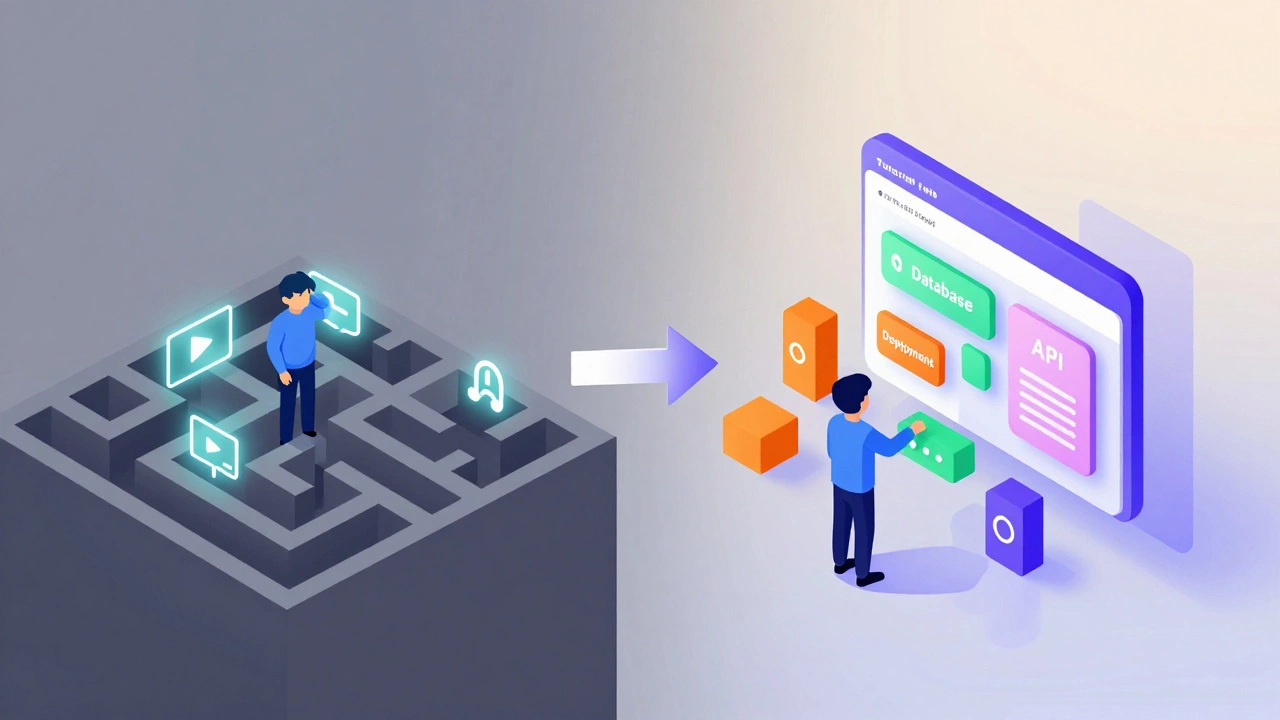
A Month-by-Month Roadmap for One Year
Vagueness is the enemy of progress. You cannot simply say "I will learn web development." You need a schedule. Here is a realistic breakdown of how to structure your year if you are studying 15-20 hours a week while holding down another job.
Months 1-3: The Front-End Foundation
Start with the basics. Do not jump into React yet. Spend these three months mastering HTML5, CSS3, and vanilla JavaScript. Build static websites. Make them responsive so they look good on mobile phones. Understand the box model, flexbox, and grid layouts. Then, dive deep into JavaScript. Learn variables, functions, loops, DOM manipulation, and asynchronous programming (Promises and Async/Await). If you cannot explain how a `for` loop works or how to fetch data from an API, you are not ready for the next step.
Months 4-6: Modern Frameworks & Version Control
Now you pick a front-end framework. In 2026, React remains the industry standard for jobs, though Vue and Svelte are growing. Stick with React for employability. Learn components, state management (useState, useEffect), and routing. Simultaneously, learn Git. Every single line of code you write should be committed to a GitHub repository. Employers look at your GitHub profile before they look at your resume. If it is empty, you do not exist to them.
Months 7-9: Back-End Logic & Databases
Switch gears to the server side. Node.js with Express is the easiest transition since you already know JavaScript. Learn how to create RESTful APIs. Understand HTTP methods (GET, POST, PUT, DELETE). Connect your API to a database. PostgreSQL is highly recommended because relational data structures are fundamental to most business applications. Learn SQL queries, joins, and normalization. Build a simple CRUD (Create, Read, Update, Delete) application where users can sign up, log in, and save data.
Months 10-12: Integration, Deployment & Portfolio
This is where most people fail. They learn the pieces but never connect them. Spend these final three months building two or three substantial projects. Not a To-Do list app. Build a clone of a popular service, an e-commerce store with payment integration (Stripe), or a project management tool. Deploy these apps live. Use Vercel for the front end and Render or Railway for the back end. Write case studies explaining the problems you solved and the technologies you used. This portfolio is your ticket to interviews.
The Hidden Trap: Tutorial Hell
You have probably heard of "tutorial hell." It is the state where you watch video after video, nodding along, feeling productive, but unable to write a single line of code without copying the instructor. This is the biggest risk in a one-year timeline.
To avoid this, follow the 30/70 rule. Spend 30% of your time consuming content (reading docs, watching tutorials) and 70% of your time building. When you get stuck, do not immediately look up the solution. Struggle with it for twenty minutes. Debugging is where the actual learning happens. If you skip the struggle, you skip the growth. Your brain needs the friction of error messages to form new neural pathways.
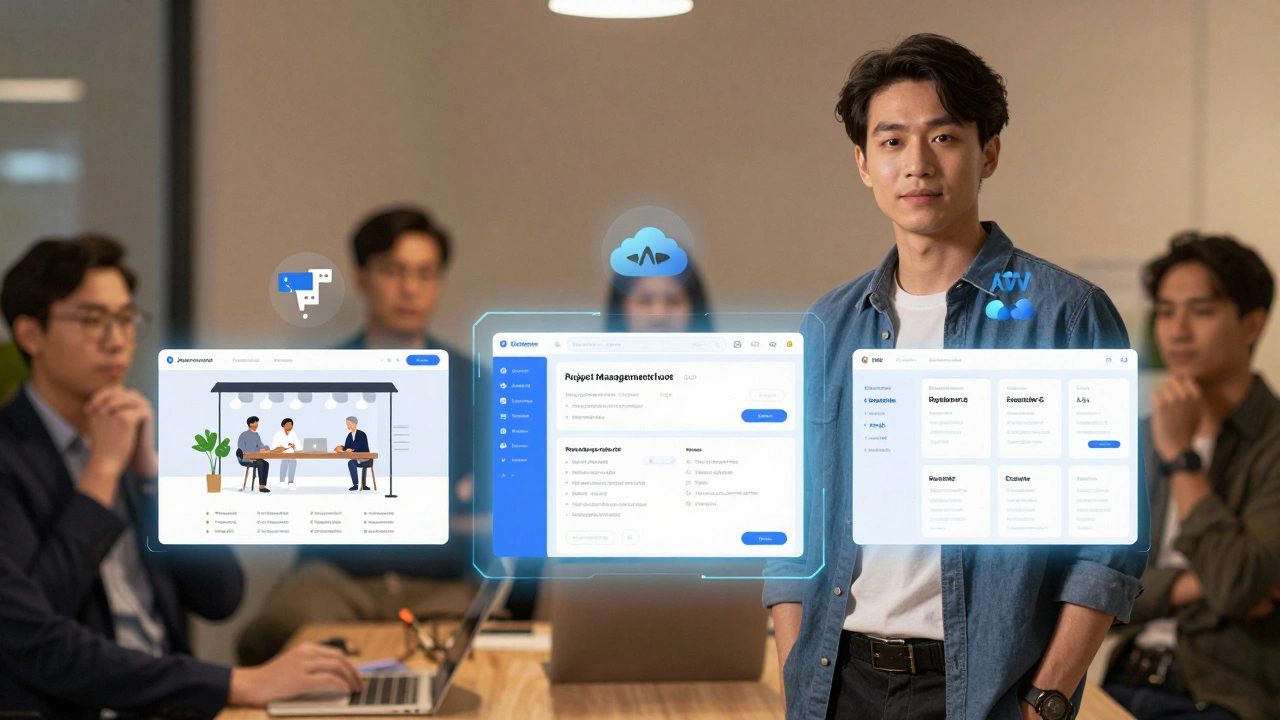
Building a Portfolio That Gets Hired
In 2026, certificates matter less than code. A bootcamp certificate shows you showed up. A deployed application shows you can do the job. Your portfolio needs to demonstrate specific skills:
- Complexity: Show that you can handle state, authentication, and external APIs.
- Code Quality: Clean, readable code with comments. Use ESLint and Prettier to format your code automatically.
- Problem Solving: Include a README file for each project that explains the technical challenges you faced and how you overcame them.
- Diversity: Have one project focused on UI/UX, one focused on backend logic, and one full-stack integration.
Recruiters spend about thirty seconds scanning a portfolio. Make sure your best work is visible immediately. Do not bury your flagship project on page three.
Is One Year Enough for a Job?
The job market for entry-level developers is competitive. It is saturated with bootcamp graduates and self-taught juniors. However, companies still need developers who can execute tasks reliably. The key is not just knowing the syntax; it is understanding how to collaborate. Learn how to read other people's code. Learn how to ask good questions. Soft skills like communication and teamwork often tip the scale in hiring decisions.
Expect rejection. You might apply to fifty jobs and hear nothing back. Apply to one hundred. The first interview is often the hardest hurdle. Once you get your foot in the door, your salary and opportunities will grow exponentially. One year gets you to the starting line. It does not guarantee the finish line, but it gives you the clearest path available.
Do I need a computer science degree to become a full stack developer?
No. Most modern web development roles do not require a CS degree. Employers prioritize practical skills and portfolio projects over academic credentials. A degree helps with theoretical foundations, but it is not a barrier to entry for most startups and mid-sized tech companies.
Which programming language should I learn first?
JavaScript is the only language that runs natively in the browser, making it essential for front-end development. By learning JavaScript, you can also use Node.js for the back-end, allowing you to be full-stack with a single language initially. This reduces cognitive load and speeds up your learning process.
Can I learn full stack development in 6 months instead of 1 year?
It is possible if you dedicate 40+ hours per week to intensive study, such as in a full-time bootcamp. For most people balancing a job and family, 6 months is too aggressive and leads to burnout. One year allows for deeper understanding and better project quality, which translates to better job prospects.
What are the best free resources for learning web development?
FreeCodeCamp offers a comprehensive, interactive curriculum. MDN Web Docs is the authoritative reference for HTML, CSS, and JavaScript. YouTube channels like Traversy Media and The Net Ninja provide excellent project-based tutorials. These resources are sufficient to reach a hireable level if used consistently.
How important is soft skills in web development?
Extremely important. Developers rarely work alone. You must communicate effectively with designers, product managers, and other engineers. Being able to explain technical concepts to non-technical stakeholders and collaborating via Git workflows are critical skills that distinguish successful juniors from those who struggle.