
Future-Proof SEO Readiness Calculator
-
Content focuses on concepts/relationships rather than just keywords.
-
Advanced schema (Product, FAQ, Article) used across site.
-
Data presented in clear tables/bullet points for AI parsing.
-
Author schemas, security (HTTPS), and privacy compliance established.
-
Q&A formats optimized for natural language queries.
-
Analytics rely on server-side tracking without third-party cookies.
-
Real-time data feeds for inventory/pricing updates.
-
Deep, comprehensive coverage of topics to avoid being ignored by LLMs.
Your Future-Readiness Score
Picture this: It’s mid-2031. You’re a web developer sitting at your desk in Dublin, staring at a blank code editor. A client asks you to optimize their new SaaS platform for Google. But here’s the twist-Google doesn’t show a list of blue links anymore. Instead, it spits out a fully synthesized answer, complete with charts and product recommendations, generated by an AI model that has already scanned the entire web.
You might be thinking, "Does that mean my job is done? Is SEO dead?"
The short answer is no. SEO isn’t dying; it’s evolving into something far more technical, data-centric, and integrated into the development lifecycle than ever before. In fact, if you think about it, search has always been about connecting user intent with relevant information. The medium changes-from keyword stuffing to semantic relevance, from backlinks to entity authority-but the core problem remains the same.
For web developers, this shift is actually good news. As marketing teams struggle to adapt to AI-generated content farms, developers who understand how search engines crawl, index, and prioritize structured data will become the gatekeepers of visibility. Let’s break down what this future looks like and why your skills are more valuable than they were in 2026.
The Death of "Traditional" SEO and the Rise of Entity Optimization
To understand where we are going, we need to look at where we just left. For decades, SEO was largely a game of keywords and links. You targeted phrases, built backlinks, and hoped the algorithm would reward you. That era is effectively over. By 2031, the concept of ranking for a single keyword phrase is obsolete because users rarely type exact phrases anymore. They ask questions, upload images, or interact with voice assistants.
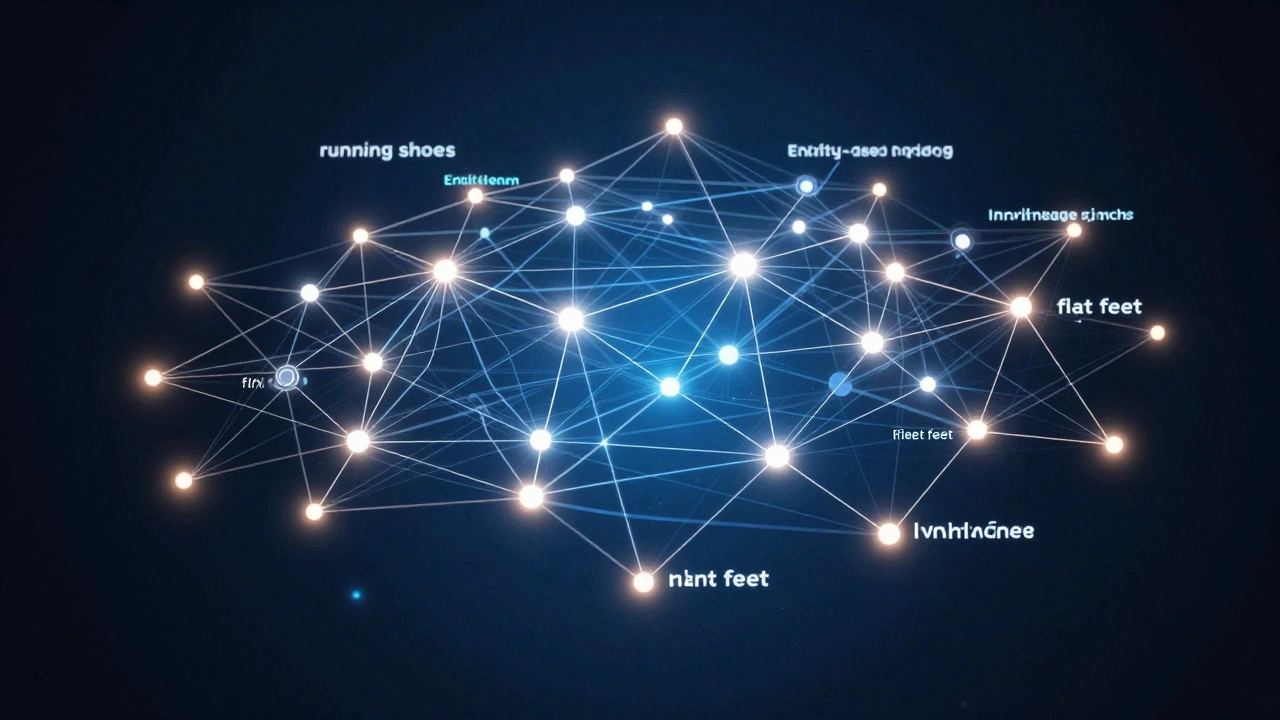
Search engines have moved entirely to Entity-Based Indexing, which means Google understands concepts, not just words. When a user searches for "best running shoes for flat feet," Google doesn’t look for those words on your page. It looks for entities related to "running shoes," "flat feet," "orthopedic support," and specific brands like Nike or Brooks. It then maps the relationships between these entities.
As a developer, this means your focus shifts from meta tags to schema markup and internal linking structures that define these relationships. You aren’t writing for robots anymore; you’re building a knowledge graph for your website. If your site doesn’t clearly define who you are, what you sell, and how it relates to other topics, you won’t exist in the AI’s context window.
- From Keywords to Concepts: Stop targeting "buy laptop." Start structuring data around "laptop specifications," "price ranges," and "user reviews" as distinct entities.
- Semantic Density: Your content needs to cover a topic comprehensively so that AI models can extract accurate facts. Thin content gets ignored by LLMs (Large Language Models).
- Authority Signals: Backlinks still matter, but they act as votes of confidence for entity authority. A link from a trusted educational institution (.edu) carries more weight than a thousand spammy blog comments.
AI Overviews and the Zero-Click Reality
Let’s address the elephant in the room: Generative Engine Optimization (GEO). By 2031, most informational queries are answered directly by AI overviews (formerly known as SGE - Search Generative Experience). Users get their answer without clicking a single link. This phenomenon, often called "zero-click search," has terrified marketers for years. But for developers, it presents a unique opportunity.
Here is the reality: AI models need sources. They don’t hallucinate facts when high-quality, structured data is available. If your website provides clear, authoritative, and easily parsable information, the AI will cite you. Being cited in an AI overview is the new "Position Zero." It builds brand trust and drives qualified traffic from users who want to verify the information or make a purchase.
This requires a different approach to content architecture. You need to ensure your pages are optimized for extraction. This means using clear headings, bullet points, and tables that summarize complex data. Think of your webpage as a dataset for an AI. If it’s messy, the AI skips it. If it’s clean and structured, it becomes a primary source.
| Aspect | Traditional SEO (Pre-2025) | AI-Native SEO (2031+) |
|---|---|---|
| Primary Goal | Rank for keywords | Be cited by AI models |
| Content Strategy | Keyword density, long-tail phrases | Entity coverage, factual accuracy |
| Technical Focus | Page speed, mobile-friendliness | Schema markup, API accessibility |
| User Intent | Informational/Navigational | Transactional/Verification |
| Measurement | Organic clicks, impressions | Citation rate, conversion from AI referrals |
Structured Data as the New Currency
If there is one skill every web developer must master for the next five years, it is advanced structured data implementation. JSON-LD is no longer optional; it is the backbone of how search engines understand your content. As AI agents browse the web to perform tasks for users-like booking flights or comparing insurance policies-they rely heavily on machine-readable formats.
Consider a local business website. In the past, having a NAP (Name, Address, Phone) section was enough. Now, you need detailed LocalBusiness schema with opening hours, price ranges, accepted payment methods, and even menu items if applicable. For e-commerce sites, Product schema with availability, review ratings, and SKU details is critical. Without this, your site is invisible to the automated agents that power the next generation of search.
Moreover, we are seeing the rise of dynamic schema. Instead of static markup, developers are integrating APIs that update schema in real-time based on inventory levels or pricing changes. This ensures that when an AI agent checks your site, it gets the most current data possible. Stale data leads to poor user experiences, which leads to de-indexing or lower citation priority.
The Developer’s Role in Content Quality
There is a misconception that SEO is solely a marketer’s job. In the age of AI, this distinction blurs. Marketers write content, but developers build the infrastructure that makes that content discoverable and trustworthy. Google’s E-E-A-T (Experience, Expertise, Authoritativeness, Trustworthiness) guidelines have become stricter, especially with the flood of AI-generated spam.
Developers play a crucial role in establishing E-E-A-T through technical signals. This includes:
- Author Attribution: Implementing
PersonorOrganizationschema to clearly link content creators to their work. - Fact-Checking Infrastructure: Building systems that allow for easy updates and corrections of content, signaling freshness and accuracy.
- Security and Privacy: Ensuring HTTPS, secure data handling, and transparent privacy policies. Trust is a ranking factor, and security breaches destroy it instantly.
Additionally, as AI tools allow anyone to generate thousands of articles in minutes, the value of human expertise skyrockets. Websites that demonstrate genuine experience-through original research, unique data visualizations, or expert commentary-will stand out. Developers can facilitate this by creating interactive elements, custom charts, and personalized user journeys that generic AI content cannot replicate.
Voice Search and Conversational UI
By 2031, voice search will be ubiquitous. People won’t type "weather in Dublin"; they’ll ask their smart glasses or car dashboard, "What should I wear today?" This shift demands a conversational approach to SEO. Questions become the primary query format. Long-tail, natural language queries dominate.
For developers, this means optimizing for featured snippets and direct answers. Structuring content in Q&A formats helps search engines identify concise responses to voice queries. Using FAQ schema extensively allows your content to appear in voice results. Furthermore, as interfaces become more conversational, your website’s UX must adapt. Fast load times and clear, scannable layouts are essential because users expect instant gratification from voice interactions.

Privacy-First Tracking and Analytics
With the decline of third-party cookies and increasing regulations like GDPR and CCPA, tracking user behavior has become challenging. However, SEO relies on data. How do you measure success without invasive tracking?
The answer lies in first-party data strategies. Developers are building robust consent management platforms and leveraging server-side analytics to gather insights while respecting user privacy. Techniques like differential privacy and aggregated reporting allow businesses to understand trends without compromising individual identities. Understanding these metrics is vital for refining SEO strategies. If you can’t measure what works, you can’t improve.
Conclusion: Adapt or Obsolete
So, will SEO exist in 5 years? Absolutely. But it won’t look like the keyword-stuffing tactics of the past. It will be a sophisticated blend of technical engineering, data science, and user experience design. For web developers, this is an exciting time. Your ability to structure data, build fast and secure websites, and integrate AI-friendly architectures will make you indispensable.
Don’t wait for the future to arrive. Start optimizing your sites for entities, implement comprehensive schema markup, and focus on providing genuine value. The search landscape is changing, but the goal remains the same: connect the right information with the right people at the right time.
Is SEO dead for web developers?
No, SEO is not dead. It has evolved from keyword manipulation to technical optimization and entity-based indexing. Developers are now crucial for implementing structured data and ensuring sites are crawlable by AI agents.
How does AI affect SEO rankings?
AI affects rankings by prioritizing high-quality, authoritative content that can be easily understood and cited by Large Language Models. Sites with poor structure or thin content are increasingly ignored in favor of those providing clear, factual data.
What is the importance of schema markup in 2031?
Schema markup is critical as it serves as the primary way for AI and search engines to understand the context and relationships between entities on a webpage. It enables rich results and direct citations in AI-generated answers.
Will backlinks still matter in the future of SEO?
Yes, backlinks remain important as signals of authority and trust. However, quality outweighs quantity. Links from reputable, relevant sources carry significantly more weight than large numbers of low-quality links.
How should developers prepare for AI-driven search?
Developers should focus on mastering JSON-LD schema, improving site performance, ensuring mobile-first design, and creating content structures that facilitate easy data extraction by AI models.