PHP Web Usage Calculator
PHP Web Development Market Share
See how PHP usage has changed over time and compare it to modern alternatives
Estimated Usage
Decreasing PHP usage has decreased by -1.2% since 2024.
In 2010, PHP powered over 80% of websites. Today, it's down to 38% of web servers.
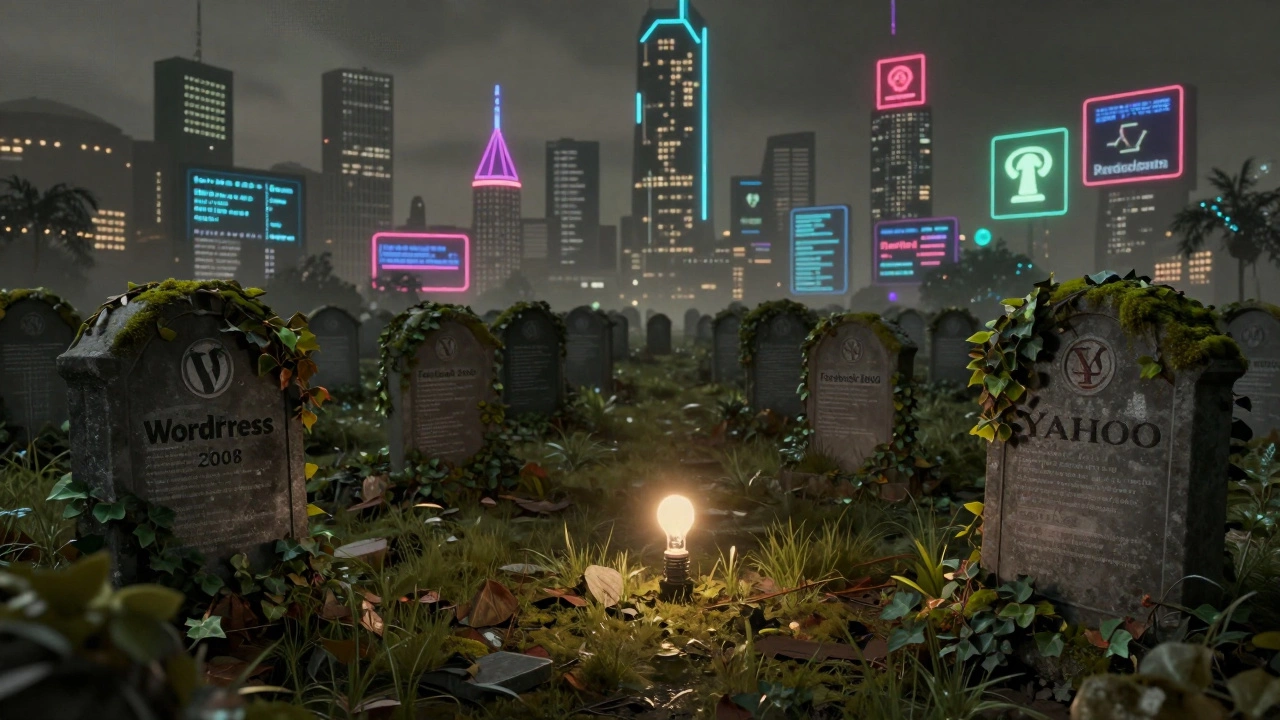
PHP used to run over 80% of the web. WordPress, Facebook, Wikipedia, Yahoo - all built on it. Today, that number is under 40%, and falling. You hear it everywhere: PHP is dying. But is it really? Or is it just changing?
PHP’s peak was bigger than you remember
In the early 2000s, PHP was the easiest way to make a website. You didn’t need a degree. You didn’t need a server farm. You just wrote a few lines, uploaded it to your cheap shared host, and boom - your site was live. That simplicity made it the go-to for small businesses, bloggers, and startups. By 2010, PHP powered over 80% of all websites with a server-side language. It wasn’t just popular - it was the default.
But popularity doesn’t mean quality. PHP was built as a glue language - a quick fix for static HTML pages. It didn’t have classes, namespaces, or proper error handling at first. Developers learned to work around its flaws. And for a long time, that worked. But as websites grew more complex, those workarounds turned into technical debt.
Modern alternatives outpaced PHP’s evolution
PHP 5.3 in 2009 introduced namespaces. PHP 7 in 2015 made it 2x faster. These were huge improvements. But they came too late. By then, developers had already moved on.
Node.js arrived with JavaScript on the server. Suddenly, you could use one language across the whole stack. Python’s Django and Flask offered clean, predictable structures. Ruby on Rails made development feel like magic. These frameworks didn’t just fix PHP’s flaws - they redefined what web development could feel like.
PHP tried to catch up. Composer, PSR standards, Laravel - they brought order. But the damage was done. New developers didn’t learn PHP because they didn’t need to. Companies hiring for web roles started asking for React, Node, or Python. PHP became the legacy option.
PHP isn’t gone - it’s stuck in maintenance mode
Here’s the truth: PHP isn’t dying because it’s broken. It’s dying because it’s no longer the first choice.
WordPress still runs 43% of all websites. That’s over 500 million sites. Most of them are on PHP. But how many of those sites are being built from scratch today? Very few. Most are updates, plugins, or minor tweaks. The new sites? They’re built with Next.js, SvelteKit, or Astro - all JavaScript-based, all server-side rendered, all faster to deploy.
PHP’s biggest users aren’t startups. They’re enterprises with massive legacy codebases. Banks, government portals, old e-commerce systems. These aren’t shiny new projects. They’re systems that cost millions to replace. So they keep PHP running - not because they love it, but because they can’t afford to switch.
The job market is shifting away from PHP
Look at job boards. In 2015, PHP was in 30% of all web dev job postings. In 2025? It’s below 10%. And the roles that remain? They’re not for junior devs. They’re for senior engineers who know how to fix broken code, optimize slow databases, and patch security holes in decade-old systems.
Meanwhile, JavaScript frameworks dominate entry-level listings. Companies want developers who can build real-time dashboards, interactive forms, and dynamic UIs - not write PHP scripts to pull data from a MySQL table. The skills that pay now are different. PHP skills don’t open doors anymore. They just keep them from slamming shut on old systems.
PHP’s ecosystem is aging
Think about the tools around PHP. Composer? Still useful. Laravel? Still powerful. But how many new libraries are being built for PHP today? Compare that to npm, PyPI, or RubyGems. The volume of new packages, the speed of updates, the community activity - it’s not even close.
PHP’s biggest strength used to be its simplicity. Now, that simplicity feels outdated. You can’t just throw together a REST API in PHP like you can in Express.js or FastAPI. You need a framework. You need configuration. You need to think about autoloading, dependency injection, middleware. It’s no longer the quick win it once was.
And then there’s the hosting problem. Shared hosting - PHP’s original home - is disappearing. Cloud platforms like Vercel, Netlify, and Railway don’t optimize for PHP. They optimize for JavaScript, Python, and Go. Deploying a PHP app often means managing a VPS, configuring Nginx, handling PHP-FPM. It’s messy. It’s slow. It’s not what modern developers want.

PHP still has value - but only in specific cases
Let’s be clear: PHP isn’t dead. It’s not even obsolete. It’s still the backbone of WordPress, Drupal, and Magento. If you’re maintaining a WordPress site, you need PHP. If you’re working on a legacy e-commerce system, you’re stuck with it.
But if you’re starting fresh? There are better options. For content sites: Next.js or Astro. For APIs: Node.js or Python. For internal tools: Ruby or Go. PHP doesn’t offer a compelling reason to choose it over these.
There’s one exception: small businesses in developing countries. In places where cheap hosting and simple tools matter more than architecture, PHP still thrives. But that’s not the future of web development. That’s the past clinging on.
What does the future hold for PHP?
PHP will survive - but only as a maintenance language. Like COBOL in banking, it’ll keep running where it’s too expensive to replace. But it won’t grow. It won’t innovate. It won’t attract new talent.
The PHP community is doing everything right. They’ve modernized the language. They’ve fixed performance issues. They’ve built great frameworks. But they’re fighting a tide. Developers don’t choose languages because they’re good. They choose them because they’re popular, because their friends use them, because the jobs are there.
PHP lost that race. Not because it’s bad. But because the world moved on.
Should you learn PHP in 2025?
If you need to maintain an old WordPress site? Yes. Learn PHP. Learn MySQL. Learn how to debug legacy code.
If you want to build new websites, get hired at a tech startup, or work on modern web apps? No. Learn JavaScript, TypeScript, or Python. Learn how to build with React, Next.js, or FastAPI. Those are the skills that pay now.
PHP isn’t a dead language. But it’s a sinking ship. And if you’re not already on board, don’t jump in hoping to fix it. You’ll just get wet.
Is PHP really dying, or is this just hype?
PHP isn’t disappearing overnight, but its role is shrinking fast. It still powers millions of sites - mostly WordPress installations - but almost no new projects start with PHP today. The decline isn’t hype; it’s measurable in job postings, new project trends, and developer surveys. PHP is becoming a legacy technology, not a modern one.
Why did Laravel and Symfony not save PHP?
Laravel and Symfony made PHP more attractive to developers, but they couldn’t reverse the shift in developer preferences. Modern frameworks like Next.js and SvelteKit offer better tooling, faster development cycles, and full-stack JavaScript consistency. PHP frameworks still require separate server setups, slower deployment pipelines, and more configuration. Even with great tools, PHP feels outdated next to the speed and simplicity of modern alternatives.
Can PHP still be used for new web apps in 2025?
Yes - but you’d be choosing a harder path. You can build a modern API with Laravel or a CMS with Symfony. But you’ll spend more time on server setup, deployment, and tooling than with JavaScript or Python. Unless you’re working with existing PHP systems or need WordPress integration, there’s little advantage to starting fresh with PHP.
What percentage of websites still use PHP today?
As of 2025, around 38% of all websites use PHP on the server side, down from over 80% in 2010. This is based on W3Techs data, which tracks server-side technologies. The decline has been steady - about 1-2% per year since 2018. The drop is most noticeable in new websites, where PHP usage is under 5%.
Is PHP less secure than other languages?
PHP itself isn’t inherently less secure. But its history of poor defaults and fragmented ecosystems made it a target. Early versions had insecure configurations by default, and many shared hosts ran outdated PHP versions. Modern PHP (8.1+) is much safer, with built-in protections and strict typing. The security risk now comes from outdated installations - not the language itself.
Will PHP ever make a comeback?
Unlikely. Comebacks require momentum - new developers, new tools, new companies betting on it. PHP has none of that. The industry has moved to JavaScript, Python, and Go for new projects. PHP’s future is maintenance, not innovation. It won’t vanish, but it won’t rise again either.