Django Suitability Checker
Django's popularity might be lower than JavaScript frameworks, but it's still the perfect choice for many projects. This tool helps you determine if Django is the right fit for your current needs.
Why Django? (Key strengths)
Ever wonder why Django doesn’t show up as often in job posts or trending tech lists, even though it powers big names like Instagram and Pinterest? It’s not because it’s broken. In fact, Django is one of the most stable, secure, and full-featured web frameworks out there. But popularity isn’t just about what works - it’s about what feels easy, fast, and familiar. And right now, Django doesn’t ride the same wave as JavaScript frameworks like React or Node.js.
Django is powerful, but it’s not flashy
Django does a lot out of the box. Authentication? Built-in. Admin panel? Ready to use. Database ORM? Already there. You don’t need to install ten different libraries to get a login system working. That’s a huge win for developers who want to build secure, complex apps quickly - especially startups or teams without a full-time DevOps person.
But here’s the catch: that power comes with weight. New developers often feel overwhelmed by Django’s "batteries-included" approach. When you’re learning web dev today, you’re usually pushed toward JavaScript. You start with HTML, then CSS, then a little JavaScript, and suddenly you’re using React to build a button that changes color. It’s visual. It’s interactive. It feels like you’re making progress fast.
Django doesn’t give you that instant gratification. You’re writing Python, setting up models, running migrations, and staring at terminal output for 20 minutes before you even see a webpage. It’s not that Django is harder - it’s just different. And in a world where tutorials show you building a live chat app in 10 minutes, Django looks slow.
The JavaScript wave drowned out Python in web dev
Since 2015, JavaScript has taken over web development education. YouTube channels, bootcamps, and even university courses now focus on React, Vue, or Next.js. Why? Because the frontend and backend can both be JavaScript. You learn one language, use it everywhere, and feel like a wizard.
Django, on the other hand, runs on Python. That’s fine - Python is one of the easiest languages to learn. But if you’re a beginner looking for a "full-stack" path, most guides will point you to Node.js + Express + MongoDB. Not Django + PostgreSQL. Even though Django’s ORM is far more powerful than MongoDB’s query system, the JavaScript stack feels more "modern" - even if it’s not.
There’s also the ecosystem. JavaScript has npm, which has over 2 million packages. Django has PyPI, which has over 400,000. That doesn’t mean Django is weak - it means developers are more likely to find a ready-made solution for a niche problem in JavaScript land. Need a real-time notification system? There’s a React package for that. Need to integrate with Stripe? A dozen npm libraries. Django has good tools too, but they’re not as numerous or as trendy.

Companies use Django - but they don’t advertise it
If you look at job boards, you’ll see tons of openings for React, Angular, or Node.js developers. Django? Rare. But if you dig into the tech stacks of companies like Instagram, Pinterest, Spotify, and Dropbox - you’ll find Django running under the hood. These companies don’t shout about Django because they don’t need to. It’s not the selling point. Their brand is the product, not the framework.
Meanwhile, startups and agencies love to highlight their tech stack as a marketing tool. "Built with React and Next.js!" sounds cool. "Built with Django and PostgreSQL"? Not so much. That’s not because Django is inferior - it’s because marketing matters. And Django doesn’t have the hype.
The learning curve is real - but not because Django is bad
Let’s be honest: Django’s documentation is excellent. The tutorial is clear. The Django Girls initiative has helped thousands of women learn web dev through Django. But the curve is steep because Django expects you to understand how web apps work - not just how to click buttons in a UI builder.
With React, you can build a working app by copying code from CodeSandbox. With Django, you need to understand HTTP requests, URL routing, templates, and middleware. You need to know what a view is, how forms are processed, and why CSRF tokens matter. That’s not a flaw - it’s depth.
But depth doesn’t sell. Speed does. And beginners don’t always know they’re trading long-term stability for short-term speed.
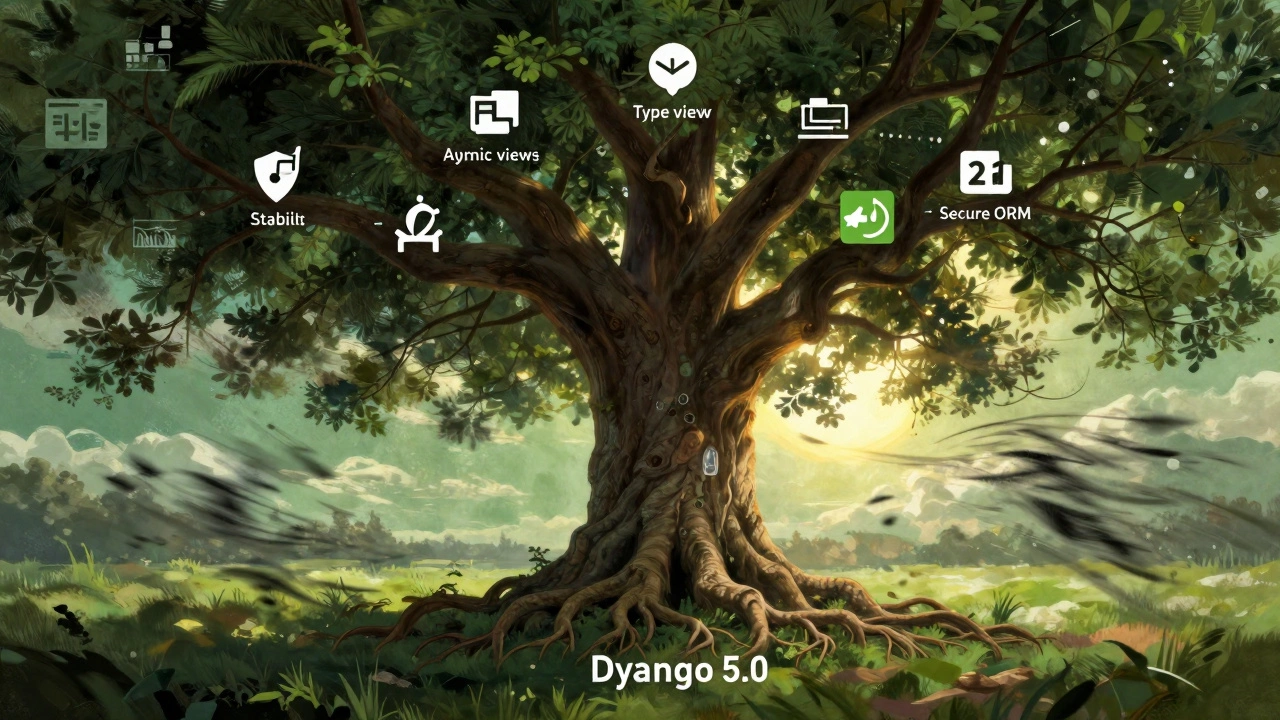
It’s not about being outdated - it’s about being quiet
Django hasn’t stopped evolving. Django 5.0, released in late 2025, added async views by default, improved type hints, and made the admin panel even more customizable. It’s still actively maintained, with a strong community and regular security updates.
But it doesn’t need to be loud. Django doesn’t chase trends. It doesn’t release a new version every three months just to stay in the news. It fixes bugs, improves performance, and stays reliable. That’s why companies like NASA and The Washington Post still use it - because it doesn’t break.
Meanwhile, JavaScript frameworks change so fast that tutorials from 2023 are already outdated. Developers burn out keeping up. Django developers? They can build a project in 2020 and still maintain it in 2026 without rewriting half the codebase.
Who should still choose Django today?
If you’re building:
- A content-heavy website with user accounts
- An internal tool for your team
- A backend for a mobile app
- Anything that needs to be secure, scalable, and maintainable for years
Django is still one of the best choices. It’s not for everyone. But if you care about long-term stability over viral trends, Django is quietly the best tool for the job.
Don’t let the noise of JavaScript hype make you think Django is outdated. It’s just not trying to be the loudest kid in the room. And sometimes, the quietest kid is the one who actually gets the job done.
Is Django dead?
No, Django is not dead. It’s actively maintained, with Django 5.0 released in late 2025 adding modern features like default async support and improved type safety. Major companies like Instagram and Spotify still rely on it. The framework has a stable release cycle, strong security updates, and a large, dedicated community. It’s not trending, but it’s far from obsolete.
Why do startups avoid Django?
Many startups avoid Django because they’re chasing speed and hype. They want to hire developers who know React or Next.js because those skills are easier to find and market. Also, JavaScript full-stack stacks let frontend and backend devs use the same language, which feels more efficient - even if it’s not always better. Django requires more upfront learning, which slows down early-stage teams that prioritize rapid iteration over long-term architecture.
Is Django harder to learn than Node.js?
It’s not harder - it’s just different. Node.js lets you start building UIs fast with JavaScript, which feels immediate. Django requires understanding how web servers, databases, and HTTP work before you see a page. That can feel slow at first. But once you get past the initial setup, Django’s structure makes complex apps easier to build and maintain. Node.js often needs dozens of third-party packages to match Django’s built-in features.
Can Django handle high traffic like Instagram?
Yes. Instagram runs on Django and handles billions of daily requests. The key isn’t the framework - it’s how you scale it. Instagram uses Django for the backend, but relies on caching, load balancing, and microservices for performance. Django’s strength is its reliability under load, not raw speed. It’s proven at scale - just not as loudly as JavaScript frameworks.
Should I learn Django in 2026?
Absolutely - if you want to build robust, long-lasting web applications. Django teaches you how web frameworks really work, not just how to use a UI. It’s ideal for backend roles, enterprise apps, and projects where security and maintainability matter. If you’re aiming for a job at a company that values stability over trends, Django will make you a stronger developer than chasing the latest JavaScript library.