
Web Development Framework Selector
Select a framework below to see why it might be the right choice for your project.
Frontend (User Interface)
React
Most Popular Great for complex, dynamic user interfaces.Vue.js
Beginner Friendly Easy to learn, flexible, and lightweight.Angular
Enterprise Complete solution with strict structure.Backend (Server & Data)
Django
Python Secure, scalable, batteries-included.Ruby on Rails
Ruby Rapid development, convention over configuration.Express.js
Node.js Minimalist, perfect for APIs and microservices.Ready to Build?
Click on any framework card above to see its strengths, ideal use cases, and learning curve.
Imagine trying to build a house by first mining the clay for bricks, then burning them in your own kiln, and finally mixing concrete from scratch. It’s possible, but it’s exhausting and incredibly slow. Now imagine buying pre-made bricks and ready-mixed cement. You still have to do the construction, but you skip the heavy manufacturing work. That is exactly what a web development framework is a collection of pre-written code that provides a structured foundation for building websites and web applications.
If you are new to coding, the term "framework" can sound intimidating. You might wonder why you need one when you already know HTML, CSS, and JavaScript. The short answer is speed and reliability. Frameworks handle the boring, repetitive parts of coding so you can focus on making your app unique. They enforce best practices, improve security, and make your code easier to maintain.
How Frameworks Actually Work
To understand frameworks, you need to understand the concept of inversion of control. In plain English, this means the framework runs the show, not you. When you write raw code, you decide every single step: load this file, check this variable, render this page. With a framework, you plug your custom logic into the slots the framework provides. The framework handles the routing, the database connections, and the security checks automatically.
This structure prevents "spaghetti code," where everything is tangled together and hard to fix. Instead, you get a clean, organized project structure. For example, if you use a popular backend framework like Django is a high-level Python web framework that encourages rapid development and clean, pragmatic design., it automatically sets up folders for your models, views, and templates. You just fill in the blanks.
Think of it like IKEA furniture. The framework gives you the instructions, the screws, and the pre-cut wood. You still have to assemble it, but you don't have to invent the chair from scratch. This saves weeks, sometimes months, of development time.
Frontend vs. Backend Frameworks
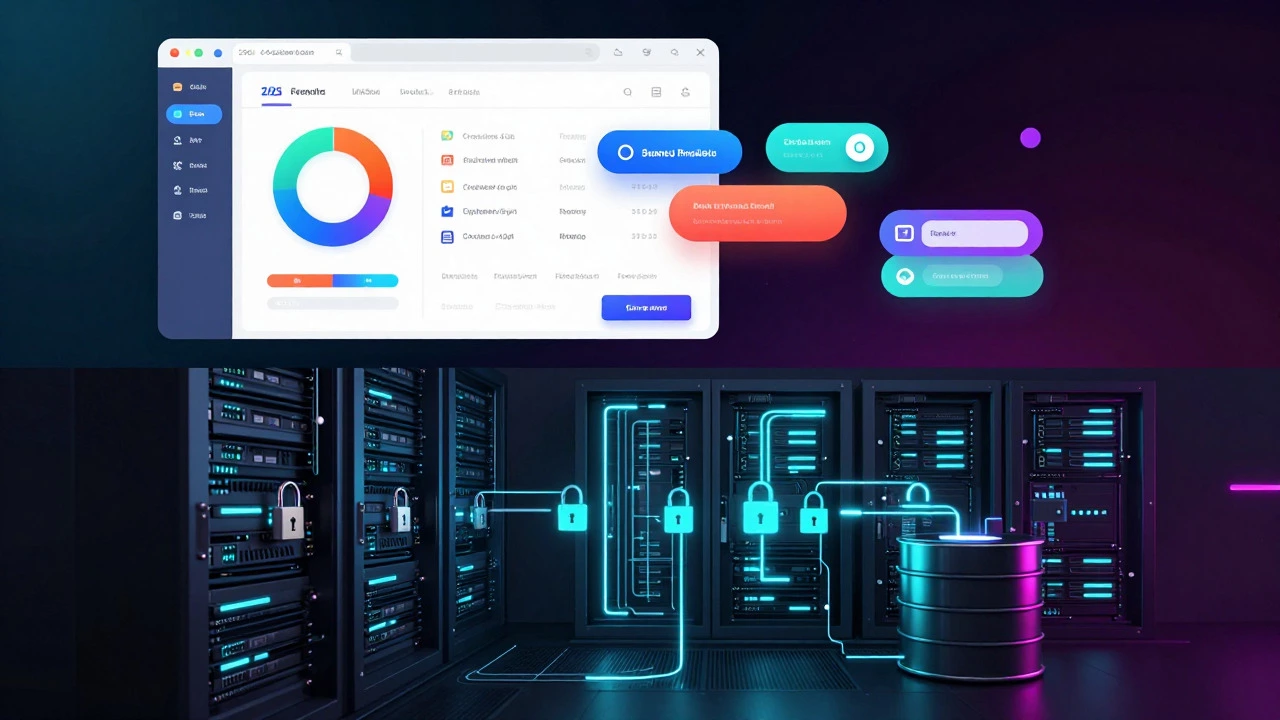
Not all frameworks do the same thing. They are generally split into two camps: frontend and backend. Understanding this difference is crucial because they solve different problems.
Frontend frameworks live in the user's browser. They control what you see and how the interface behaves. If you click a button and a menu slides out without reloading the page, a frontend framework is likely handling that. These tools manage the Document Object Model (DOM) efficiently. Without them, updating a webpage often requires reloading the entire site, which feels sluggish to users.
Backend frameworks live on the server. They handle the data, user authentication, and business logic. When you log in, the backend framework checks your password against the database securely. It doesn't care what the buttons look like; it cares about whether the data is correct and safe.
| Feature | Frontend Frameworks | Backend Frameworks |
|---|---|---|
| Where it runs | In the user's browser | On the web server |
| Main Goal | User interface and interactivity | Data management and security |
| Key Languages | JavaScript, TypeScript | Python, Ruby, PHP, Java, C# |
| Example Tools | React, Vue.js, Angular | Django, Rails, Laravel, Express.js |
| Performance Focus | Rendering speed, responsiveness | Database queries, server load |
Why Use a Framework Instead of Plain Code?
You might ask, "Can't I just write vanilla JavaScript or plain PHP?" Yes, you can. But there are significant downsides as your project grows.
1. Security Risks
Security is complex. Vulnerabilities like SQL injection and Cross-Site Scripting (XSS) are common pitfalls for beginners. Frameworks come with built-in protections. For instance, Laravel is a PHP web application framework with expressive, elegant syntax designed for web artisans. automatically escapes output to prevent XSS attacks. If you write raw PHP, you have to remember to sanitize every single input manually. One mistake can leak user data.
2. Community and Ecosystem
When you use a popular framework, you join a massive community. Need to add payment processing? There is likely a plugin or package already written for your framework. If you build everything from scratch, you have to reinvent the wheel every time. This ecosystem includes documentation, tutorials, and forums where experts help each other.
3. Scalability
As your user base grows, your code needs to handle more traffic. Frameworks provide tools for caching, load balancing, and efficient database management. They are tested by millions of developers worldwide, meaning their performance bottlenecks are usually already identified and solved.
Popular Frameworks You Should Know
The landscape of web frameworks is vast, but a few names dominate the industry. Knowing these helps you understand job requirements and project choices.
React
Developed by Meta (formerly Facebook), React is a JavaScript library for building user interfaces, particularly single-page applications. It uses a component-based architecture, meaning you build small, reusable pieces of UI (like a button or a header) and combine them. React is technically a library, but it functions as a framework when paired with tools like Redux or Next.js. It is the most popular choice for frontend development today.
Angular
Also from Google, Angular is a platform and framework for building single-page client applications using HTML and TypeScript. Unlike React, Angular is a complete solution. It includes its own router, HTTP client, and form validation. It has a steeper learning curve but offers a very strict structure, which many large enterprises prefer for consistency.
Vue.js
Vue.js is a progressive JavaScript framework for building user interfaces. created by Evan You. It is known for being easy to learn and flexible. You can drop it into an existing project or use it to build a full-scale application. It sits comfortably between the simplicity of jQuery and the power of Angular.
Django
For backend development, Django remains a powerhouse. Written in Python, it follows the "batteries-included" philosophy. It comes with an admin panel, authentication system, and ORM (Object-Relational Mapper) out of the box. Companies like Instagram and Pinterest use Django because it scales well and is secure by default.
Ruby on Rails
Ruby on Rails is a server-side web application framework written in Ruby under the MIT License. It popularized the convention-over-configuration principle. This means the framework makes assumptions about what you want to do, so you write less code. It was instrumental in the rise of startups like GitHub and Shopify in the early 2010s.
Micro-Frameworks vs. Full-Stack Frameworks
Not all projects need heavy machinery. Sometimes, you just need a simple API endpoint. This is where micro-frameworks shine.
Express.js is a minimal and flexible Node.js web application framework. It provides a thin layer of basic web application features without obscuring Node.js features. It is perfect for building REST APIs or small services. On the other hand, full-stack frameworks like Next.js is a React framework for production-grade web applications. handle both frontend rendering and backend routing, simplifying deployment and SEO.
Choosing between them depends on your project size. A personal blog might only need a static site generator or a lightweight framework. A social media platform needs the robustness of a full-stack solution.

Common Pitfalls When Using Frameworks
While frameworks make life easier, they introduce their own challenges.
Over-Engineering
Beginners often try to use a heavy framework for a simple task. If you are building a landing page with no dynamic content, using React might be overkill. It adds complexity to your build process and increases the JavaScript bundle size, slowing down your site.
Version Lock-In
Frameworks update frequently. Major version updates can break your code. You need to dedicate time to keeping dependencies updated. If you ignore updates for years, migrating later can become a nightmare. Always read the changelogs and test updates in a staging environment.
Learning Curve
Each framework has its own conventions and jargon. Learning React involves understanding JSX, hooks, and state management. Learning Django involves understanding models, views, and templates. This initial investment of time is necessary, but it pays off in long-term productivity.
How to Choose the Right Framework
There is no single "best" framework. The right choice depends on your specific needs.
- Project Type: Is it a dashboard, an e-commerce store, or a blog? Dashboards benefit from reactive frameworks like React or Vue. Blogs might work better with static generators or WordPress.
- Team Skills: What does your team already know? If everyone knows Python, Django is a natural fit. Switching languages mid-project causes friction.
- Community Support: Check Stack Overflow and GitHub issues. A framework with an active community means faster problem-solving.
- Performance Requirements: Does your app need real-time updates? Consider frameworks that support WebSockets easily, like those in the Node.js ecosystem.
Start small. Build a simple todo list with a new framework before committing to a large project. This hands-on experience reveals the framework's strengths and weaknesses better than any tutorial.
The Future of Web Frameworks
The trend is moving toward full-stack solutions and server components. Frameworks like Next.js and SvelteKit blur the line between frontend and backend. They allow you to write components that run on the server, reducing the amount of JavaScript sent to the browser. This improves performance and SEO.
Additionally, there is a growing emphasis on developer experience (DX). Frameworks are becoming easier to set up and configure. The goal is to let developers focus on business logic rather than configuration files. As AI-assisted coding tools become more prevalent, frameworks will likely integrate deeper with these tools to automate boilerplate generation.
Do I need a framework to build a website?
No, you do not. Simple websites with static content can be built with plain HTML, CSS, and JavaScript. However, as soon as you need dynamic features like user login, databases, or complex interactivity, a framework becomes highly beneficial for organization and security.
What is the difference between a library and a framework?
A library is a collection of functions you call when you need them (you are in control). A framework is a structure that calls your code (the framework is in control). For example, jQuery is a library, while Angular is a framework.
Which framework is best for beginners?
Vue.js is often recommended for frontend beginners due to its gentle learning curve and clear documentation. For backend, Flask (Python) or Express.js (Node.js) are great starting points because they are lightweight and simple to understand.
Are frameworks slow?
Modern frameworks are highly optimized. While they add some initial load time due to JavaScript bundles, techniques like code splitting and lazy loading mitigate this. In most cases, the development speed gained outweighs minor performance costs.
Can I use multiple frameworks in one project?
Yes, it is common to use a frontend framework like React with a backend framework like Django or Node.js. They communicate via APIs. However, avoid using two frontend frameworks (e.g., React and Angular) in the same project unless absolutely necessary, as it creates unnecessary complexity.