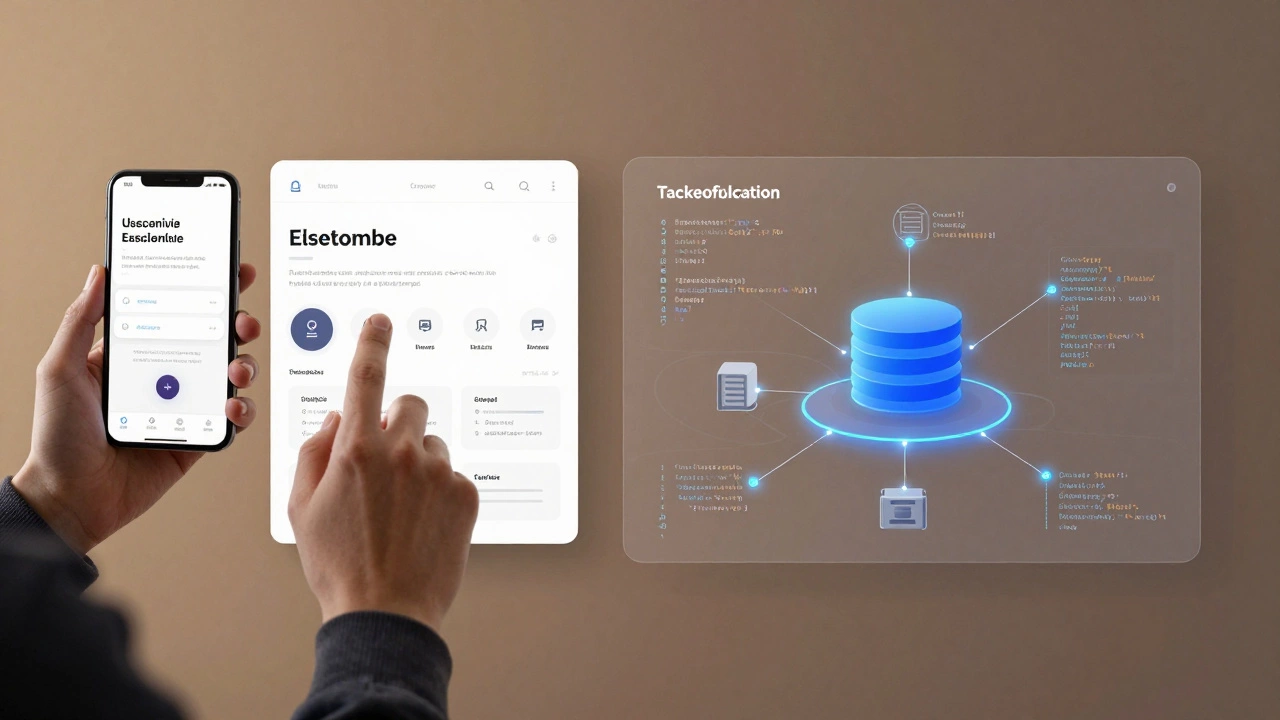
Being a full stack developer isn't just about knowing a bunch of technologies. It’s about connecting the dots between what users see and what powers it behind the scenes. If you’re asking what’s required to become one, the answer isn’t a checklist of tools-it’s a mindset. You need to understand how every piece of a web application fits together, from the button a user clicks to the database that stores their data.
Front End: What Users See and Feel
The front end is where the user lives. This is the part of the app they interact with directly. You need to be fluent in the core trio: HTML, CSS, and JavaScript. But it doesn’t stop there. Modern front ends rely on frameworks like React, Vue, or Angular. Most hiring managers in 2026 expect you to have at least one of these under your belt. React is still the most common-it powers over 40% of top websites, according to BuiltWith data.
You also need to understand how to make things work well on every device. Responsive design isn’t optional anymore. It’s expected. That means knowing CSS Grid and Flexbox inside out, using media queries naturally, and testing layouts on real phones, not just browser dev tools. Accessibility matters too. If your site can’t be used by someone relying on a screen reader, it’s not done.
And don’t forget performance. A slow website loses users fast. You should know how to optimize images, lazy-load content, reduce JavaScript bundle sizes, and use browser caching. Tools like Lighthouse aren’t just for audits-they’re part of your daily workflow.
Back End: The Engine Under the Hood
The back end handles everything the user doesn’t see: servers, databases, APIs, logic. You don’t need to be an expert in every language, but you must be comfortable with at least one server-side stack. Node.js with Express is the most popular-it lets you use JavaScript everywhere, which makes the transition from front to back smoother. But Python with Django or Flask, Ruby on Rails, and even Java with Spring are still widely used.
You’ll need to understand how HTTP works. Not just GET and POST, but status codes, headers, cookies, and authentication flows. JWT tokens, OAuth, and session management aren’t buzzwords-they’re daily tools. If you can’t explain how a login system works from browser to server to database, you’re not ready.
API design is critical. REST is still the standard, but GraphQL is growing fast, especially in apps that need flexible data fetching. You should be able to build a clean, well-documented API that other developers can use without guessing.
Databases: Where Data Lives
Every app needs to store data. You can’t avoid databases. You need to know at least one relational database like PostgreSQL or MySQL. PostgreSQL is the go-to for serious apps-it’s reliable, powerful, and supports JSON fields, which makes it great for hybrid data. You should know how to write queries, create indexes, and understand joins.
But you also need to know when to use something different. NoSQL databases like MongoDB are common for apps with unstructured or rapidly changing data. If you’re building a social feed or a content-heavy site, MongoDB might be your best fit. You don’t need to be a database engineer, but you need to know the trade-offs: when to use SQL vs. NoSQL, how to structure data for speed, and why indexing matters.
And don’t forget migrations. You’ll need to version your database changes. Tools like Sequelize (for Node) or Django Migrations (for Python) help you update schemas without breaking production data.

DevOps and Deployment: Getting It Live
Writing code is only half the job. You also need to get it running where people can use it. That means understanding deployment. You don’t need to be a DevOps engineer, but you should know how to push code to a server or cloud platform.
Most full stack devs today deploy using platforms like Vercel, Netlify, or AWS. Vercel is popular for React apps-it handles builds and CDN automatically. For Node.js apps, platforms like Render or Heroku make deployment simple. You should be comfortable with Git, branching, and pull requests. CI/CD pipelines? You don’t need to build them, but you should know how to trigger one and read logs when something breaks.
Basic server knowledge helps too. Know what a Linux terminal is. Know how to SSH into a server. Know how to check logs with journalctl or tail -f. You won’t be managing servers full-time, but if your app goes down at 2 a.m., you need to know how to fix it-or at least figure out what went wrong.
Tools of the Trade
You’ll use a lot of tools daily. Here’s what’s non-negotiable:
- Git and GitHub/GitLab: For version control. You must know branching, merging, and resolving conflicts.
- Terminal: You’ll spend more time here than in your IDE.
- Postman or Insomnia: To test your APIs.
- VS Code: The most common editor. Learn its shortcuts.
- npm or Yarn: For managing JavaScript packages.
- Browser DevTools: Your best friend for debugging.
Don’t overlook communication tools. Slack, Notion, and Jira are everywhere. You’ll need to explain bugs, estimate tasks, and collaborate with designers and product managers. Being a full stack developer means being part of a team-not just a lone coder.

Soft Skills: The Hidden Requirements
Technical skills get you in the door. Soft skills keep you there. You’ll often be the bridge between designers and backend engineers. That means you need to ask questions. You need to explain complex things simply. You need to say “I don’t know” and then go learn it.
Problem-solving is your core skill. You won’t always have a tutorial for the bug you’re facing. You’ll need to read documentation, search Stack Overflow, and experiment. Patience and persistence matter more than memorizing syntax.
And curiosity? That’s the biggest differentiator. The best full stack devs aren’t the ones who know the most tools. They’re the ones who keep learning. New frameworks come out every year. Security threats evolve. You have to stay hungry.
Where to Start
Don’t try to learn everything at once. Pick one path:
- Start with HTML, CSS, and JavaScript. Build a simple website.
- Add React. Make it interactive.
- Learn Node.js and Express. Create a basic API.
- Connect it to PostgreSQL. Store user data.
- Deploy it on Vercel or Render.
Repeat. Build three apps this way. Make them different-one for shopping, one for blogging, one for task tracking. Each one will teach you something new. By the time you finish, you’ll have a portfolio that shows you can handle the whole stack.
There’s no magic formula. No secret course. Just consistent, focused practice. And the more you build, the more you’ll understand how everything connects.
Do I need a computer science degree to become a full stack developer?
No. While a degree helps, most hiring managers care more about what you can build than what diploma you have. Companies like Google, Apple, and startups alike hire developers based on portfolios, coding tests, and real project experience. Online bootcamps, freeCodeCamp, and personal projects can get you hired if you can demonstrate solid skills.
How long does it take to become a full stack developer?
It varies. If you study full-time (40+ hours a week), you can land an entry-level job in 6-9 months. Part-time learners (10-15 hours a week) usually take 12-18 months. The key isn’t time-it’s consistency. Building real projects every week matters more than how many hours you log. One person who builds five apps in six months will be more ready than someone who watches 100 tutorials.
Is Python or JavaScript better for full stack development?
Both work great. JavaScript lets you use the same language on the front and back end (Node.js), which simplifies learning. Python (with Django or Flask) is known for clean, readable code and strong backend libraries. If you’re new, JavaScript is often easier because you can start with front-end and gradually add back-end. But if you’re drawn to data science or AI, Python gives you a head start in those areas too.
Do I need to know cloud platforms like AWS?
Not at first. Beginners can start with simpler platforms like Vercel, Netlify, or Render-they handle the complexity for you. But if you want to grow into senior roles, understanding cloud basics (like storage, servers, and scaling) becomes important. AWS, Google Cloud, and Azure are used in enterprise apps, so learning them later is a smart move. Start simple, then expand.
What’s the biggest mistake new full stack developers make?
Trying to learn everything at once. They jump between React, Angular, Vue, Node, Django, Ruby on Rails, MongoDB, PostgreSQL, Docker, Kubernetes-and get overwhelmed. The fix? Focus on one stack. Master HTML/CSS/JS → React → Node.js → PostgreSQL. Build three apps. Then, once you’re confident, explore other tools. Depth beats breadth early on.
There’s no finish line in this field. The tech changes. The tools evolve. But the core idea stays the same: build things that people use. That’s what makes a full stack developer valuable-not the number of frameworks on your resume, but the problems you solve.