
Web Dev Career Cost & ROI Calculator
Compare the true cost of becoming a web developer by factoring in tuition, equipment, and lost income.
Your Financial Profile
- Self-Taught: Assumes part-time study while working (no lost wages), $500 tools/subs, 12-month timeline.
- Bootcamp: Assumes full-time study (lost wages), $15,000 tuition, 4-month duration.
- University: Assumes full-time study (lost wages), $40,000 total tuition, 4-year duration.
Financial Impact Analysis
Break-Even Analysis
How long until you recover your investment from your new salary?
Year 1 Net Position
New Salary minus Total Investment (assuming immediate hire).
You quit your job, bought a laptop, and started watching YouTube tutorials. Three months in, you’re staring at a JavaScript error that won’t go away, wondering if you’ve wasted your savings or just your time. The question isn’t whether you can become a web developer; it’s how much this transformation will actually hit your bank account before you see the first paycheck.
Here is the uncomfortable truth: there is no single price tag. One person spends $0 and lands a junior role in six months. Another drops $18,000 on a bootcamp and takes two years to break even. The difference usually comes down to structure, not talent. As someone living in Dublin’s tech hub, I’ve watched friends take every path available. Some thrived on free resources; others needed the rigid schedule of a paid program to stay focused. This guide breaks down the real numbers-tuition, tools, lost income, and hidden costs-so you can pick the route that fits your wallet and your discipline.
The Three Main Paths to Web Development
Before we talk dollars, you need to pick a lane. Your choice dictates your spending. Most aspiring developers fall into one of three categories: self-taught, bootcamp graduate, or degree holder. Each has a different financial profile and risk factor.
Self-Taught: You pay for internet and maybe a few subscriptions. You control the pace. If you are disciplined, this is the cheapest option by far. If you struggle with consistency, you might spend two years learning what could have been learned in six months.
Coding Bootcamps: These are intensive, short-term programs (usually 3-6 months). They promise job placement and structured curriculum. They are expensive upfront but compress the timeline significantly. Think of it as paying for speed and accountability.
University Degree: A four-year Computer Science or Web Development degree. It’s the most expensive and slowest route, but it carries prestige and covers broader computer science theory. In Ireland and Europe, public university fees are lower than in the US, but living costs remain high.
| Path | Direct Tuition Cost | Time to Job Readiness | Hidden Costs | Risk Level |
|---|---|---|---|---|
| Self-Taught | $0 - $500 | 6 - 24 Months | High opportunity cost (lost wages) | Medium-High (requires extreme discipline) |
| Bootcamp | $10,000 - $20,000 | 3 - 9 Months | Living expenses during full-time study | Low-Medium (structured support) |
| University | $20,000 - $100,000+ | 3 - 4 Years | 4 years of foregone full-time income | Low (recognized credential) |
Breaking Down the Direct Costs
Let’s look at the hard numbers. If you choose the self-taught route, your direct outlay is surprisingly low. You don’t need a new MacBook Pro. A decent used laptop running Linux or Windows handles modern development environments fine. You’ll need an editor like VS Code (free) and a browser (free).
Where does the money go? Mostly subscriptions. While freeCodeCamp and The Odin Project offer incredible curricula for zero cost, many learners add paid platforms for depth. Udemy courses often sell for $10-$20 during sales. Frontend Masters, a favorite among senior devs, costs about $39/month. Over a year, that’s roughly $470. Add a domain name ($12/year) and hosting for your portfolio ($5/month), and you’re looking at under $600 total for the first year.
Now, consider coding bootcamps. Prices vary wildly. A part-time online course from a reputable provider like General Assembly or Flatiron School might range from $10,000 to $16,000. Full-time immersive programs in major cities like Dublin, London, or New York can hit $18,000 to $22,000. Some schools offer Income Share Agreements (ISAs), where you pay nothing upfront and repay a percentage of your salary once you’re hired. This shifts the financial risk from you to the school, but be careful reading the fine print-interest rates and repayment caps matter.
University is the heavyweight. In Ireland, tuition for EU students is capped at around €3,000 per year, plus student contribution charges. For non-EU students, fees can jump to €15,000-€25,000 annually. In the US, private universities charge upwards of $50,000 per year. But remember, you’re also paying for four years of rent, food, and social life. When you calculate the "opportunity cost"-the salary you didn’t earn while studying-the true price of a degree skyrockets.
The Hidden Cost: Opportunity and Time
This is the number most articles ignore. If you quit your job to attend a six-month bootcamp, you aren’t just losing $15,000 in tuition. You’re losing six months of salary. If you were earning $4,000 a month, that’s another $24,000 gone. Total impact: $39,000.
Self-learners face a different kind of opportunity cost. If you study part-time while working, you lose leisure time and potentially burn out. If you study full-time without quitting your job, you might extend the process to 18 months. During those 18 months, you’re still earning your old salary, so the financial hit is minimal, but the mental load is heavy.
Ask yourself: What is my hourly rate? If you value your time at $50/hour, and you spend 500 hours struggling with a concept because you lacked a mentor, that’s $25,000 in "wasted" time value. Sometimes, paying for a mentor or a structured course saves you more money in the long run by accelerating your progress.
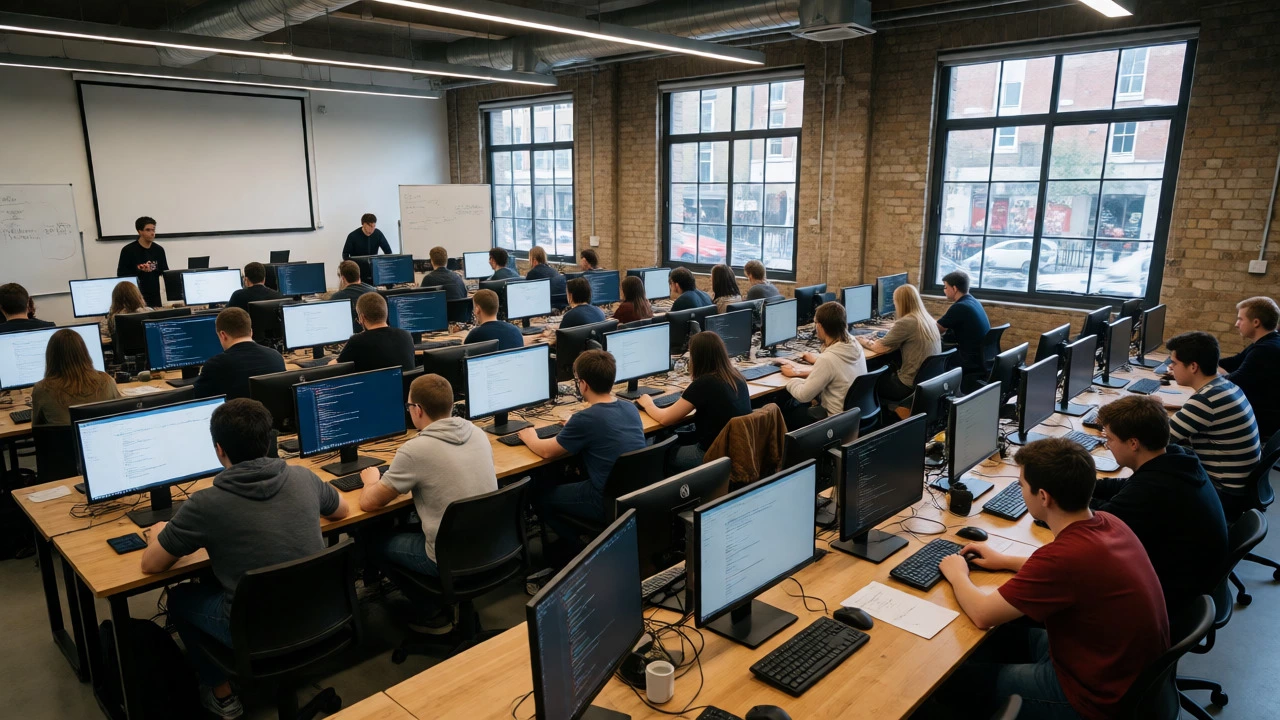
Tools and Equipment: What Do You Actually Need?
You do not need a $3,000 setup to start. Here is the realistic gear list for a beginner in 2026:
- Laptop: Any machine with 16GB RAM and an SSD. Apple Silicon M-series chips are great for battery life, but mid-range Windows laptops or Linux machines work perfectly. Budget: $800-$1,200 if buying new; less if refurbished.
- Monitor: Dual monitors boost productivity. A second 24-inch monitor costs around $100-$150.
- Internet: Reliable fiber connection. Essential for downloading dependencies and streaming lectures. Budget: $50-$80/month depending on location.
- Software: Git (free), Node.js (free), VS Code (free). You only pay for premium fonts or specialized IDEs if you really want them.
Don’t get trapped in "tool porn." Buying a mechanical keyboard or a standing desk won’t make you write better code. Focus on the skills first. Upgrade your hardware when your current setup actively slows you down.
Return on Investment: How Fast Do You Earn It Back?
So, you spent $15,000. How quickly do you recover it? Junior web developer salaries vary by region. In Dublin, a junior front-end developer might start at €35,000-€45,000. In the US, remote roles can start at $60,000-$80,000.
If you land a job paying $60,000 after a $15,000 bootcamp, you break even in about three months of gross salary (ignoring taxes for simplicity). Compare this to a self-taught path where you kept your old $40,000 job for a year while studying. You earned $40,000, but you delayed the career switch. The bootcamp accelerates the timeline, which is valuable if you’re eager to change industries.
However, the market is competitive. Paying for a course doesn’t guarantee a job. Employers hire based on portfolios and problem-solving ability, not certificates. If you spend $15,000 but don’t build strong projects, you’ve just bought an expensive hobby. Always prioritize building over passive video-watching.

Which Path Fits Your Personality?
Money isn’t the only constraint. Your personality matters more.
Choose Self-Taught if: You are highly disciplined, love research, have a stable income to support yourself, and learn well from documentation. You save money but must manage your own motivation.
Choose a Bootcamp if: You need external deadlines, crave community support, and want to fast-track your entry into the industry. You’re willing to invest capital to buy time and structure.
Choose University if: You are young, want a broad education, care about the brand name, or plan to pursue roles that require a formal degree (like some enterprise or government positions). It’s a long game.
In Dublin, many professionals opt for hybrid models: part-time evening courses at local colleges combined with self-study. This spreads the cost over time and allows you to keep earning. It’s slower, but financially safer.
Frequently Asked Questions
Is it possible to become a web developer for free?
Yes, absolutely. Platforms like freeCodeCamp, The Odin Project, and MDN Web Docs provide comprehensive curricula at no cost. Many successful developers are entirely self-taught using these resources. The main cost is your time and the need for high self-discipline to complete the material without external pressure.
Do employers care about bootcamp certificates?
Generally, no. Employers care about your portfolio, GitHub activity, and technical interview performance. A certificate proves you finished a course, but it doesn’t prove you can build production-ready software. However, some hiring managers view top-tier bootcamps as a signal of commitment and baseline knowledge, especially if you lack a CS degree.
How much does a coding bootcamp cost in Europe vs. the US?
US bootcamps typically range from $10,000 to $20,000. European prices vary by country but often align with local wage standards. In Ireland, full-time immersive programs can cost between €8,000 and €12,000. Part-time options are cheaper, often under €5,000. Always check if the price includes career coaching, as this adds significant value.
What is the biggest hidden cost of becoming a web developer?
The biggest hidden cost is opportunity cost-the income you forego while studying. If you quit a well-paying job to study full-time, you lose months of salary. Additionally, the mental energy required to switch careers can lead to burnout, which may force you to pause your studies, extending the timeline and increasing overall stress.
Are Income Share Agreements (ISAs) worth it?
ISAs can be beneficial if you lack upfront cash and trust the bootcamp’s job placement stats. However, they often result in higher total payments over time due to interest-like structures. Carefully review the cap on total repayment and the definition of "employment." If you fail to find a qualifying job within the timeframe, you might owe nothing, but you also gained no financial cushion.
Next Steps: Calculating Your Personal Budget
Grab a spreadsheet. List your current monthly expenses. Determine how many months you can survive without income. That number defines your maximum study duration if you go full-time. Then, compare that against the tuition costs of bootcamps or the subscription fees of self-study platforms.
If you have less than $2,000 saved, start with free resources today. Build three solid projects. Once you feel confident, consider investing in a targeted Udemy course or a part-time workshop to fill specific gaps. If you have $15,000+ and need a career switch now, research bootcamps with strong alumni networks in your target city. Visit their open days, talk to graduates, and ask about their job placement rates for people with your background.
Becoming a web developer is an investment in your future earning potential. Whether you spend $0 or $20,000, the key is ensuring that every dollar spent translates into tangible skills and a stronger portfolio. Don’t let the price tag scare you off; let it help you choose the right tool for your journey.