
JavaScript Learning Tracker
"The only thing that stops you is deciding to stop trying."
You’re 32. You’ve worked in retail for seven years. You’ve seen friends switch to tech, land remote jobs, and double their pay. You’ve watched YouTube videos of people building apps in weeks. And you’ve asked yourself: Is it too late to learn JavaScript? The answer isn’t yes or no. It’s you’re already behind-if you believe the myth.
JavaScript isn’t dying. It’s everywhere.
Every website you visit-Amazon, Facebook, your bank’s portal, even this one-runs on JavaScript. In 2026, over 98% of websites use it. Not as a bonus. Not as a fancy add-on. As the engine. It powers buttons, forms, animations, real-time chat, live maps, and dynamic shopping carts. Without JavaScript, the web would look like a 1998 GeoCities page.
And it’s not just browsers. JavaScript runs on servers with Node.js. It builds mobile apps with React Native. It powers desktop software like Slack and VS Code. Even smart fridges and fitness trackers use JavaScript in their interfaces. This isn’t a niche language. It’s the universal glue of digital life.
Age doesn’t matter. Consistency does.
A 58-year-old woman in Dublin learned JavaScript in six months and landed a junior frontend role at a local startup. A 45-year-old teacher in Cork switched careers after taking free Codecademy courses on nights and weekends. Their secret? They didn’t wait for the perfect time. They started with 20 minutes a day.
Studies from MIT and Stanford show that adults over 30 learn coding just as fast as teenagers-when given the right structure. The difference isn’t brain power. It’s fear. Fear of looking stupid. Fear of failing. Fear of being "too old." But code doesn’t care how old you are. It only cares if you show up.
When you’re younger, you have more free time. When you’re older, you have more focus. You know how to solve problems. You’ve dealt with real-world stress. You don’t get distracted by TikTok for three hours. You want results. That’s an advantage.
What you need to learn (and what you can skip)
You don’t need to master every JavaScript library ever made. You don’t need to memorize every ES2025 feature. You don’t need to become a React guru on day one.
Here’s what actually matters in 2026:
- Core JavaScript: Variables, functions, loops, arrays, objects, conditionals. Master these first.
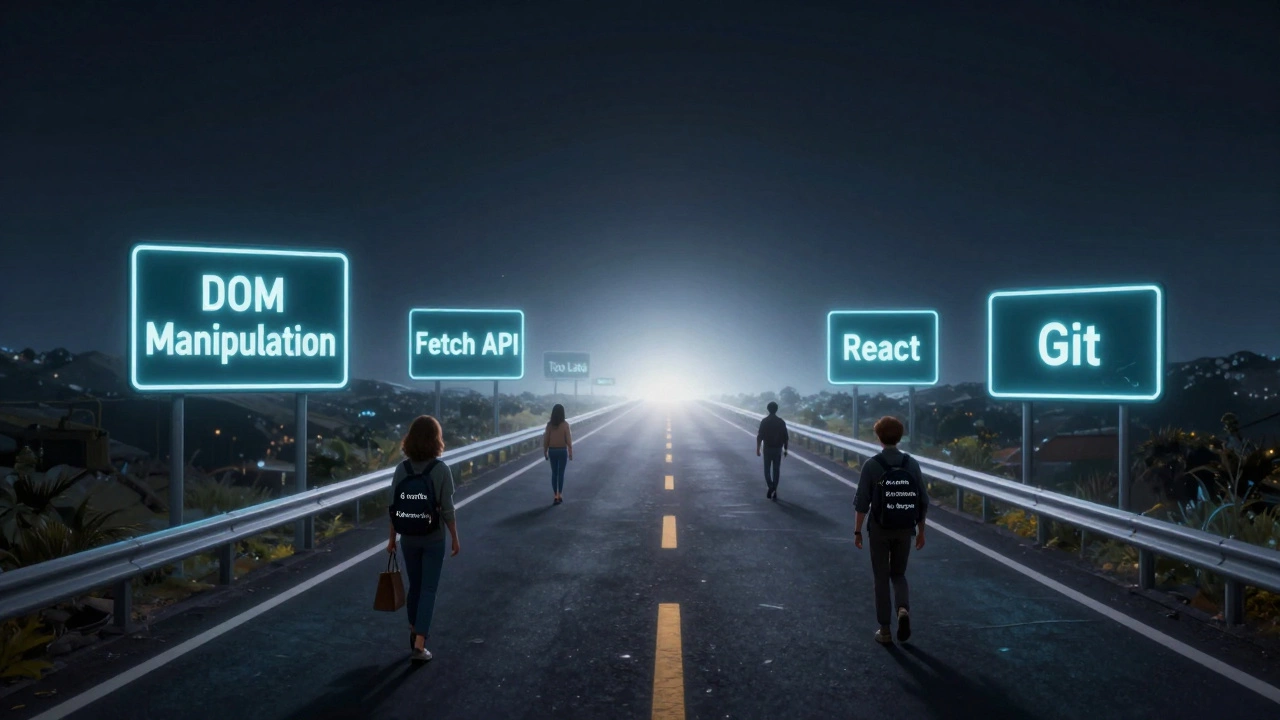
- DOM manipulation: How to change what’s on the page using JavaScript. This is where your code makes things happen.
- Fetch API: How to get data from servers. You’ll use this for everything from loading user profiles to showing weather updates.
- Basic HTML and CSS: JavaScript doesn’t work alone. Learn how to structure pages and style them.
- One framework: Pick React. It’s the most in-demand. Learn it after you’re comfortable with plain JavaScript.
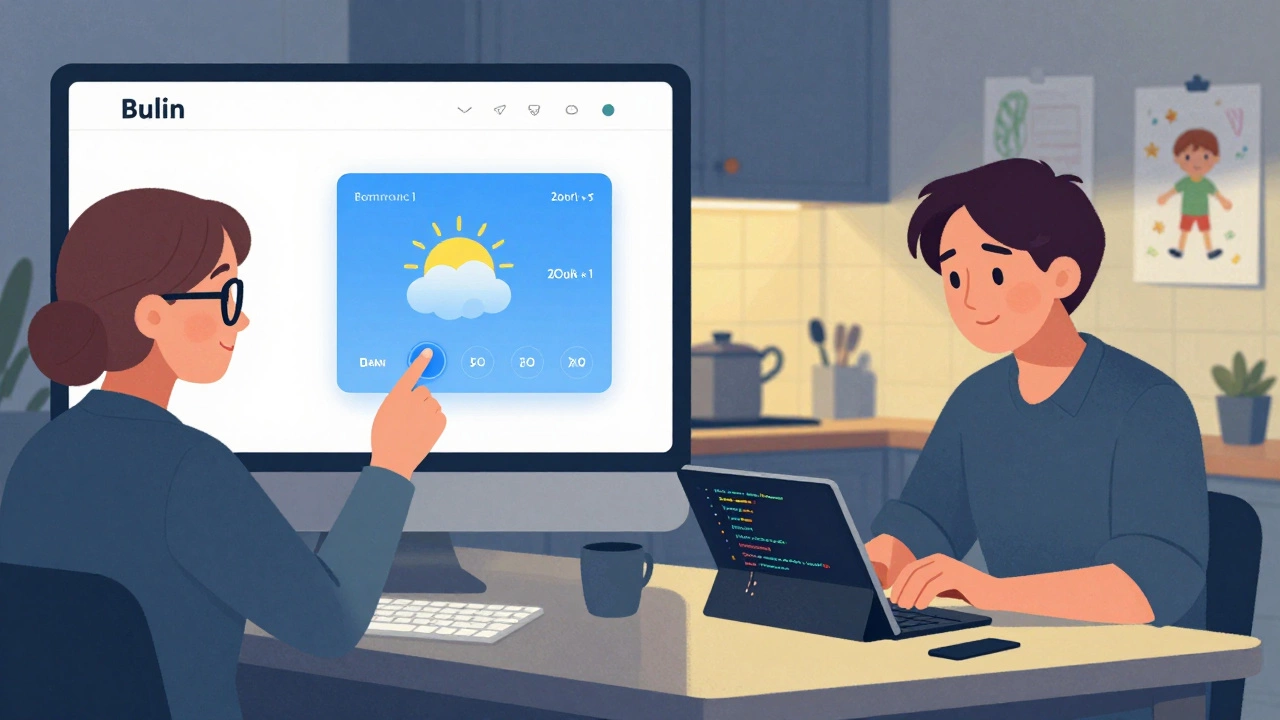
Skip the hype. Skip the 100-hour courses promising "full stack mastery." Focus on building small things: a to-do list, a weather widget, a quiz app. Each one teaches you more than ten videos.
The job market isn’t shrinking-it’s evolving
Yes, there are more developers than five years ago. But there are also more websites, more apps, more companies going digital. Every small business in Ireland now needs a website. Every local service-plumbers, electricians, hair salons-needs an online booking system. Most of them still use WordPress with plugins. But the ones that want to stand out? They hire people who can build custom JavaScript interfaces.
Companies aren’t just hiring for Silicon Valley roles anymore. They need people who can fix their Shopify store’s checkout flow. Or build a custom form for their dental clinic’s appointment system. Or automate their inventory tracker. These aren’t "senior developer" jobs. They’re junior or mid-level roles. And they pay €35,000-€50,000 in Ireland. No degree required.
LinkedIn data from 2025 shows that JavaScript-related job postings grew 22% year-over-year in Europe. The biggest growth? In small to medium businesses-not tech giants. That’s your opening.
Where to start (without spending a cent)
You don’t need a bootcamp. You don’t need a $2,000 course. You need:
- freeCodeCamp.org - Complete the Responsive Web Design and JavaScript Algorithms certifications. Do one lesson a day. Takes 6-8 weeks.
- JavaScript.info - The clearest, most practical JavaScript guide online. No fluff. Just clear examples.
- CodePen - Type code and see it run instantly. Build a button that changes color on click. That’s your first win.
- GitHub - Create an account. Push your projects there. It’s your portfolio. Even one working app beats ten certificates.
Set a timer for 30 minutes. Every day. No exceptions. Weekends too. After a month, you’ll notice you’re thinking differently. You’ll start seeing websites and thinking, "How did they do that?" That’s when learning becomes fun.
The real question isn’t "Is it too late?"
The real question is: Are you willing to be bad at first?
You will write code that doesn’t work. You’ll get error messages you don’t understand. You’ll copy-paste solutions without knowing why they work. That’s normal. Everyone does it. Even the people who seem like geniuses on YouTube. They just didn’t quit.
There’s no magic age cutoff. There’s no expiration date on curiosity. The only thing that stops you is deciding to stop trying.
JavaScript doesn’t care if you’re 19 or 59. It only cares if you type the code. And if you type it every day, you’ll get better. Not perfect. Just better. And better is enough to change your life.
Start today. Not tomorrow. Not next week. Today. Open your browser. Go to freeCodeCamp. Click "Beginner JavaScript." Type your first line of code. That’s it. You’re not too late. You’re just getting started.
What comes next?
After you’ve built a few small projects, you’ll want to:
- Learn Git and GitHub to track your progress
- Build a portfolio website with your projects
- Apply for junior roles or freelance gigs on Upwork or local job boards
- Join a local coding meetup in Dublin or Cork-most are free
There’s no finish line. There’s just the next project. And the one after that.
Is JavaScript still worth learning in 2026?
Yes. JavaScript is the most widely used programming language in the world. Every website you use depends on it. It powers everything from mobile apps to smart devices. Demand for JavaScript skills is growing, especially in small businesses and local services that need custom digital tools.
Can I learn JavaScript without a computer science degree?
Absolutely. Most JavaScript developers today never went to college for coding. Employers care more about what you can build than what’s on your diploma. A GitHub profile with three working projects will get you further than a degree with no code to show.
How long does it take to get a job with JavaScript?
Most people land their first role in 6 to 12 months with consistent daily practice. You don’t need to know everything. You just need to know enough to solve real problems. Start applying for junior roles after you’ve built 3-5 projects-even if they’re simple.
Is JavaScript too hard for older learners?
No. Adults often learn better than teens because they’re more focused and goal-driven. The challenge isn’t age-it’s patience. Coding is a skill, not a talent. Anyone can learn it with regular practice, even if progress feels slow at first.
What’s the best way to stay motivated?
Build things that matter to you. A calculator for your budget. A tracker for your running habits. A page that shows your favorite recipes. When your code solves a real problem in your life, you’ll keep going-even on days you feel stuck.