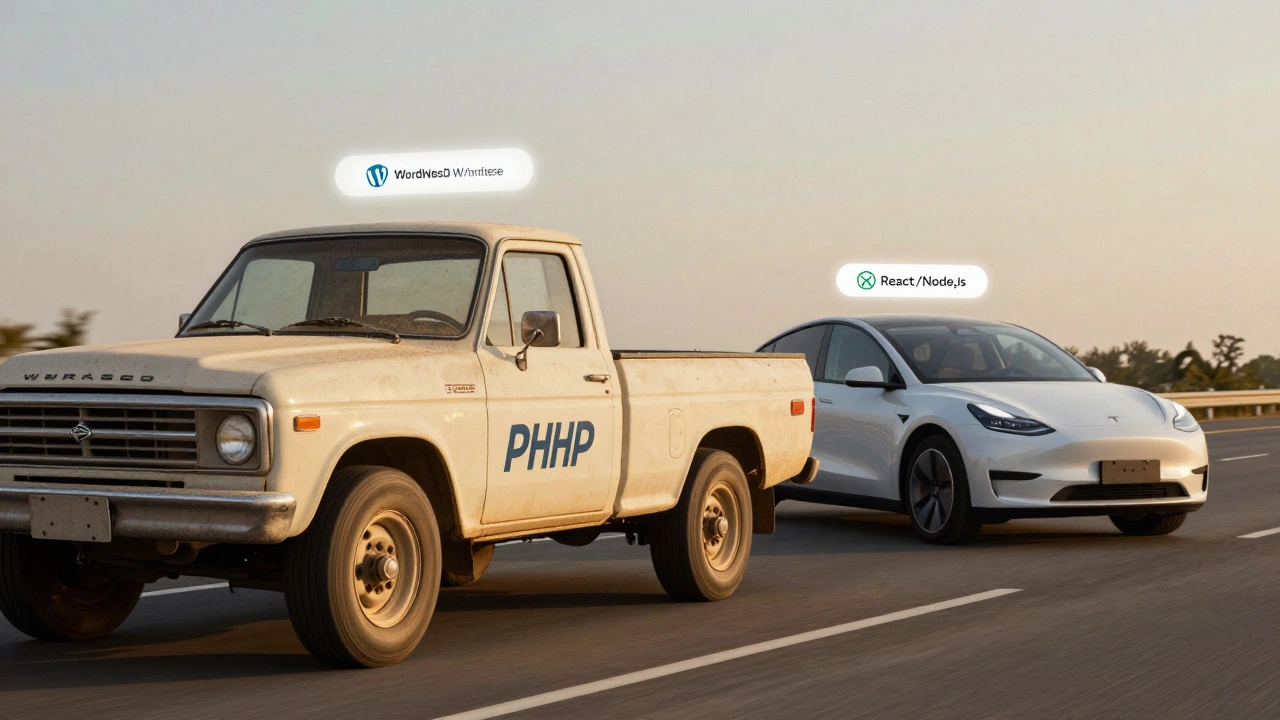
PHP used to run over 80% of all websites. Back in 2015, you couldn’t open a browser without running into a WordPress site, a Drupal portal, or a custom PHP app powering a small business. Today, that number’s dropped to around 75%. It’s not crashing-it’s slowing down. And people are asking: is PHP losing its value?
PHP still powers the web, just differently
PHP isn’t dead. It’s still the backbone of WordPress, which runs 43% of all websites on the internet. That’s over 1.5 billion sites. WooCommerce, Elementor, bbPress-all built on PHP. If you’re running an online store, a blog, or a local business site, you’re probably using PHP right now. Even companies like Etsy and Wikipedia still rely on it. The difference? PHP is no longer the shiny new tool. It’s the reliable old truck that still gets you to work every day.
PHP 8.2 and 8.3 brought real improvements: better performance, union types, readonly classes, and a JIT compiler that makes it 20-30% faster than PHP 7.4. That’s not a minor upgrade. That’s a leap. But most developers aren’t upgrading because their apps work fine. And that’s the problem-PHP’s strength is now also its weakness. It doesn’t need to change much because it’s already doing its job.
Why developers are moving away
Young developers today learn JavaScript first. Not because it’s better for everything, but because it’s everywhere. React, Vue, Svelte-front-end frameworks that run in the browser. Then Node.js lets them use the same language on the server. One language, one toolset, one learning curve. PHP feels like a separate world.
Stack Overflow’s 2024 developer survey showed JavaScript as the most-used language for the 12th year in a row. PHP didn’t even make the top 10 for “most loved.” It ranked 18th out of 25. That’s not about capability-it’s about perception. PHP is seen as outdated, even by people who use it. The stigma sticks.
There’s also the rise of APIs. Modern apps don’t serve HTML from the server anymore. They serve JSON. Front-end frameworks fetch data from REST or GraphQL endpoints. That means the backend doesn’t need to render pages-it just needs to respond. Python with Django REST Framework, or Node.js with Express, are now the go-to choices for API backends. PHP can do it, sure. But it’s not the first thing people think of.
Where PHP still wins
Here’s the truth: PHP is still the fastest way to build a simple website that needs a CMS, user logins, and a database. Want a blog with comments? WordPress. A product catalog with checkout? WooCommerce. A membership site? MemberPress. All PHP. No complex setup. No bundlers. No npm install taking 5 minutes.
Compare that to building the same thing with React + Next.js + Node.js + PostgreSQL. You need a build step. You need to manage state. You need to deploy two separate apps. You need to worry about hydration, SSR, and SEO. With PHP, you write a file, upload it, and it works. That’s why small agencies, freelancers, and local businesses still choose it. It’s not about being cutting-edge-it’s about being cost-effective.
And let’s not forget hosting. You can get a basic PHP site running on $3/month shared hosting. Try that with a Node.js app. You’ll need at least a $10 VPS. For someone managing five client sites, that’s $150/month in hosting alone. PHP wins on price, simplicity, and reliability.

The real competition isn’t JavaScript-it’s no-code
Here’s something no one talks about: the biggest threat to PHP isn’t Node.js. It’s Webflow, Bubble, and Carrd. These tools let non-developers build websites with drag-and-drop. No code. No servers. No PHP. And they’re growing fast. A survey by Builder.io found that 42% of small businesses now use no-code tools for their websites. That’s up from 19% in 2022.
PHP developers aren’t losing work because of JavaScript. They’re losing it because clients are bypassing them entirely. If you can build a website in an afternoon with no training, why hire a developer? That’s the real pressure point.
PHP isn’t being replaced by better code. It’s being replaced by better access.
Who still needs PHP developers?
Not everyone is moving away. Here’s who still hires PHP developers in 2025:
- Small to mid-sized agencies that maintain legacy WordPress sites for clients who don’t want to migrate.
- Ecommerce businesses using Magento (still PHP-based) or custom WooCommerce plugins.
- Government and education sites built on Drupal or custom PHP systems-slow to change, high security needs.
- Developers who specialize in PHP performance-optimizing slow WordPress sites, caching layers, database tuning.
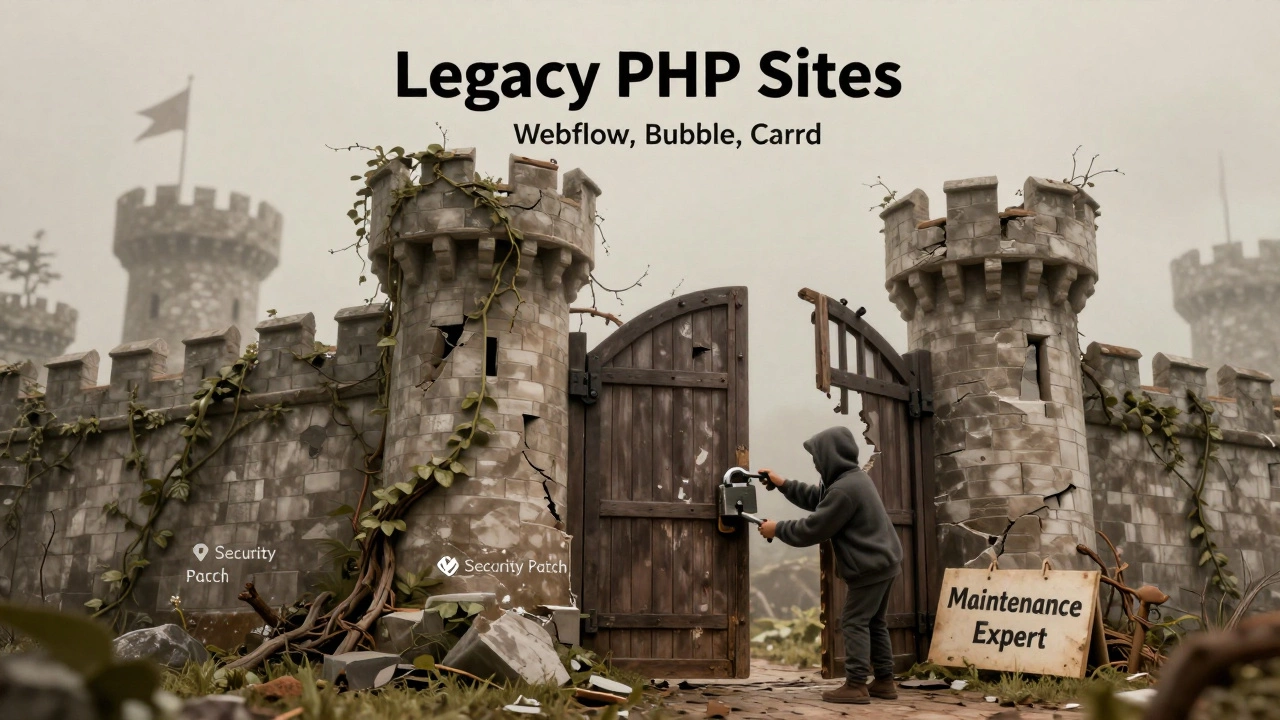
There’s a growing niche: PHP maintenance experts. Not the ones who build new sites. The ones who fix broken ones. Who upgrade old plugins. Who patch security holes in WordPress installations that haven’t been updated since 2020. That work pays well. And it’s not going away anytime soon.
What PHP developers should do now
If you’re a PHP developer, your job isn’t to fight JavaScript. It’s to adapt. Here’s what actually works:
- Learn Laravel-it’s PHP, but modern. Clean syntax, built-in tools, great documentation. Laravel powers over 2 million websites and is growing fast.
- Master WordPress performance-learn how to optimize caching, reduce database queries, use Redis, and fix slow themes. That’s a skill people will pay for.
- Add JavaScript to your toolkit-you don’t need to become a React expert. Learn how to connect a WordPress site to a headless front-end. That’s a high-value combo.
- Specialize in security-PHP sites are still the #1 target for hackers. Knowing how to harden WordPress, patch vulnerabilities, and audit plugins makes you indispensable.
- Offer migration services-many clients want to move off PHP but don’t know how. Position yourself as the person who helps them transition smoothly.
PHP isn’t dying. It’s becoming a niche. And niches can be profitable. The developers who thrive aren’t the ones trying to be trendy. They’re the ones who understand PHP’s real strengths: reliability, low cost, and deep integration with content systems.
The bottom line
Is PHP losing its value? Not really. It’s losing its dominance. And that’s okay. The web doesn’t need one language to rule them all. It needs the right tool for the job. For simple, content-heavy sites? PHP still wins. For complex, real-time apps? JavaScript or Python are better.
PHP’s value isn’t in being the future. It’s in being the foundation. Millions of sites still run on it. Millions more will for years to come. The question isn’t whether PHP is dead. It’s whether you’re still useful with it.
If you can fix, optimize, secure, and extend PHP systems-you’re not obsolete. You’re essential.
Is PHP still worth learning in 2025?
Yes-if you’re targeting small businesses, WordPress sites, or legacy systems. PHP is still the fastest way to build and maintain content-driven websites. But don’t learn it in isolation. Pair it with Laravel, WordPress optimization, and basic JavaScript to stay relevant.
Why do so many developers say PHP is outdated?
Because they learned modern frameworks first. PHP’s syntax feels clunky compared to JavaScript or Python. Its history includes poorly written code from the early 2000s, which still colors perception. But PHP 8+ is clean, fast, and well-designed. The issue isn’t the language-it’s the legacy.
Can PHP compete with Node.js for APIs?
Technically, yes. Laravel and Symfony can build robust APIs. But Node.js has the ecosystem advantage: Express, NestJS, and a massive npm library. Most teams choose Node.js for APIs because it’s familiar to their front-end devs. PHP isn’t blocked-it’s just not the default choice anymore.
Are PHP jobs disappearing?
New PHP jobs are fewer, but maintenance and migration work is growing. Companies with old WordPress or Drupal sites need help upgrading, securing, and speeding them up. That’s a steady stream of paid work. The decline is in new builds, not in upkeep.
Should I switch from PHP to JavaScript?
Only if you want to build new apps from scratch and enjoy working with modern tooling. If you’re happy maintaining existing sites and value speed and low cost, stay with PHP-but add JavaScript and Laravel to your skills. You don’t have to abandon PHP to stay employable.
PHP isn’t going anywhere. It’s just changing roles. The developers who survive aren’t the ones clinging to the past. They’re the ones who see PHP for what it is: a quiet, reliable workhorse that still runs half the web.