
Full-Stack Tech Stack Estimator
Select the technologies you are comfortable with to see how aligned your stack is with current market demands.
Your Profile Analysis
Select skills above to generate your analysis.
Imagine spending six months mastering pointers and memory management in C++, a powerful systems programming language known for its performance and control over hardware resources. You finally feel confident. Then you apply for your first full-stack developer role, only to realize the job description asks for React, Node.js, and SQL. Not a single mention of C++. You might be asking yourself if you wasted your time or if there is a hidden requirement you missed.
The short answer is no. C++ is not required to become a successful full-stack developer in 2026. In fact, it is rarely used in standard web application development. However, understanding why companies still list it occasionally-and when you actually need it-can save you years of confusion. This guide breaks down the reality of the tech stack landscape so you can focus on the skills that actually get you hired.
The Reality of Modern Web Stacks
To understand why C++ isn't mandatory, we first need to look at what a full-stack developer actually does day-to-day. Most modern web applications are built using high-level languages that prioritize speed of development and ease of maintenance over raw computational power. The industry standard revolves around JavaScript (and its superset TypeScript) for both front-end and back-end development.
On the client side, frameworks like React, a JavaScript library for building user interfaces maintained by Meta, Vue, or Angular dominate the market. These tools run in the browser, which is essentially a JavaScript engine. On the server side, Node.js allows developers to use JavaScript to handle requests, interact with databases, and manage APIs. Other popular back-end choices include Python (with Django or Flask), Ruby (with Rails), and PHP (with Laravel).
These languages abstract away the complex details of memory management and hardware interaction. They let you build features quickly. If you are building an e-commerce site, a social media platform, or a SaaS dashboard, you will almost never touch C++ code. Your primary concern is data flow, user experience, and database integrity, not optimizing CPU cycles at the assembly level.
Where Does C++ Fit In?
If C++ isn't used for typical web apps, why does it still exist in the tech world? It is crucial for performance-critical systems. Think about video games, operating systems, high-frequency trading platforms, and embedded devices. These applications require direct access to hardware and minimal latency. C++ provides that control.
In the context of web development, C++ appears in specific niches:
- WebAssembly (Wasm): Some high-performance web applications compile C++ code to WebAssembly to run in the browser. This is common for photo editors, CAD software, or complex simulations running online.
- Backend Microservices: Rarely, a company might write a specific microservice in C++ if it handles massive amounts of data processing where every millisecond counts.
- Browser Engines: The core of Chrome (Blink) and Firefox (Gecko) are written in C++. While you don't write these engines, understanding them helps explain why browsers behave the way they do.
Unless you are targeting one of these specialized areas, learning C++ as your first step into full-stack development is like buying a Formula 1 car to drive to the grocery store. It’s impressive, but it’s not practical for daily errands.
The "C++" Confusion: C vs. C++ vs. C#
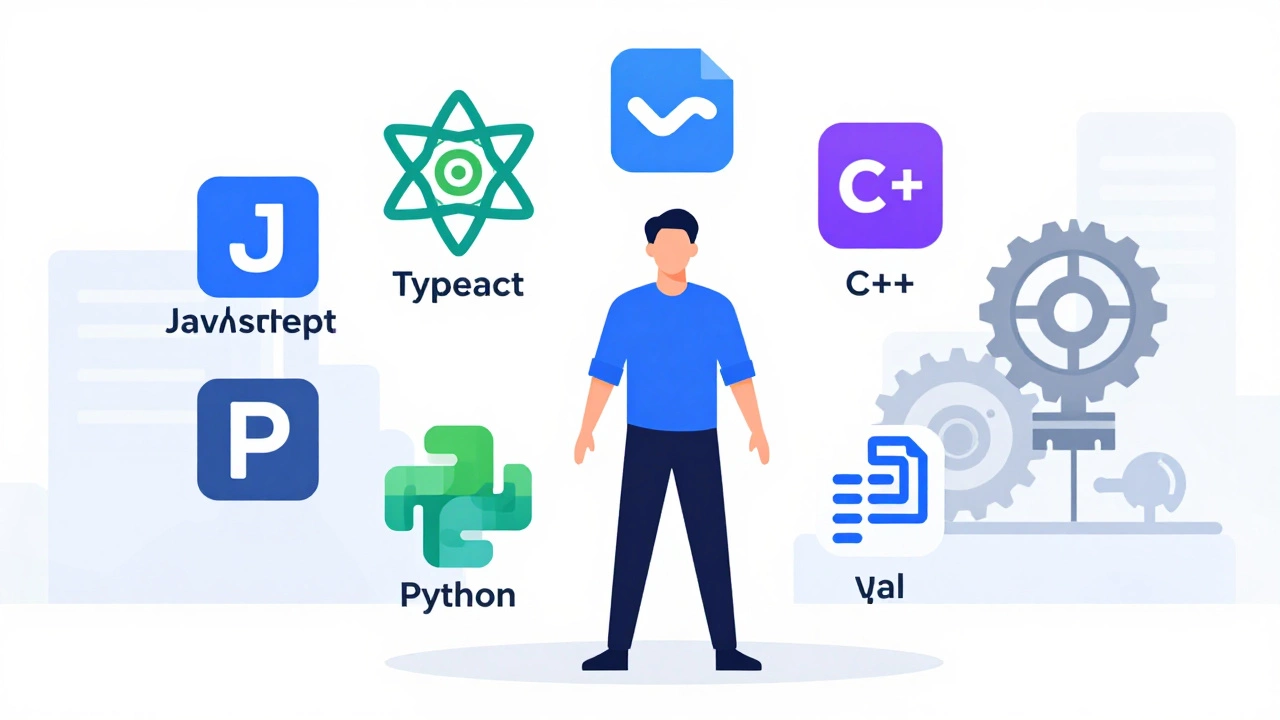
A significant source of confusion for beginners comes from similar-looking language names. Job postings sometimes list "C-family languages" or candidates mistake one for another. Let’s clear this up:
| Language | Primary Use Case | Relevance to Full-Stack | Learning Curve |
|---|---|---|---|
| JavaScript | Frontend & Backend | Essential | Low to Medium |
| TypeScript | Frontend & Backend | Highly Recommended | Medium |
| Python | Backend, AI, Scripts | High | Low |
| Java | Enterprise Backend | Medium | Medium |
| C# | Backend (.NET) | Medium | Medium |
| C++ | Systems, Games | Very Low | High |
Note the difference between C# and C++. C# is widely used in enterprise environments with the .NET framework. Many large corporations use C# for their back ends. If you see a job posting for a "C-family" developer, they likely mean C#. C++ is distinctly different and much harder to learn due to manual memory management.
What Skills Actually Matter in 2026?
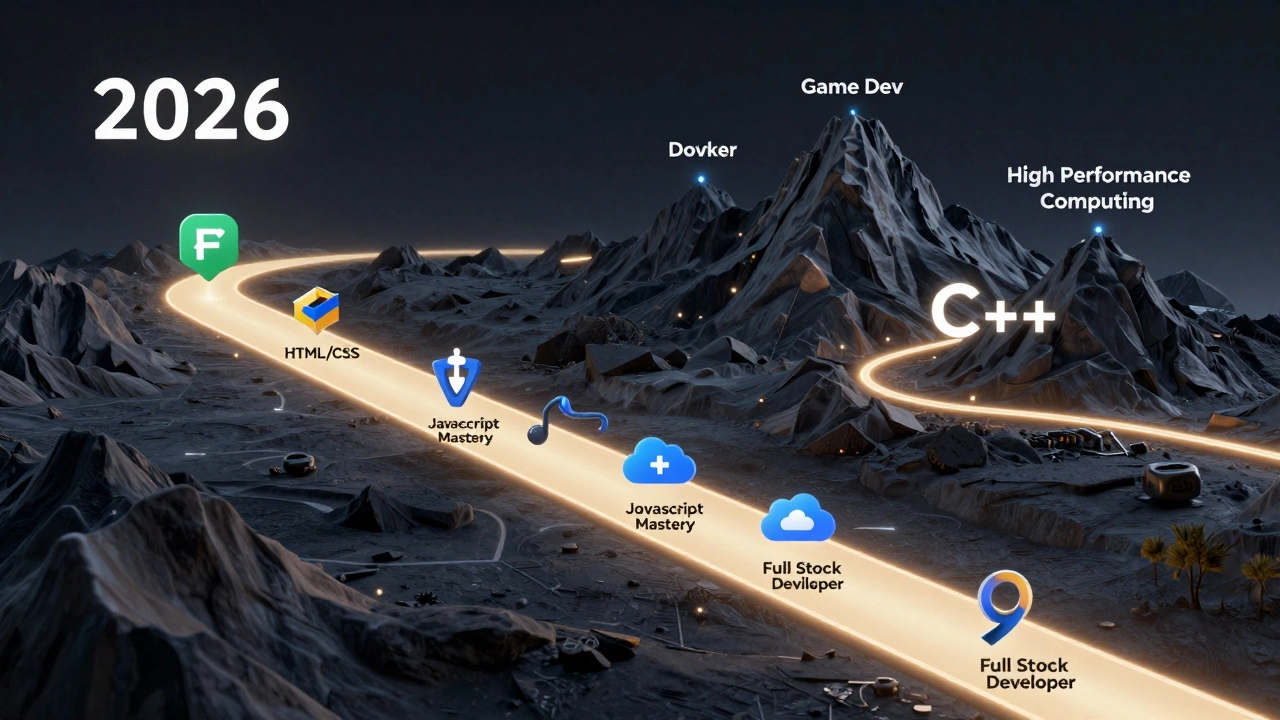
Instead of worrying about C++, focus on the core competencies that define a modern full-stack developer. The market in 2026 values versatility and depth in the JavaScript ecosystem more than ever.
- HTML/CSS Fundamentals: You cannot build the web without understanding structure and style. Learn Flexbox, Grid, and responsive design principles.
- JavaScript Mastery: Go beyond the basics. Understand closures, promises, async/await, and the event loop. This is the glue that holds everything together.
- Frontend Framework: Pick one major framework. React remains the most popular, but Vue and Svelte are growing. Learn component-based architecture.
- Backend Runtime: Node.js is the easiest transition for frontend developers. Alternatively, learn Express.js for building RESTful APIs.
- Databases: Understand both SQL (PostgreSQL, MySQL) and NoSQL (MongoDB, Redis). Know when to use relational data versus document stores.
- DevOps Basics: Familiarize yourself with Docker, CI/CD pipelines, and cloud providers like AWS or Vercel. Deploying your app is part of the job.
These skills allow you to build complete applications from scratch. They are directly applicable to 95% of job openings for junior and mid-level full-stack roles.
When Should You Learn C++?
There are scenarios where adding C++ to your resume makes sense. If you are interested in game development, machine learning infrastructure, or high-performance computing, C++ is indispensable. It teaches you how computers really work under the hood. Understanding memory allocation, pointers, and compilation processes can make you a better programmer overall, even if you stick to JavaScript for your day job.
However, this should be a secondary interest. Do not start with C++. Start with JavaScript, build a few projects, get comfortable with the web platform, and then explore C++ out of curiosity. This approach prevents burnout and keeps you relevant to the immediate job market.
Common Misconceptions About Language Requirements
Many new developers fall into the trap of thinking they need to know every language listed in a job description. This is unrealistic. Job descriptions are often wish lists created by HR teams copying from other posts. When hiring managers review applications, they look for proficiency in the core stack and the ability to learn new technologies.
Another myth is that low-level languages make you a "better" developer. While C++ forces you to think carefully about resource usage, it doesn’t automatically translate to better web architecture. Good software engineering practices-clean code, testing, modularity-are language-agnostic. You can write terrible code in JavaScript or excellent code in C++. The tool doesn’t determine the quality; the developer does.
Can I get a job as a full-stack developer without knowing C++?
Yes, absolutely. The vast majority of full-stack positions require JavaScript, HTML, CSS, and a backend language like Node.js, Python, or Java. C++ is rarely a requirement unless the role involves specific high-performance computing tasks.
Is C++ harder to learn than JavaScript?
Generally, yes. C++ requires manual memory management and has a steeper learning curve due to its complexity and strict syntax. JavaScript is more forgiving and easier to pick up for beginners, making it a better starting point for web development.
Should I learn C# instead of C++ for web development?
If you are interested in enterprise-level backend development, C# is a strong choice. It is widely used in corporate environments with the .NET framework. Unlike C++, C# is designed for rapid application development and integrates well with web technologies.
Does knowing C++ help me understand JavaScript better?
It can provide deeper insights into how engines work, but it is not necessary. Most JavaScript concepts are best understood through practice with the language itself. Focusing on JavaScript fundamentals will yield faster results for web development careers.
What is the best first language for aspiring full-stack developers?
JavaScript is the best first language because it runs on both the client and server sides. Learning JavaScript allows you to build entire applications without switching contexts, making it the most efficient path to becoming a full-stack developer.