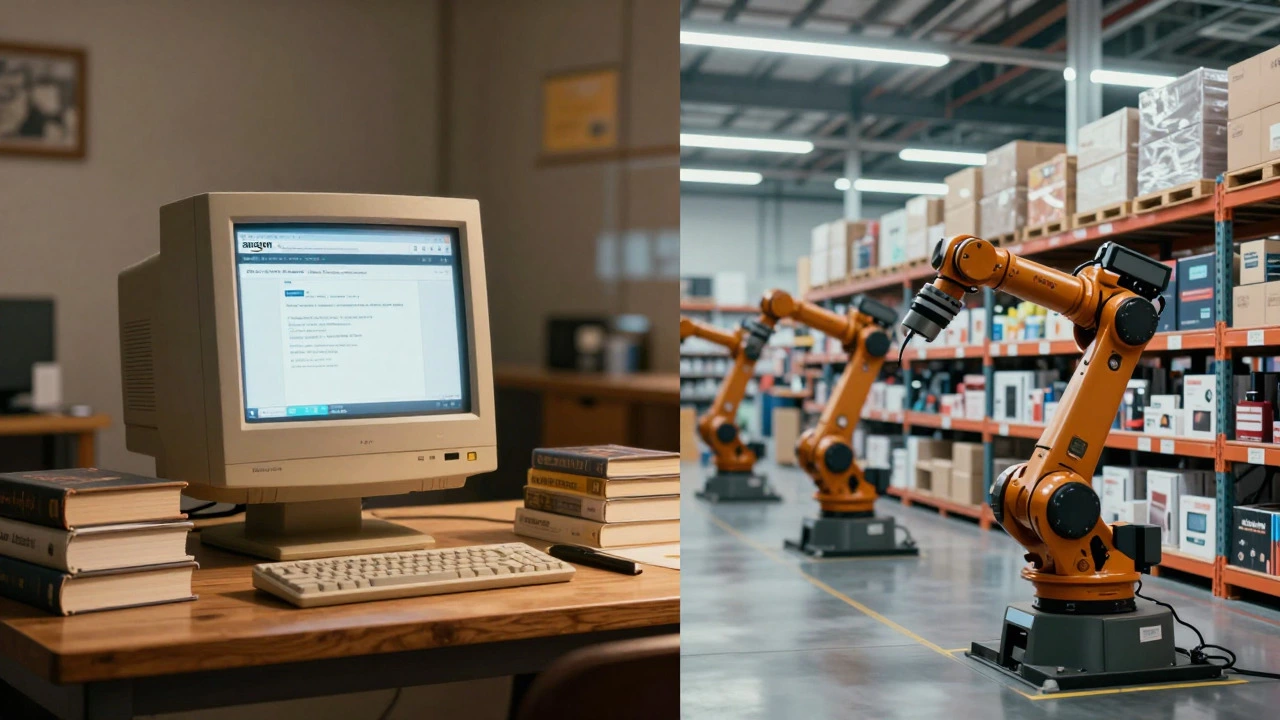
Amazon Evolution Timeline Explorer
How to use: Click on any year marker or use the arrow buttons to explore how Amazon transformed from a simple bookstore into the world's largest online marketplace.
Loading...
Loading...
When you think about shopping online, one name usually pops up first. You probably click on it without even thinking twice. But if someone asked you, "Is Amazon actually an e-commerce company?" would you pause for a second? It seems like a silly question, right? Of course, it is. They sell everything from books to blenders. But the reality is a bit more complex than just "yes."
Amazon started as a simple bookstore in 1994. Today, it is a global giant that does way more than just move boxes from warehouses to doorsteps. To understand what Amazon really is, we have to look past the homepage and see how its business model works. This article breaks down why Amazon is the definition of modern e-commerce, but also explains the other massive parts of its empire that don't involve selling you a new pair of shoes.
The Origin Story: From Books to Everything Store
Jeff Bezos founded Amazon in July 1994. He chose books because they were easy to ship, had a huge market, and could be sold at lower prices than physical stores. Back then, the internet was slow, and credit cards weren't trusted by everyone. Selling a book online felt risky. But Bezos saw the potential. He wanted to build a store that could sell anything.
This vision turned Amazon into the "Everything Store." Over the decades, the catalog grew. First came music and videos. Then electronics, clothing, home goods, and groceries. By the early 2000s, Amazon had established itself as the go-to place for online retail. If you needed something delivered fast, you went to Amazon. This core function-selling physical goods directly to consumers over the internet-is the textbook definition of e-commerce.
| Year | Key Development | Impact on E-commerce Status |
|---|---|---|
| 1994 | Founded as an online bookstore | Proved direct-to-consumer online sales worked |
| 1998 | Expanded to music, video, electronics | Became a general retailer |
| 2000 | Launched Third-Party Seller Platform | Shifted from pure retailer to marketplace |
| 2005 | Introduced Amazon Prime | Changed consumer expectations for shipping speed |
| 2015 | Acquired Whole Foods Market | Merged online retail with brick-and-mortar grocery |
Direct Retail vs. The Marketplace Model
Here is where things get interesting. When you buy a product on Amazon, who is actually selling it to you? Sometimes it is Amazon itself. In these cases, Amazon buys inventory from manufacturers, stores it in their warehouses, and ships it to you. This is traditional e-commerce retail. Think of it like a digital Walmart or Target.
But more often than not, especially today, you are buying from a third-party seller. Amazon provides the platform, handles the payment processing, and sometimes even the shipping (through Fulfillment by Amazon, or FBA). The seller lists the item, sets the price, and makes the profit. Amazon takes a cut. This makes Amazon a marketplace, similar to eBay but with much stricter controls and integrated logistics.
Does this change whether it is e-commerce? No. Both models fall under the e-commerce umbrella. Direct retail is B2C (Business-to-Consumer) e-commerce. The marketplace model is C2C (Consumer-to-Consumer) or B2B2C (Business-to-Business-to-Consumer) e-commerce. Whether Amazon owns the box or a small business in Ohio does, the transaction happens online. That is the key.
Beyond Retail: AWS and Digital Services
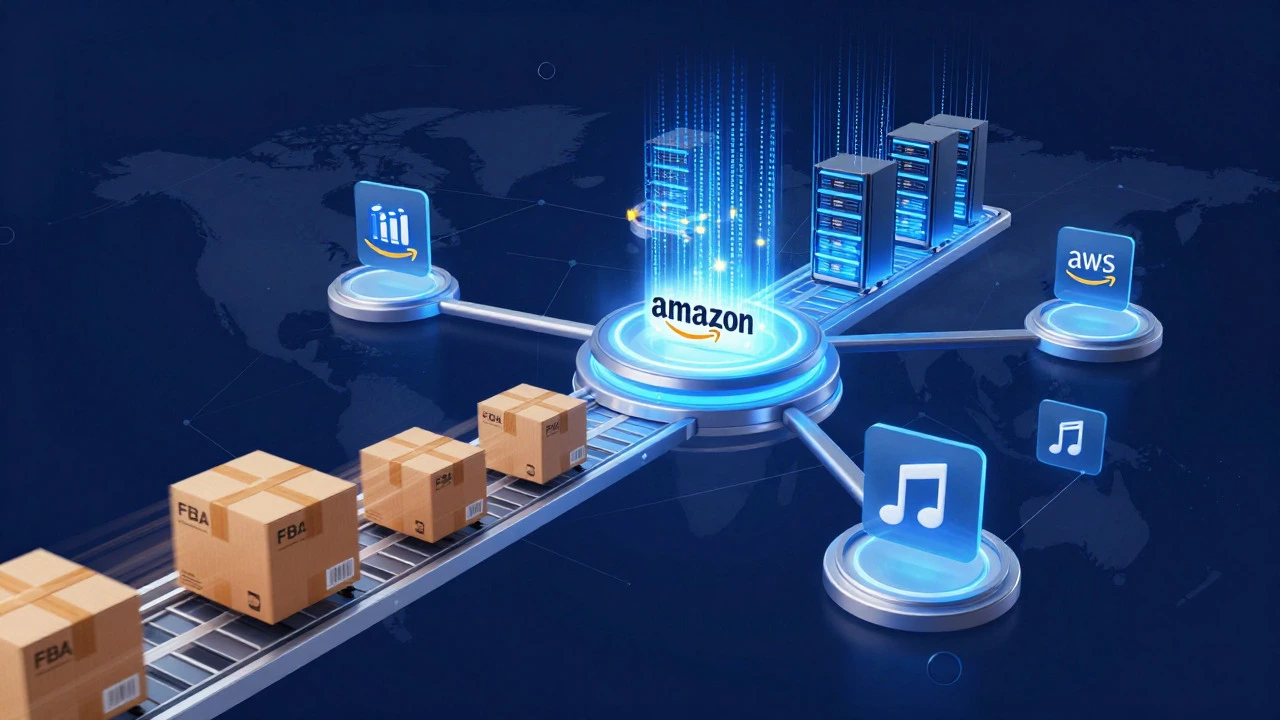
If Amazon only sold stuff, it would still be a huge e-commerce company. But it is also the backbone of the internet itself. Enter Amazon Web Services (AWS). Launched in 2006, AWS provides cloud computing services. It hosts websites, runs apps, and stores data for millions of businesses, including Netflix, NASA, and countless startups.
AWS is not e-commerce in the traditional sense. It is B2B (Business-to-Business) technology infrastructure. However, it supports e-commerce globally. Many independent online stores run on AWS servers. So, while AWS isn't selling you a toaster, it enables the digital storefronts that do. This dual identity makes Amazon unique. It is both the shopkeeper and the landlord of the digital economy.
Then there is digital content. Amazon sells eBooks through Kindle, movies through Prime Video, and music through Amazon Music. These are digital downloads or streaming services. This is another form of e-commerce, specifically digital goods commerce. Unlike physical products, there is no shipping involved. The value is in the license to access the content. This expansion into digital media solidified Amazon's position as a comprehensive digital lifestyle hub.
How Amazon Defines Modern E-commerce Standards
Amazon didn't just participate in e-commerce; it rewrote the rules. Before Amazon, online shopping was often slow, unreliable, and frustrating. Returns were a nightmare. Shipping costs were high. Amazon changed all that with a few key innovations.
- One-Click Ordering: Patented in 1999, this feature reduced friction in the checkout process. It made buying as easy as clicking a button. Other sites had to adapt to match this convenience.
- Customer Reviews: Amazon built trust by letting buyers share honest opinions. This social proof became essential for online shoppers. Without reviews, many people hesitate to buy unfamiliar brands online.
- Prime Membership: Launched in 2005, Prime offered free two-day shipping for an annual fee. This created a loyalty loop. Once you paid for Prime, you naturally shopped more on Amazon to get your money's worth. It shifted the focus from price per item to overall convenience.
- Fulfillment by Amazon (FBA): This allowed third-party sellers to use Amazon's logistics network. Sellers stored their goods in Amazon warehouses. Amazon picked, packed, and shipped them. This ensured fast delivery for customers and scalability for sellers.
These features set the standard for the entire industry. Even competitors like Walmart and Target had to invest heavily in their own logistics and membership programs to keep up. Amazon proved that speed and reliability were just as important as low prices.
Is Amazon Still Growing?
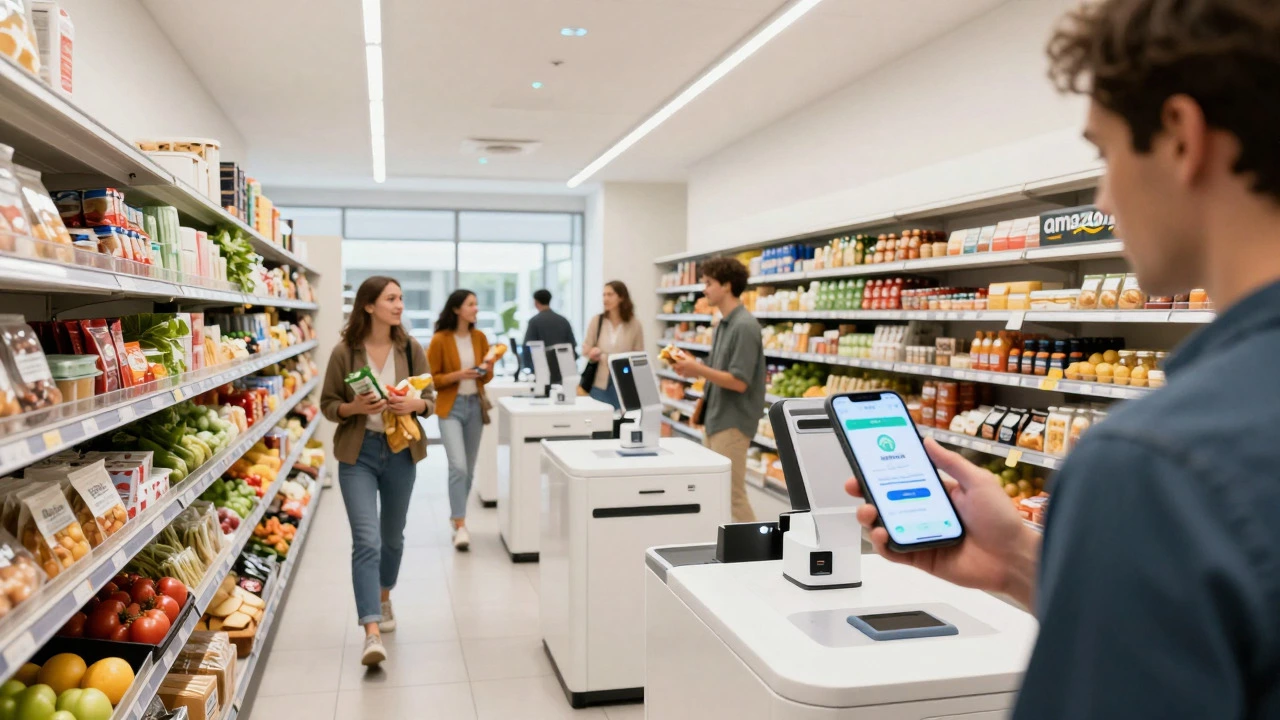
As of 2026, Amazon continues to evolve. The rise of AI and machine learning has personalized shopping experiences further. Recommendations are now incredibly accurate, driving higher conversion rates. Amazon Go stores, which use cashier-less technology, blend physical and digital retail. You walk in, grab what you need, and walk out. Your account is charged automatically. This is the future of omnichannel e-commerce.
Amazon also faces challenges. Regulatory scrutiny is increasing. Governments are looking closely at its market dominance. There are concerns about labor practices in warehouses. Competition from Temu, Shein, and TikTok Shop is heating up, especially among younger shoppers. Despite this, Amazon's scale and infrastructure remain unmatched. Its ability to integrate retail, logistics, cloud computing, and entertainment creates a moat that is hard to cross.
Why This Matters for Businesses
If you are running a business, understanding Amazon's role is crucial. For many brands, Amazon is not just a sales channel; it is a primary revenue source. Listing on Amazon gives you instant access to millions of active buyers. But it comes with trade-offs. You pay fees, compete with similar products, and risk losing control over your brand image.
Alternatively, you can build your own e-commerce site using platforms like Shopify or WooCommerce. This gives you full control but requires more work in marketing and customer acquisition. Many successful businesses use a hybrid approach. They sell on Amazon for volume and reach, while maintaining their own website for branding and direct customer relationships.
Knowing that Amazon is fundamentally an e-commerce company helps you make better strategic decisions. It means you are competing in a mature, highly optimized marketplace. You need to optimize your listings, manage inventory carefully, and leverage data analytics to stay ahead.
The Verdict: Yes, But It Is More
So, is Amazon e-commerce? Absolutely. At its heart, it is a retailer that sells goods online. It processes billions of transactions every year. It connects buyers and sellers across the globe. That is the essence of e-commerce. But calling it just an e-commerce company undersells its complexity. It is a logistics powerhouse, a cloud computing leader, a media studio, and a technology innovator.
For consumers, Amazon represents convenience and choice. For businesses, it represents opportunity and competition. For the internet, it represents infrastructure. As we move further into the digital age, Amazon's influence will only grow. Understanding its multifaceted nature helps us navigate the modern economy smarter.
Is Amazon considered a B2C or B2B company?
Amazon operates in both sectors. Its retail arm is primarily B2C (Business-to-Consumer), selling directly to shoppers. However, Amazon Business serves B2B (Business-to-Business) clients, offering bulk pricing and procurement tools. Additionally, AWS is a major B2B service provider, hosting infrastructure for other companies.
What percentage of Amazon's revenue comes from e-commerce?
While exact percentages fluctuate quarterly, historically, the majority of Amazon's revenue comes from its North American and International segments, which include online stores and third-party seller services. AWS contributes a smaller portion of revenue but a significant portion of operating income due to higher profit margins.
How does Amazon differ from eBay?
eBay is primarily a peer-to-peer auction and fixed-price marketplace. Amazon is a hybrid retailer and marketplace. Amazon sells its own inventory alongside third-party sellers, offers integrated logistics via FBA, and focuses heavily on new products rather than used or collectible items found on eBay.
Can small businesses succeed on Amazon?
Yes, many small businesses thrive on Amazon. Using Fulfillment by Amazon (FBA) allows them to compete with larger brands on shipping speed and reliability. Success requires careful keyword optimization, competitive pricing, and excellent customer service to maintain high ratings.
Is Amazon Web Services (AWS) part of e-commerce?
Not directly. AWS is a cloud computing service. However, it enables e-commerce by hosting online stores, processing payments, and managing databases for retailers worldwide. It is the infrastructure behind much of the digital economy, including many e-commerce platforms.