
Ecommerce Profitability Calculator
Net Profit Per Unit
Profit Margin
Enter values to see results
Input your selling price, costs, and order volume to analyze your store's financial health based on current market realities.
Here is the hard truth: most ecommerce sites do not make money. In fact, if you look at the raw data from the last five years, about 90% of new online stores fail within their first year. That leaves only a slim 10% that survive long enough to see consistent profits. So, when you ask if ecommerce makes money, the answer isn't a simple yes or no. It is a question of whether your specific business model can withstand the razor-thin margins and fierce competition of the digital marketplace.
You are not alone in asking this. With the barrier to entry lower than ever-thanks to platforms like Shopify and WooCommerce-anyone with a credit card can launch a store today. But launching is easy; profiting is hard. The landscape has shifted dramatically by 2026. The era of "buy low, sell high" on generic products is dead. Today, profitability comes from brand equity, customer retention, and operational efficiency. If you are thinking about starting an online store, or if you are already struggling to turn a profit, you need to understand exactly where the money goes and how to keep it.
The Reality of Ecommerce Margins
To understand if you will make money, you first need to understand what "profit" actually looks like in this industry. Unlike a software business where selling one more copy costs almost nothing, physical goods have heavy overheads. A typical successful ecommerce business operates on a net profit margin of 5% to 15%. That means for every $100 you sell, you might only keep $10 after paying for everything.
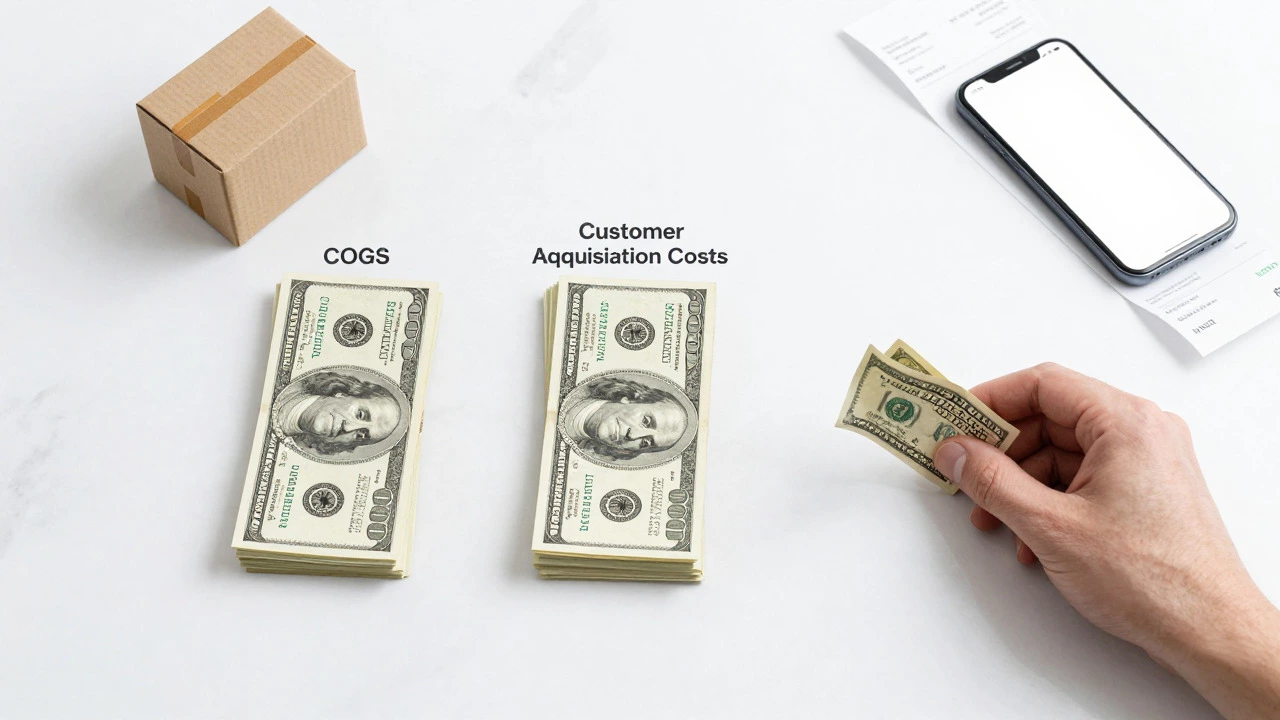
Where does the rest of that $90 go? It disappears into three main buckets: Cost of Goods Sold (COGS), Customer Acquisition Costs (CAC), and Operational Overhead. Let’s break these down because this is where most beginners get blindsided.
- Cost of Goods Sold (COGS): This includes the product itself, packaging, and shipping to the fulfillment center. If you buy a t-shirt for $10, your COGS isn’t just $10. It’s $10 plus the box, the label, and the freight to get it to the warehouse. Expect COGS to eat up 30-40% of your revenue.
- Customer Acquisition Costs (CAC): This is the biggest killer of ecommerce dreams. In 2026, organic traffic from social media is nearly non-existent for new brands. You have to pay for ads on Meta, Google, or TikTok. If you spend $30 in ads to make a $100 sale, your CAC is 30%. Combine that with COGS, and you are left with very little room for error.
- Operational Overhead: Platform fees (Shopify takes ~2%), payment processing fees (Stripe/PayPal take ~2.9% + $0.30 per transaction), returns management, and customer support. These small percentages add up quickly.
If your math doesn’t account for all three, you aren’t making money-you’re just moving cash around until you run out.
Business Models That Actually Print Money
Not all ecommerce stores are created equal. Some models are structurally designed to be profitable, while others are traps. Your choice of business model dictates your potential profit ceiling and your risk level.
| Model | Upfront Cost | Margin Potential | Risk Level | Best For |
|---|---|---|---|---|
| Private Label / Inventory | High ($5k+) | High (40-60%) | High | Building long-term brands |
| Dropshipping | Low ($500) | Low (10-20%) | Medium | Testing products quickly |
| Digital Products | Very Low | Very High (80-90%) | Low | Experts, creators, educators |
| Subscription Boxes | Medium | Medium (20-30%) | Medium | Consumables (coffee, beauty) |
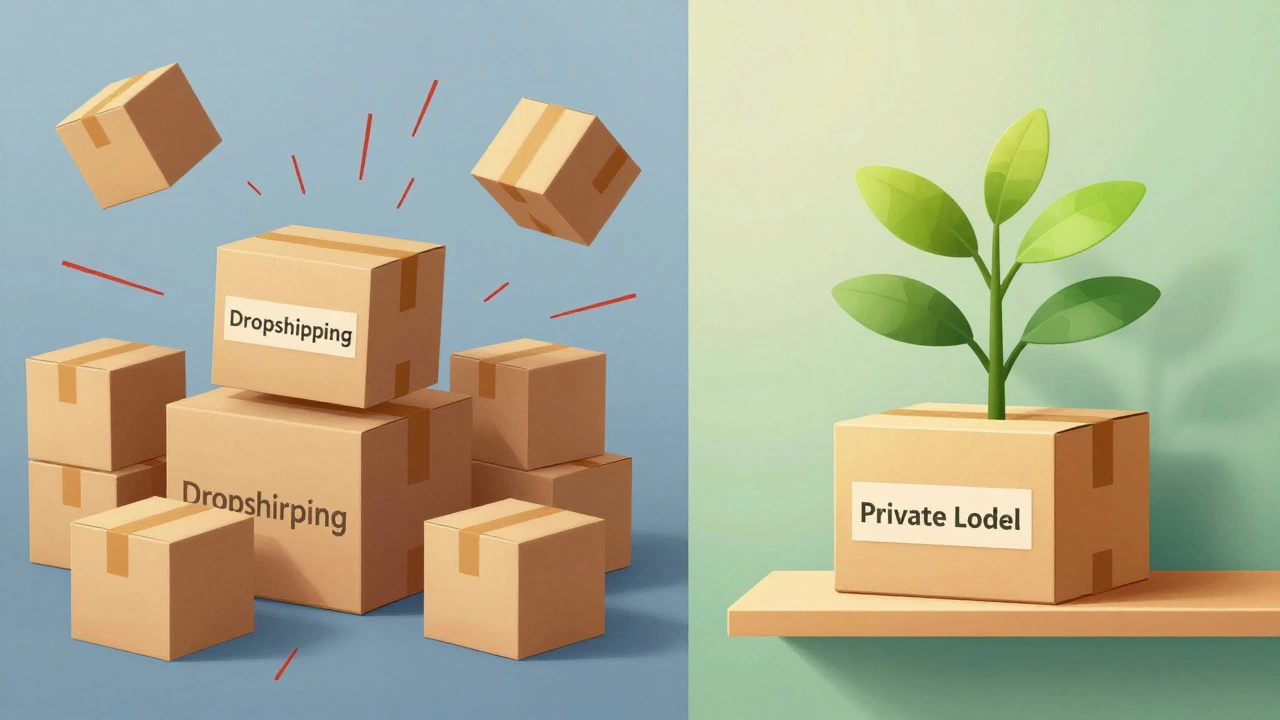
Private Label is the gold standard for building real wealth. You buy products in bulk from manufacturers (often in Asia or locally), put your brand on them, and hold the inventory. Because you control the supply chain, you can negotiate better prices and improve quality. The downside is the upfront capital required. You need to buy stock before you sell it. If it doesn’t sell, you lose money. However, successful private label brands like Gymshark or Allbirds show that this path leads to the highest valuations and profits.
Dropshipping is often sold as a "get rich quick" scheme, but in reality, it is a volume game with thin margins. Since you don’t hold inventory, your risk is low. But since you rely on third-party suppliers, your control over shipping times and quality is minimal. In 2026, customers expect fast delivery. Dropshippers who succeed are those who treat it as a testing ground for products, eventually moving to private label once they find a winner.
Digital Products are the secret weapon for high profitability. Selling an ebook, a course, or software has near-zero marginal cost. Once you create the product, selling it to 10 people or 10,000 people costs roughly the same. This model bypasses shipping, returns, and inventory entirely. If you have expertise, this is the fastest route to cash flow.
The Hidden Profit Killer: Returns and Churn
Many entrepreneurs focus solely on getting the first sale. They forget that the first sale is just the beginning of the financial relationship. Two metrics determine if you stay in business: Return Rate and Customer Lifetime Value (LTV).
In fashion ecommerce, return rates can hit 30-40%. When a customer returns an item, you don’t just lose the profit. You lose the shipping cost both ways, and the item may be damaged and unsellable. A 30% return rate can wipe out a 15% net margin instantly. To combat this, successful stores invest in accurate sizing guides, high-quality video content, and easy return policies that build trust rather than fear.
On the flip side, Customer Lifetime Value (LTV) is your lifeline. If it costs you $30 to acquire a customer who spends $100 once, you made $70 (before COGS). But if that customer comes back six months later and spends another $100, your acquisition cost effectively drops to $15. The second sale is pure profit. Brands that master email marketing and loyalty programs increase LTV by turning one-time buyers into repeat customers. This is why companies like Dollar Shave Club thrive-they lock in recurring revenue, smoothing out the volatility of ad spending.
How to Ensure Your Store Makes Money
If you want to join the 10% that succeed, you need to stop guessing and start optimizing. Here is a practical checklist to ensure your ecommerce site is built for profit, not just traffic.
- Niche Down Aggressively: Don’t sell "electronics." Sell "ergonomic keyboards for programmers." Specificity reduces competition and allows you to charge premium prices. General stores compete on price; niche stores compete on value.
- Master Unit Economics: Before you scale ads, calculate your break-even point. Know exactly how much you can spend on a click to remain profitable. Use tools like Triple Whale or Northbeam to track true ROI, not just last-click attribution.
- Optimize Conversion Rate (CRO): Getting traffic is expensive. Converting it is free. Improve your site speed, simplify checkout (use Apple Pay/Google Pay), and use social proof (reviews). A 1% increase in conversion rate can double your profit without spending an extra dollar on ads.
- Build an Email List: Social media algorithms change. Your email list is yours. Capture emails with a discount code or valuable content. Email marketing consistently delivers the highest ROI of any channel, often exceeding 4000%.
- Start Small, Validate Fast: Don’t order 1,000 units of inventory immediately. Start with a small batch or even print-on-demand to validate demand. Scale only after you have proven sales data.
Is Ecommerce Still Worth It in 2026?
Despite the high failure rate, ecommerce remains one of the most accessible paths to financial independence. The key difference between 2020 and 2026 is maturity. The market is saturated with noise, so signal matters more than ever. Brands that tell compelling stories, provide exceptional customer service, and maintain transparent pricing are winning.
You don’t need a million dollars to start. You need a clear plan, a realistic budget for customer acquisition, and a willingness to iterate. The money is there, but it is no longer found in easy wins. It is earned through strategic patience and operational excellence. If you approach ecommerce as a serious business rather than a side hustle lottery ticket, the odds shift significantly in your favor.
What is the average profit margin for an ecommerce store?
The average net profit margin for a successful ecommerce store ranges from 5% to 15%. However, this varies heavily by business model. Digital products can see margins of 80%+, while dropshipping often struggles to exceed 10-20% due to higher customer acquisition costs and lower perceived value.
How much money do I need to start a profitable ecommerce site?
You can start with as little as $500-$1,000 if you use dropshipping or print-on-demand. However, for a traditional inventory-based private label brand, you should budget at least $5,000-$10,000 to cover initial inventory, branding, website setup, and early advertising tests.
Why do 90% of ecommerce stores fail?
Most failures stem from poor unit economics. Owners underestimate customer acquisition costs and overestimate demand. They also often lack a unique value proposition, competing solely on price against giants like Amazon, which is a losing strategy for small businesses.
Is dropshipping still profitable in 2026?
Yes, but it is harder than before. Consumers expect faster shipping and better quality. Successful dropshippers now act as brands, focusing on excellent marketing and customer service, and often transition to holding inventory for their best-selling items to improve margins and delivery times.
What is the most profitable ecommerce niche right now?
There is no single "best" niche, but high-margin opportunities exist in personalized gifts, sustainable home goods, specialized fitness equipment, and digital products like courses or templates. Niches with passionate communities and recurring needs (like pet supplies) tend to be the most stable.