Web Development Language Comparison Tool
Compare Web Development Languages
See how PHP stacks up against modern alternatives for new projects
Comparison Results
| Learning Curve | ||||
|---|---|---|---|---|
| Full-Stack Capabilities | ||||
| Modern App Support | ||||
| Job Market Demand | ||||
| Ecosystem Maturity | ||||
| Community Support |
PHP used to be the backbone of the web. Back in the early 2000s, if you wanted a website that did more than display static text, you reached for PHP. It powered WordPress, Facebook’s early years, Wikipedia, and thousands of small business sites. But today? You don’t hear much about it in new projects. Developers talk about JavaScript, Python, or Go. PHP is still out there-hundreds of millions of sites still run on it-but it’s no longer the go-to choice for new builds. So why is PHP losing popularity?
It’s not that PHP is broken-it’s just outdated
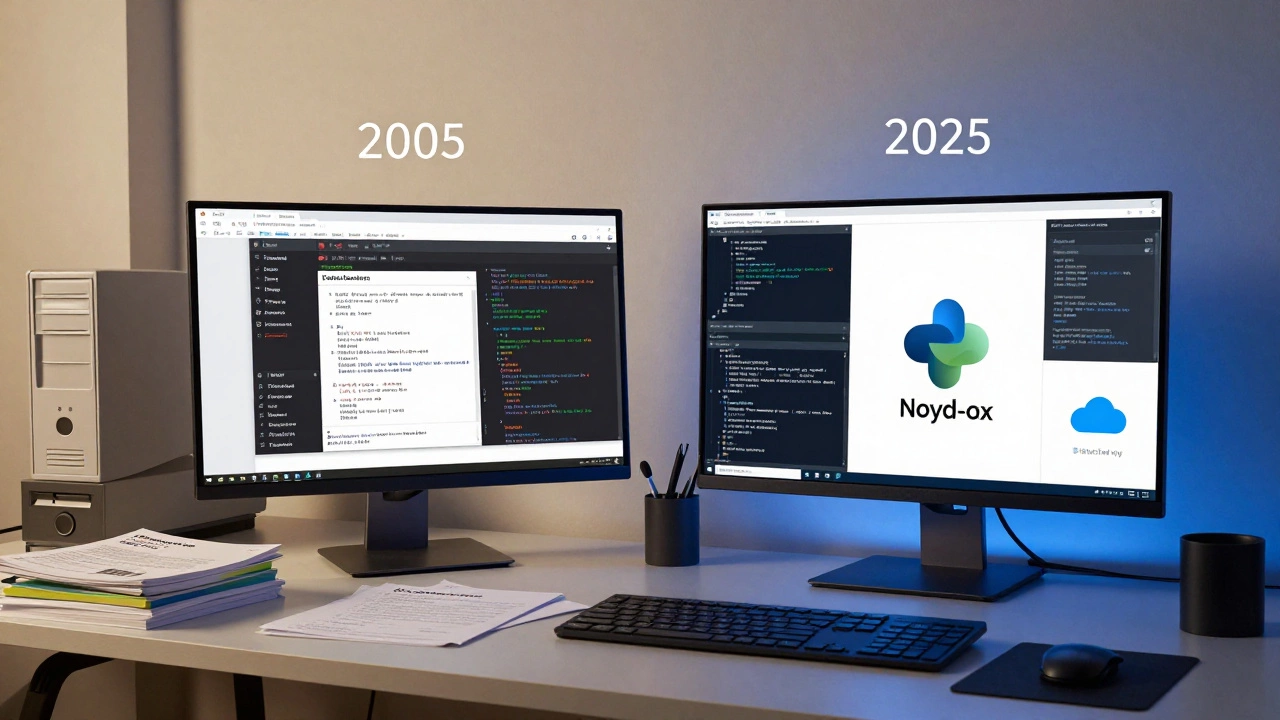
PHP still works. It runs on cheap shared hosting. It’s easy to get started with. You can throw together a contact form in 15 minutes. But that’s the problem. The things that made PHP great in 2005 are the same things that make it feel clunky in 2025.
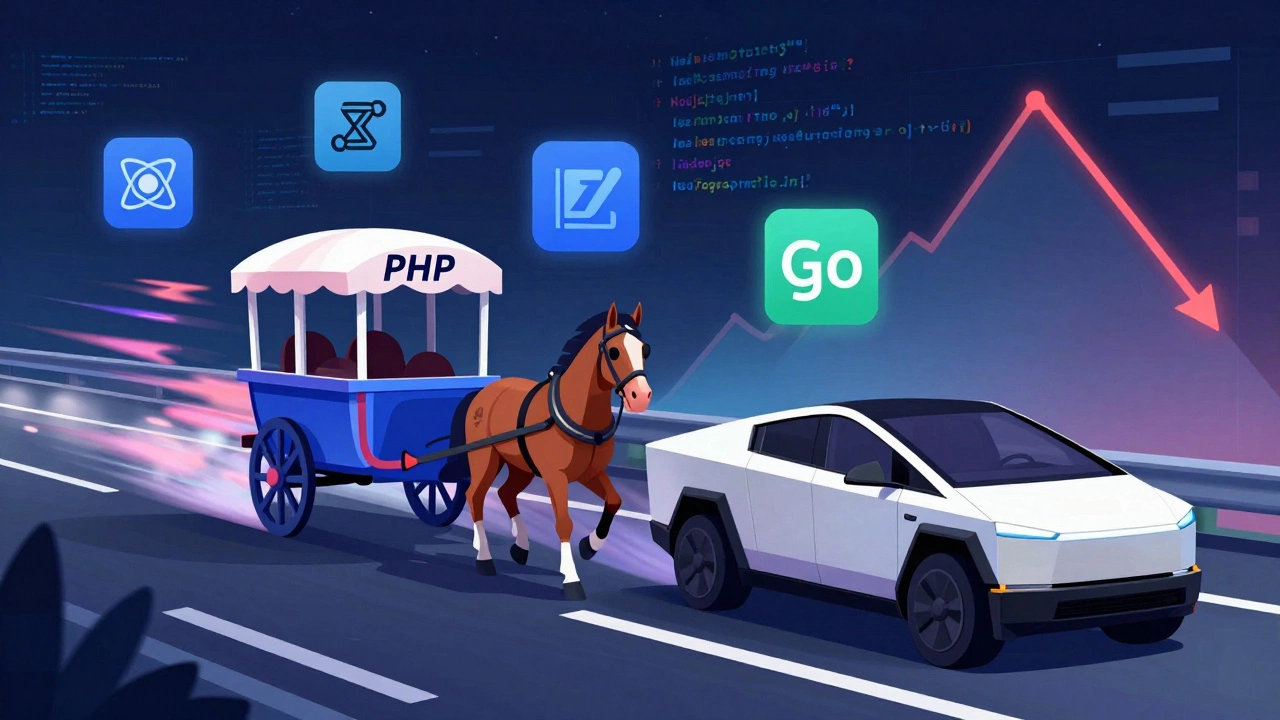
PHP was built for simple scripts. It wasn’t designed for large-scale applications with clean architecture. Early PHP code mixed HTML, logic, and database calls in one messy file. Even modern PHP frameworks like Laravel fix this, but they’re adding layers of complexity that other languages already had built-in. Compare that to Node.js, where JavaScript runs on both the front end and back end. Or Python’s Django, where structure is enforced from day one. PHP feels like retrofitting a horse-drawn cart with a Tesla engine.
JavaScript took over the full stack
One of the biggest shifts happened when JavaScript stopped being just a browser language. With Node.js, developers could use the same language for everything. No more switching between PHP for the server and JavaScript for the client. That’s a huge win for productivity and team alignment.
Think about it: a single developer can now build a full app using React on the front end and Express on the back end-all in JavaScript. No need to learn a new syntax, a new ecosystem, or a new debugging workflow. PHP developers still need to juggle HTML templates, PHP functions, SQL queries, and sometimes even AJAX calls written in vanilla JS. It’s fragmented. JavaScript unified it.
Companies like Netflix and PayPal moved from PHP to Node.js because they needed faster development cycles and better performance under load. The results were real: 35% faster page loads, 50% fewer lines of code, and teams that could ship features twice as fast.
Modern frameworks expect structure-PHP doesn’t enforce it
PHP doesn’t force you to write clean code. You can write everything in one file. Even today, many tutorials still show beginners how to connect to a database right inside an HTML page. That’s a recipe for spaghetti code that’s impossible to maintain.
Compare that to Django (Python) or Ruby on Rails. These frameworks come with strict conventions: models, views, controllers. They tell you where everything goes. PHP frameworks like Laravel try to bring order, but they’re fighting against decades of bad habits. You can still write messy PHP in a Laravel app. You can’t do that in Django without breaking the rules.
Young developers learning today don’t want to learn how to fix bad patterns-they want to learn how to build things the right way from the start. PHP doesn’t give them that.
The job market is shifting
If you look at job postings in 2025, PHP roles are shrinking. In Dublin, London, Berlin, or even remote tech hubs, most new backend openings ask for Node.js, Python, or Go. PHP jobs still exist-but they’re mostly legacy maintenance. Companies aren’t hiring PHP devs to build new apps. They’re hiring them to keep old systems alive.
That’s not a career path. It’s a dead end. New graduates don’t want to spend five years patching WordPress plugins. They want to work on scalable APIs, real-time apps, AI integrations. PHP isn’t the tool for that anymore.
Stack Overflow’s 2025 Developer Survey showed PHP ranked 18th in usage among professional developers. JavaScript, Python, and Java were in the top three. PHP was behind Rust, Swift, and even Kotlin. That’s not a minor dip-it’s a steady decline over 10 years.
PHP’s ecosystem is stuck in the past
PHP has Composer for dependency management. It has PHPUnit for testing. But the ecosystem feels like it’s running on fumes. New libraries are slow to appear. Documentation is often outdated. Tools like Xdebug are still clunky compared to modern debuggers in VS Code for JavaScript or Python.
Meanwhile, JavaScript’s npm ecosystem has over 2 million packages. Python’s PyPI has over 500,000. PHP’s Packagist has around 300,000-and many of those are WordPress plugins or outdated wrappers. There’s no equivalent to TensorFlow for PHP. No robust machine learning libraries. No native support for WebSockets without third-party tools.
When you need to add real-time chat to an app, you reach for Socket.io in Node.js. For PHP? You’re stuck with long-polling hacks or paying for a third-party service. It’s not that PHP can’t do it-it’s that the community stopped investing in the tools to make it easy.
Hosting and performance don’t help
PHP used to win because it ran on cheap shared hosting. Today, that’s a liability. Shared hosting is slow, insecure, and unreliable. Modern apps need containers, auto-scaling, and cloud-native deployment. PHP apps still often rely on Apache and mod_php, which don’t play well with modern infrastructure.
Node.js and Python apps run smoothly on Docker, Kubernetes, and serverless platforms like Vercel or AWS Lambda. PHP can run there too-but it’s not optimized for it. You need to configure PHP-FPM, tweak memory limits, and deal with cold starts. It’s doable, but it’s not simple. And simplicity is what developers care about now.
Performance benchmarks show PHP 8.3 is fast-faster than Python in some cases. But speed alone doesn’t win. A language needs to be fast, easy, supported, and future-proof. PHP checks one out of four.
It’s not dead-but it’s not growing
PHP isn’t disappearing. WordPress still runs 43% of all websites. Many enterprise systems rely on legacy PHP code. There are still companies that prefer PHP because they have teams that know it. But growth? It’s flatlined.
GitHub’s 2025 report showed PHP was the 12th most-used language in new repositories. That’s down from 5th in 2015. Meanwhile, TypeScript jumped from 10th to 2nd. Python went from 4th to 1st. PHP is holding on, but it’s not winning new ground.
The truth is, PHP didn’t fail because it was bad. It failed because the web changed-and PHP didn’t change fast enough. It stayed the same while the world moved on.
Should you learn PHP today?
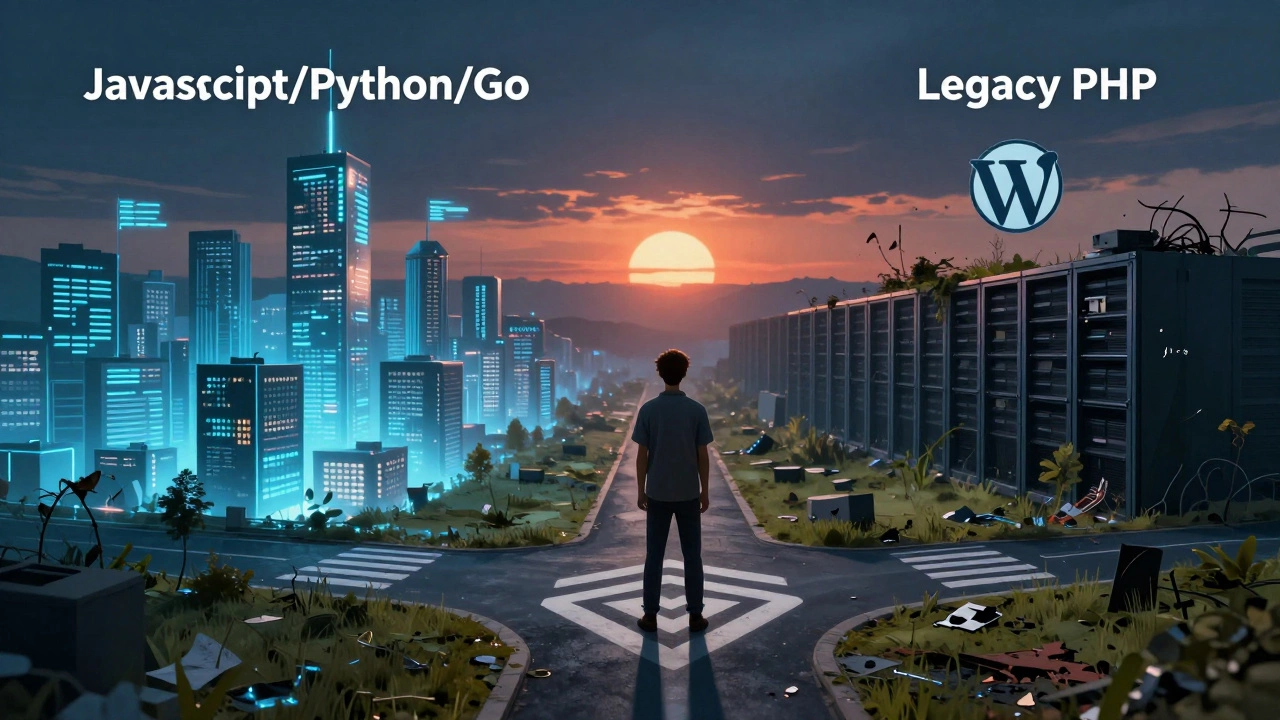
If you’re looking to build a new business, start a startup, or join a cutting-edge tech team-learn JavaScript, Python, or Go. PHP won’t open doors for you.
If you’re taking over a WordPress site, fixing an old e-commerce platform, or working at a company that still runs PHP 7.4-then yes, learn PHP. But treat it like learning COBOL. It’s a skill that keeps the lights on, not one that builds the future.
PHP taught a generation how to build websites. But now, the next generation is building something better. And they’re doing it without ever touching a .php file.
Is PHP dead in 2025?
No, PHP isn’t dead. Millions of websites still run on it, especially WordPress sites, e-commerce platforms like Magento, and legacy enterprise systems. But it’s no longer the preferred choice for new projects. Most new development work is moving to JavaScript, Python, or Go. PHP is now mostly a maintenance language.
Why are companies switching from PHP to Node.js?
Companies switch because Node.js lets teams use one language (JavaScript) for both front end and back end. This reduces complexity, speeds up development, and makes it easier to hire developers. Node.js also handles real-time features like chat and live updates better than PHP. Performance improvements and better tooling in the Node ecosystem make it more attractive for modern apps.
Can PHP still be used for modern web apps?
Yes, but it’s harder. With Laravel and PHP 8.3, you can build clean, scalable apps. But you’ll spend more time configuring tools, finding up-to-date libraries, and fighting against outdated practices. Frameworks like Laravel help, but they can’t fully overcome PHP’s historical baggage. For most teams, it’s more efficient to use a language built for modern development from the start.
Is PHP slower than other languages now?
Not really. PHP 8.3 is fast-often faster than Python and close to Node.js in raw performance benchmarks. The issue isn’t speed. It’s ecosystem maturity, developer experience, and tooling. A language needs more than speed to stay relevant. It needs community support, modern libraries, and ease of use. PHP falls short in those areas.
What should I learn instead of PHP?
For backend development, learn JavaScript (Node.js) or Python (Django or FastAPI). Both have strong ecosystems, great documentation, and are widely used in new projects. If you’re interested in high-performance systems, Go is a great option. For full-stack roles, React + Node.js is the most common combo today. These skills will open more doors than PHP ever will in 2025.