
Backend Language Decision Tool
Project Requirements
Analysis Result
PendingFill out the form to see which language fits your project best.
Choosing between Python and JavaScript for your backend is one of the most common dilemmas developers face today. Both languages are powerful, widely supported, and capable of handling massive traffic. However, they serve different strengths and fit distinct project requirements. If you’re building a data-heavy application or an API-driven service, the choice isn’t just about preference-it’s about performance, ecosystem, and long-term maintainability.
In this guide, we’ll break down the real-world differences between Python and JavaScript for backend development. We’ll look at execution speed, developer experience, library support, and scalability. By the end, you’ll know exactly which language fits your project-and why.
The Core Difference: How They Handle Requests
At their core, Python and JavaScript handle concurrency differently. Python uses multi-threading or multi-processing to manage multiple requests simultaneously. This means each request gets its own thread or process, which can lead to higher memory usage but better isolation.
JavaScript, on the other hand, runs on a single-threaded event loop. It handles many connections concurrently by non-blocking I/O operations. This makes it extremely efficient for high-throughput applications like chat servers or real-time dashboards.
| Feature | Python | JavaScript (Node.js) |
|---|---|---|
| Threading Model | Multi-threaded / Multi-processed | Single-threaded with Event Loop |
| I/O Handling | Blocking by default (async available) | Non-blocking by design |
| Memory Usage per Connection | Higher | Lower |
| Best For | Data processing, ML, APIs | Real-time apps, microservices |
Performance Benchmarks: What Really Matters?
If raw speed is your only metric, neither language wins outright. Python has improved significantly with PyPy and async frameworks like FastAPI. JavaScript benefits from V8 engine optimizations and modern runtimes like Deno and Bun.
However, performance isn’t just about CPU cycles. It’s also about how quickly you can build, test, and deploy features. In that sense, JavaScript often feels faster because of its unified syntax across frontend and backend. Python shines when integrating with scientific libraries or machine learning pipelines.
A quick benchmark shows that Node.js handles around 15,000-20,000 HTTP requests per second under load, while Python with Gunicorn + Uvicorn reaches similar numbers using ASGI servers. The difference lies not in throughput, but in resource consumption during sustained loads.
Ecosystem & Libraries: Who Has More Tools?
Both ecosystems are mature, but they specialize in different areas. Python dominates in data science, artificial intelligence, and automation. Libraries like Pandas, NumPy, TensorFlow, and Scikit-learn make it the go-to choice for analytical backends.
JavaScript excels in web-centric tools. Express.js, NestJS, Koa, and Hapi provide robust frameworks for RESTful APIs and GraphQL services. Packages like Socket.IO enable real-time communication out of the box.
- Python Strengths: Data analysis, AI/ML integration, scripting, task automation
- JavaScript Strengths: Full-stack consistency, real-time apps, rapid prototyping, npm package variety
If your backend needs to interact heavily with databases, both offer excellent ORM solutions-SQLAlchemy for Python and Prisma or TypeORM for JavaScript.
Developer Experience: Syntax, Debugging, and Tooling
Python’s clean syntax reduces cognitive load, especially for beginners. Its indentation-based structure enforces readability. Error messages tend to be descriptive, making debugging easier.
JavaScript allows more flexibility, which can lead to inconsistent codebases if not managed well. But thanks to TypeScript adoption, type safety and tooling have improved dramatically. IDEs like VS Code now offer near-perfect autocomplete and linting for both languages.
One advantage Python holds is its REPL environment. You can test functions interactively without setting up full projects. JavaScript requires bundlers or transpilers unless you use native modules or ES modules directly.

Scalability: Can Your App Grow With Demand?
Scalability depends less on the language and more on architecture. That said, JavaScript’s non-blocking nature gives it an edge in scaling horizontally across many lightweight instances. Microservices built with Node.js often require fewer resources per instance.
Python scales vertically better due to multiprocessing capabilities. When combined with container orchestration tools like Kubernetes, Python services can scale efficiently too.
Cloud providers optimize both languages equally. AWS Lambda supports Python and Node.js natively, with cold start times comparable after recent runtime improvements.
When to Choose Python Over JavaScript
Pick Python if:
- You're building a data-intensive backend
- Your team includes data scientists or analysts
- You need tight integration with ML models or statistical engines
- You prefer strict typing and clearer error reporting
- You value simplicity over syntactic sugar
When to Choose JavaScript Over Python
Choose JavaScript if:
- You want full-stack consistency
- You're building real-time applications (chat, live updates)
- You rely heavily on third-party APIs and webhooks
- You need fast iteration cycles and hot reloading
- Your team already knows React/Vue/Angular
Hybrid Approaches: Why Not Both?
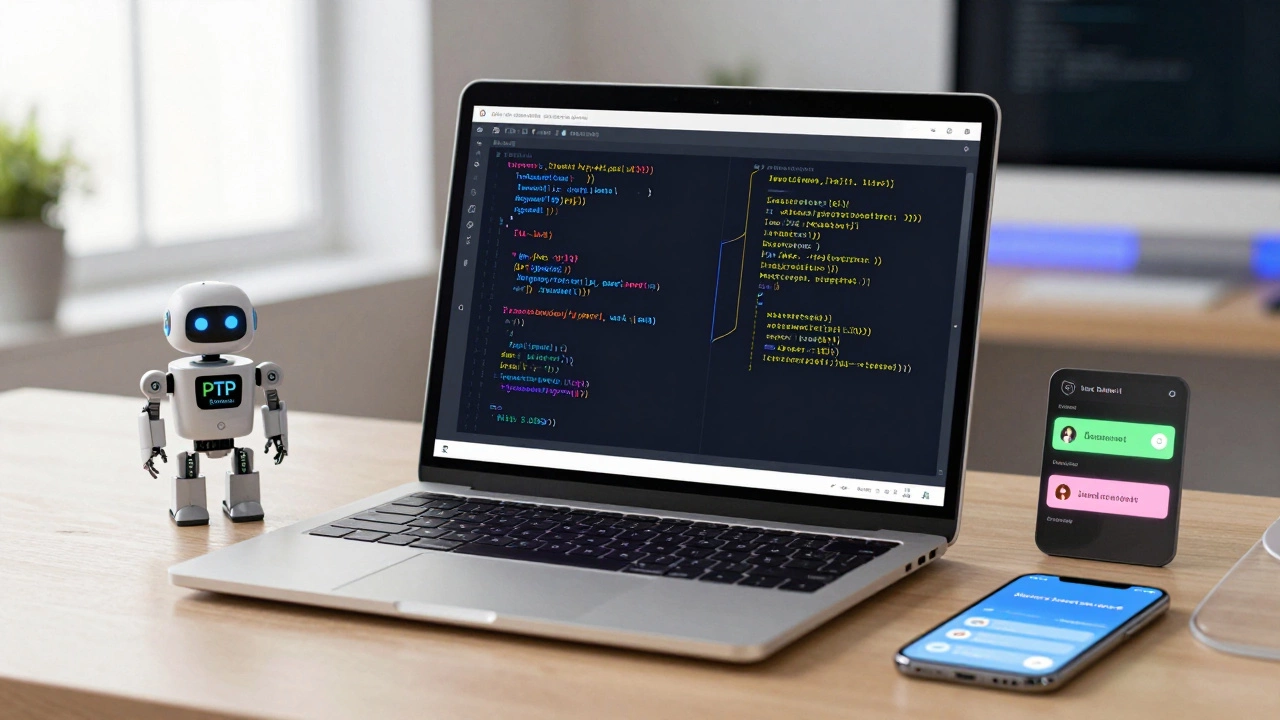
Many successful startups use hybrid architectures. For example, a company might write their main API in Node.js for low-latency responses and offload heavy computations to Python microservices.
This approach leverages the best of both worlds. Communication happens via message queues (RabbitMQ, Kafka) or gRPC calls. It adds complexity upfront but pays off in flexibility later.
Even large platforms like Netflix and Uber employ polyglot persistence strategies. Don’t feel locked into one language forever.
Learning Curve & Community Support
Python has a gentler learning curve. Its official documentation is thorough, and tutorials abound for every skill level. Stack Overflow consistently ranks Python among top-voted tags.
JavaScript has a steeper initial climb due to asynchronous patterns and callback hell history. But once mastered, it opens doors to entire ecosystems including browser extensions, desktop apps (Electron), and mobile cross-platform development (React Native).
Community size matters. As of 2026, GitHub hosts over 14 million repositories tagged with JavaScript and nearly 9 million with Python. Job postings reflect similar demand globally.
Final Thoughts: Make Your Choice Based on Project Needs
There’s no universal winner. Python brings clarity, power, and precision. JavaScript offers agility, ubiquity, and seamless frontend-backend flow. Evaluate your team’s skills, project scope, and future roadmap before deciding.
If you’re still unsure, try building a small prototype in both. Measure response times, setup effort, and team comfort levels. Let empirical results guide your decision-not hype.
And remember, great software comes from thoughtful architecture, not just language selection. Whether you pick Python or JavaScript, focus on writing clean, tested, and maintainable code.
Is Python slower than JavaScript for backend tasks?
Not necessarily. While JavaScript’s event loop gives it an edge in concurrent I/O-bound tasks, Python performs comparably in compute-heavy scenarios thanks to optimized libraries and async frameworks. Raw speed differences rarely matter compared to architectural choices.
Can I switch from Python to JavaScript mid-project?
Yes, though it’s costly. Rewriting logic, adapting database queries, and retraining teams take time. Better to plan early or adopt modular designs where components can be swapped independently.
Which language is better for beginners learning backend development?
Python is generally easier to learn due to readable syntax and forgiving errors. JavaScript introduces concepts like promises and closures earlier, which may confuse newcomers initially.
Do companies prefer Python or JavaScript for hiring backend engineers?
It varies by industry. Tech startups lean toward JavaScript for full-stack roles. Enterprises and research firms favor Python for stability and analytics integration. Check job boards relevant to your region.
Are there security advantages to either language?
Security depends on implementation, not language. Both have known vulnerabilities if misused. Follow OWASP guidelines regardless of stack. Use secure defaults, sanitize inputs, and audit dependencies regularly.