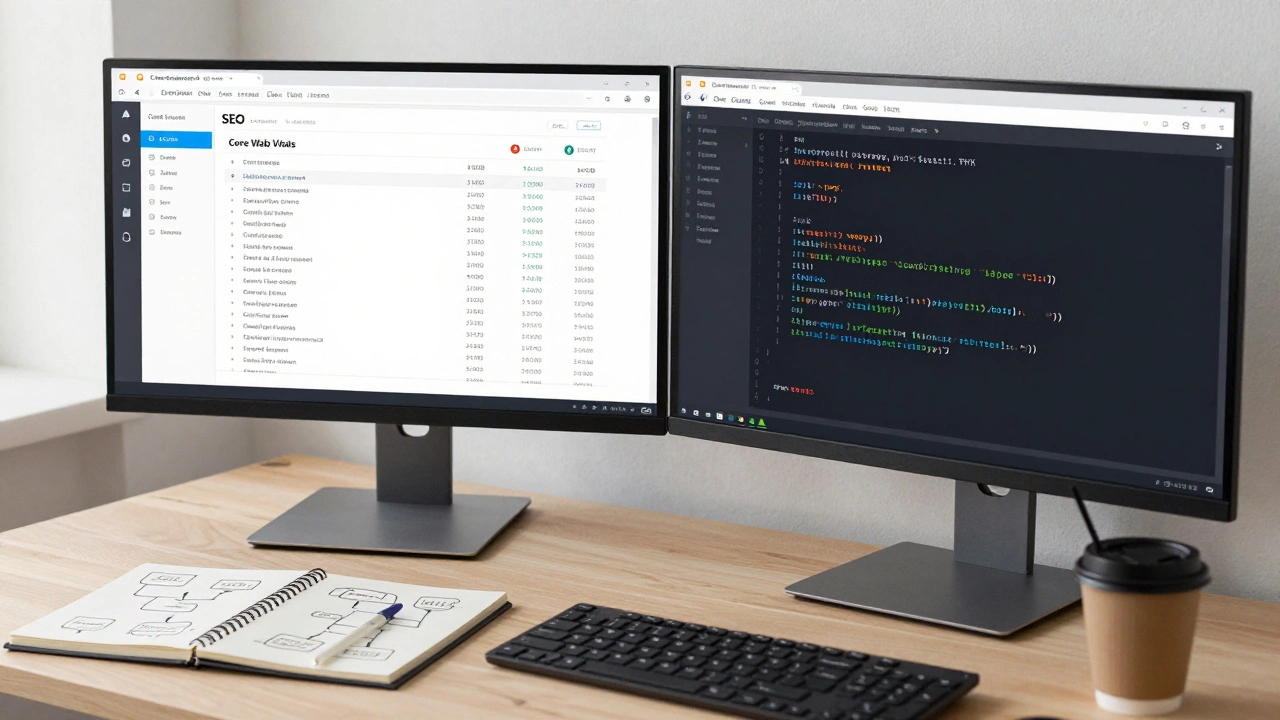
SEO Skill Balance Assessment
Answer these 5 questions to understand your current balance between hard and soft SEO skills. This assessment helps you identify where you can improve to become a more effective developer.
When you build websites, you care about clean code, fast load times, and smooth user flow. But if no one finds your site, all that effort vanishes into the void. That’s where SEO comes in. And for web developers, the big question isn’t just how to do SEO - it’s whether it’s a hard skill or a soft skill. The answer isn’t black and white. It’s both. And understanding that mix is what separates good developers from great ones.
What Counts as a Hard Skill in SEO?
Hard skills are measurable, teachable, and repeatable. You can test them. You can fail them. And you can master them with practice. For web developers, these are the SEO hard skills that actually move the needle.
- Technical SEO audits - Running crawl reports with tools like Screaming Frog or DeepCrawl to find broken links, duplicate content, or redirect chains.
- Site speed optimization - Reducing render-blocking resources, implementing lazy loading, or switching from render-heavy frameworks to static generation.
- Structured data markup - Adding JSON-LD for products, articles, or FAQs so Google displays rich results.
- URL structure and routing - Designing clean, hierarchical URLs that reflect site architecture (e.g., /blog/seo-tips vs. /page?id=234).
- Mobile-first indexing fixes - Ensuring responsive layouts don’t break on mobile, and that meta tags, hreflang, and canonicals are correctly implemented.
These aren’t guesses. They’re technical tasks with clear right and wrong answers. If your site’s Core Web Vitals score is below 90 on mobile, Google will rank you lower. No debate. That’s a hard skill. And if you can’t fix a 404 error, automate redirects in your CMS, or configure robots.txt properly - you’re leaving traffic on the table.
What Counts as a Soft Skill in SEO?
Soft skills are about influence, communication, and adaptability. You can’t measure them with a tool. But they’re just as critical.
- Explaining SEO to designers - Convincing a UI team that a flashy hero video slows down the page and hurts rankings. Not about the code - about persuasion.
- Collaborating with marketers - Translating keyword data into content priorities. Marketers say “We need 10 blog posts about CRM tools.” You say, “The search volume for ‘best CRM for small business’ is 12K/month. Let’s build one comprehensive guide instead of ten shallow ones.”
- Adapting to algorithm updates - Google drops a new core update. Your site drops 30% in traffic. Do you panic? Do you blame the algorithm? Or do you calmly analyze patterns, test hypotheses, and adjust?
- Knowing when to push back - Your client wants a homepage with 20 animated sliders. You know it’s a SEO disaster. Do you say yes? Or do you stand your ground with data?
These aren’t tasks in a checklist. They’re human interactions. And they’re why two developers with identical technical skills can have wildly different results.

Why the Mix Matters More Than the Label
Here’s the truth: SEO isn’t a skill you learn once. It’s a habit. And it’s not just about writing better code - it’s about thinking like a user, a search engine, and a business owner all at once.
Take this real example: A developer built a SaaS product with perfect technical SEO. Page speed: 0.8s. Schema markup: flawless. URLs: clean. But the site got almost no organic traffic. Why? Because the content was written by engineers for engineers. No one searching for “project management tool for remote teams” could understand it. The developer didn’t know how to talk to real users.
That’s where soft skills kick in. The developer had to learn to ask: What words do people actually type? What problems are they trying to solve? How do I make this sound like something a human would say? Once they started rewriting content with real language - not jargon - organic traffic jumped 210% in six months.
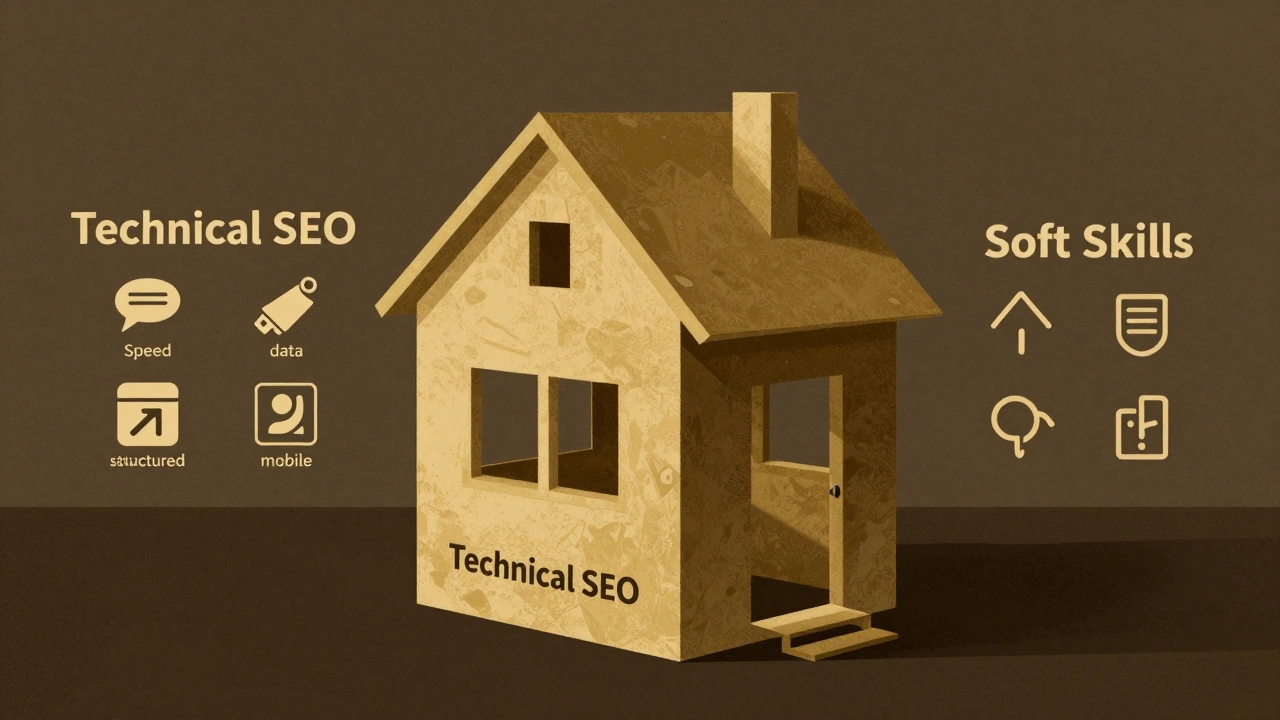
Technical SEO is the foundation. But without soft skills, you’re building a house with no doors.
What Web Developers Get Wrong About SEO
Most developers treat SEO like a checklist they can hand off. They assume:
- “If I use React, Google will crawl it fine.” (False. You still need SSR or SSG.)
- “Meta tags are just for humans.” (False. Google uses them to decide what to show in search.)
- “I don’t need to care about keywords - that’s the content team’s job.” (False. If your site structure doesn’t support topic clusters, even great content won’t rank.)
These myths persist because developers focus on what they know: code. But SEO lives at the intersection of code, content, and context.
Here’s what actually works: Start treating every feature you build through an SEO lens.
- When you add a new page - ask: What’s the search intent? Is the URL clean? Is the H1 unique? Is there schema?
- When you refactor a component - ask: Does it delay rendering? Does it block JavaScript execution?
- When you deploy - ask: Did the robots.txt change? Are redirects working? Is the sitemap updated?
That’s not a job for someone else. That’s part of your job.
How to Build Both Skill Sets
You don’t need to become a full-time SEO specialist. But you do need to become SEO-literate.
Start here:
- Run one technical audit per quarter. Use Google Search Console. Look at the “Coverage” report. Fix errors. Track improvements.
- Learn to read search intent. Type a keyword into Google. Look at the top 5 results. Are they blog posts? Product pages? Videos? That tells you what Google thinks users want.
- Pair up with a content writer. Ask them: “What’s the hardest part of writing for search?” Listen. Then help them solve it with code.
- Test one change at a time. Change a meta title. Wait two weeks. Check rankings. See what happened. That’s how you learn.
There’s no shortcut. But you don’t need to master everything. Just get comfortable with the basics. The rest follows.
SEO Isn’t a Bonus - It’s Part of the Job
Web developers used to think SEO was something marketers handled. That’s outdated. Today, the best developers don’t just build websites - they build discoverable websites.
Hard skills get you in the door. Soft skills help you stay there. And together? They turn you from a coder into a problem-solver who understands how the web really works.
If you’re building sites and not thinking about how they’ll be found - you’re leaving half your work unfinished.
Is SEO a hard skill for web developers?
Yes, part of SEO is a hard skill - especially technical SEO. Things like fixing crawl errors, optimizing Core Web Vitals, implementing structured data, and configuring server redirects are measurable, technical tasks. If you can’t do them, your site won’t rank. These are the same as learning a programming language - they require practice, tools, and precision.
Is SEO a soft skill for web developers?
Yes, and just as important. Soft skills include explaining SEO trade-offs to designers, negotiating content priorities with marketers, adapting to algorithm updates, and knowing when to push back on bad design choices. These aren’t coded - they’re communicated. And without them, even perfect technical SEO fails because no one understands why it matters.
Do I need to be an SEO expert to be a good web developer?
No - but you need to be SEO-literate. You don’t need to run keyword research or write blog posts. But you do need to understand how search engines crawl and index pages, what makes a URL SEO-friendly, how page speed affects rankings, and why structured data matters. That’s enough to make your sites more discoverable and future-proof.
Can I ignore SEO if I’m only building internal tools?
If it’s truly internal - like a private admin dashboard with no public access - then yes, SEO doesn’t matter. But if there’s any chance it could be accessed by someone outside your team, or if you plan to turn it into a public product later, then you’re building it blind. SEO isn’t just for public websites - it’s for any digital asset that needs to be found.
What’s the easiest SEO fix a developer can make today?
Add a proper title tag and meta description to every page. It’s simple, fast, and has the biggest immediate impact. Many sites still use default titles like "Home - MySite" or no description at all. Fixing that alone can double click-through rates from search results. Use your CMS or build a template that auto-generates them based on page content.
SEO isn’t a side hustle for web developers. It’s a core competency. Master the hard skills. Hone the soft ones. And stop treating search engines like an afterthought.