
UX Designer Readiness Scorecard
Your Assessment Results
Skill Breakdown
Recommended Next Steps
You’ve probably seen the headlines. "AI will replace designers." "The job market is saturated." "Don’t bother learning code or design in 2024." If you’re sitting there wondering whether it’s too late to start a career as a UX designer, defined as a professional who focuses on creating meaningful and relevant experiences for users by improving usability, accessibility, and pleasure in the interaction between the user and the product, I get it. The noise is loud. But here’s the thing: noise isn’t data.
I’m writing this from Dublin, where the tech scene is buzzing with startups and global giants alike. People are still hiring. They’re still struggling to find good designers. The difference is that the bar has moved. It’s not about knowing how to move pixels in Figma anymore. It’s about understanding human behavior, solving complex problems, and leveraging new tools without losing your creative edge.
The "Saturated Market" Myth vs. Reality
Let’s tackle the elephant in the room first. Is the market saturated? In some ways, yes. If you look at entry-level roles on LinkedIn, you’ll see hundreds of applicants for a single position. Many of them have bootcamp certificates and portfolios filled with generic coffee shop apps or e-commerce stores that solve no real problems.
But saturation doesn’t mean opportunity is dead; it means competition has evolved. Companies aren’t looking for pixel-pushers. They are looking for strategic thinkers who can bridge the gap between business goals and user needs. A junior designer who understands basic psychology, can conduct proper user research, and communicates clearly is rare. That scarcity creates value.
Think of it like this: anyone can buy a guitar. Not everyone can play in a band. The instrument is cheap; the skill is valuable. UX design is the same. The tools are accessible, but the ability to create intuitive, empathetic experiences is hard-won.
How AI Is Changing (Not Killing) UX Design
In 2024, Artificial Intelligence is everywhere. Tools like Midjourney, DALL-E, and various UI generators can create stunning visuals in seconds. Does this make UX designers obsolete? Absolutely not. Here’s why:
- AI lacks empathy: An algorithm can generate a button layout based on historical data, but it cannot understand the frustration of an elderly user trying to navigate a healthcare app. It doesn’t feel the anxiety of someone applying for a loan. Empathy is the core of UX, and AI doesn’t have feelings.
- AI generates options, not solutions: AI is great at ideation. It can give you fifty variations of a header. But deciding which one aligns with brand voice, accessibility standards, and conversion goals requires human judgment.
- Complexity increases: As products become more sophisticated (think IoT devices, AR interfaces, voice assistants), the need for structured thinking grows. AI helps automate the mundane tasks-like resizing icons or generating copy-but it struggles with high-level strategy and systems thinking.
Instead of fearing AI, embrace it. Use it to speed up your workflow. Spend less time on repetitive tasks and more time on user interviews, testing, and strategy. The designers who thrive in 2024 are those who treat AI as a co-pilot, not a replacement.
What Employers Actually Want in 2024
If you’re starting out, stop guessing what companies want. Look at the job descriptions. Read between the lines. Here’s what consistently shows up:
| Skill Area | Why It Matters | How to Demonstrate It | |||
|---|---|---|---|---|---|
| User Research | Designing without data is just decoration. | Showcase case studies where you interviewed users and changed your design based on feedback. | |||
| Prototyping & Testing | Companies want to reduce risk before development. | Include videos of usability tests in your portfolio. Show failures and iterations. | Communication | Designers must collaborate with devs and stakeholders. | Write clear rationale for your decisions. Practice presenting your work. |
| Accessibility (WCAG) | Legal requirement and ethical imperative. | Mention specific accessibility checks you performed (contrast ratios, screen reader compatibility). | |||
| Basic Front-End Knowledge | Bridges the gap between design and dev. | Show you understand HTML/CSS constraints. You don’t need to be a coder, but know what’s feasible. |
Notice that "mastery of Figma" isn’t at the top. That’s assumed. What’s missing from most portfolios is the *process*. Don’t just show the final shiny screen. Show the messy middle. Show the sketches, the rejected ideas, the user quotes that scared you. That’s where the trust is built.

Building a Portfolio That Stands Out
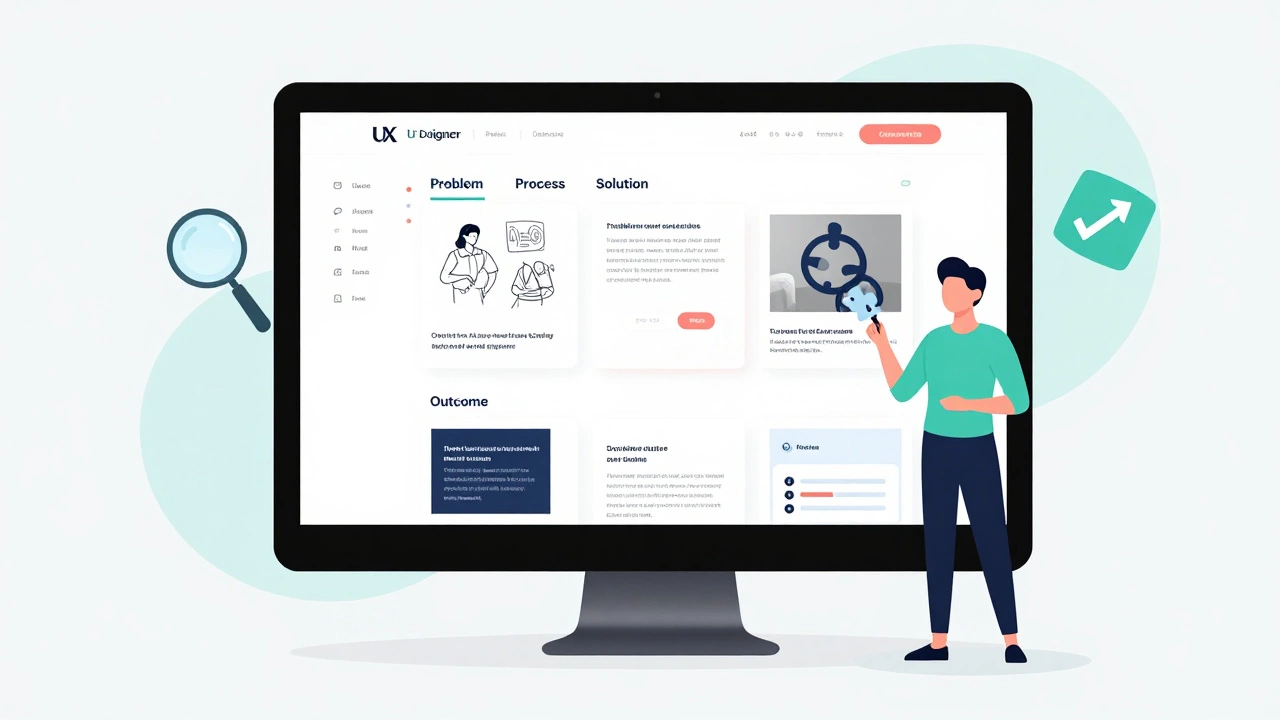
Your portfolio is your resume. In 2024, a PDF link is often ignored. You need a live website that demonstrates your design skills. But more importantly, it needs to tell a story.
Avoid the "Redesign Instagram" trap. Everyone does it. It’s easy because there’s no real stake. Instead, pick a problem that matters to you. Maybe it’s simplifying the process of returning items for a local thrift store. Maybe it’s designing a dashboard for freelance writers to track invoices. Real projects have real constraints. Budget limits, technical limitations, angry stakeholders. Dealing with these makes you a better designer.
Structure each case study like this:
- The Problem: What were you trying to solve? Who was it for?
- The Process: How did you research? What methods did you use (surveys, interviews, card sorting)?
- The Solution: Why did you choose this design? What alternatives did you consider?
- The Outcome: Did you test it? What were the results? If it wasn’t launched, what did you learn?
Be honest about your role. If you worked in a team, say so. Collaboration is a key skill. And don’t forget accessibility. Mentioning that you tested your prototype with a screen reader or checked color contrast ratios shows maturity. It tells employers you care about all users, not just the ones with perfect vision and fast internet.
Learning Paths: Bootcamps vs. Self-Study
There’s no single right way to learn UX. It depends on your learning style, budget, and timeline.
Bootcamps offer structure and community. You get feedback from mentors and peers. The downside? They can be expensive, and the quality varies wildly. Do your homework. Look at alumni outcomes. Are they getting jobs? Which companies? If a bootcamp promises "guaranteed employment," run away. No one can guarantee that.
Self-study is cheaper and flexible. You can use resources like Nielsen Norman Group articles, YouTube tutorials, and books like Don't Make Me Think by Steve Krug. The challenge is discipline. Without deadlines, it’s easy to procrastinate. You also miss out on the network effect. To counter this, join online communities, attend local meetups (Dublin has a vibrant design community), and seek critique groups.
My advice? Mix both. Take a course for structure, but supplement it with real-world practice. Volunteer to redesign a non-profit’s website. Offer to help a friend’s small business. Real experience beats theoretical knowledge every time.
Networking: Your Secret Weapon
Jobs are rarely found by applying online alone. Most roles are filled through referrals. Networking isn’t about handing out business cards. It’s about building relationships.
Start small. Connect with designers on LinkedIn. Comment thoughtfully on their posts. Ask questions. Reach out for informational interviews. Say something like: "Hi [Name], I’m transitioning into UX and admire your work at [Company]. Would you have 15 minutes to share how you got started?" Most people love talking about themselves. Just listen. Take notes. Follow up with a thank-you note.
Attend events. In Ireland, organizations like Irish User Experience Professionals Association (IUXPA) host talks and workshops. Even virtual events count. The goal is to put your name out there. When a job opens up, you want to be someone they remember, not just another application in the pile.
Overcoming Imposter Syndrome
You will feel like a fraud. Every designer does. Especially when you’re starting. You’ll see seniors with ten years of experience and think, "Why would they hire me?"
Here’s the truth: You don’t need to know everything. You need to be curious. You need to be willing to learn. Companies hire juniors for potential, not perfection. They expect you to ask questions. They expect you to make mistakes. What they don’t expect is arrogance or silence.
Focus on progress, not perfection. Celebrate small wins. Finished a wireframe? Good. Got positive feedback on a concept? Great. Keep moving forward. The confidence comes after the competence, not before.
Final Thoughts: It’s Never Too Late
So, is it too late to become a UX designer in 2024? No. It’s actually a great time. The field is maturing. The bad actors are being filtered out. The demand for thoughtful, human-centered design is higher than ever. Yes, the path is harder than it was five years ago. But that’s a good thing. It means the profession is respected.
If you’re passionate about helping people, if you enjoy solving puzzles, and if you’re willing to put in the work, you belong here. Start today. Pick a project. Learn a tool. Talk to a user. The only way to fail is to not start.
Do I need a degree to become a UX designer?
No, you do not need a formal degree. Many successful UX designers come from backgrounds in psychology, marketing, graphic design, or even unrelated fields like teaching or engineering. What matters most is your portfolio and your ability to demonstrate design thinking and problem-solving skills. Employers care about what you can do, not where you studied.
How long does it take to learn UX design?
It varies depending on your dedication and prior experience. Generally, you can build a foundational skill set in 3-6 months of intensive study. However, becoming job-ready often takes 6-12 months of consistent practice, including building a portfolio and networking. Remember, UX is a lifelong learning journey; you’ll never stop learning new tools and methodologies.
Is UX design a good career choice in 2024?
Yes, UX design remains a strong career choice. While the entry-level market is competitive, experienced designers are in high demand. The role offers good salary potential, remote work opportunities, and the satisfaction of creating products that improve people's lives. As digital products become more complex, the need for skilled UX professionals to ensure usability and accessibility grows.
What tools should I learn for UX design?
Start with Figma, which is the industry-standard tool for interface design and prototyping. It’s collaborative and widely used. Also familiarize yourself with user research tools like Maze or UserTesting, and whiteboarding tools like Miro for brainstorming. While tools change, the principles of UX remain constant, so focus on mastering the fundamentals rather than chasing every new software release.
Can I transition to UX design from a different career?
Absolutely. Many of the best UX designers are career changers. Your previous experience is an asset, not a liability. If you were a teacher, you understand pedagogy and communication. If you were in sales, you understand customer pain points. Transferable skills like empathy, analysis, and project management are highly valued in UX. Leverage your unique background to stand out.