Portfolio Score Calculator
How strong is your portfolio?
Get an instant assessment of your portfolio against hiring manager expectations. Based on data from 2026 Irish tech hiring trends.
Targets: 85+ = excellent, 70-84 = good, below 70 = needs improvement
72% of Irish tech firms require at least one modern framework
Good repos have clean commits, README, and explanations
Include metrics like "reduced load time by 40%" or "fixed 50+ accessibility issues"
It’s 2026, and you’ve spent months learning HTML, CSS, and JavaScript. You built a few websites, maybe even a portfolio. Now you’re applying for jobs-and getting ghosted. You start wondering: is it hard to get hired as a web developer? The answer isn’t yes or no. It’s more like: it depends on what you know, how you present it, and where you’re looking.
The hiring landscape has changed-here’s what’s real
Five years ago, companies were desperate for web developers. They’d hire anyone with a GitHub profile. Today, the market is tighter. Tech layoffs in 2022 and 2023 hit web dev hard. Big companies cut back. Startups became pickier. But here’s the twist: demand didn’t disappear. It just shifted.
Companies still need web developers. They just want people who can do more than just make buttons work. They’re looking for developers who understand performance, accessibility, and user behavior. They want someone who can talk to designers, debug a slow API, and fix a broken checkout flow on mobile.
According to data from Ireland’s Department of Enterprise, 72% of tech firms in Dublin reported difficulty filling junior web dev roles in late 2025-not because there weren’t enough applicants, but because most candidates couldn’t demonstrate real problem-solving skills.
What hiring managers actually look for (not what you think)
You might think your portfolio needs 10 flashy websites. It doesn’t. One well-built, well-documented project beats ten half-finished ones.
Here’s what actually gets you noticed:
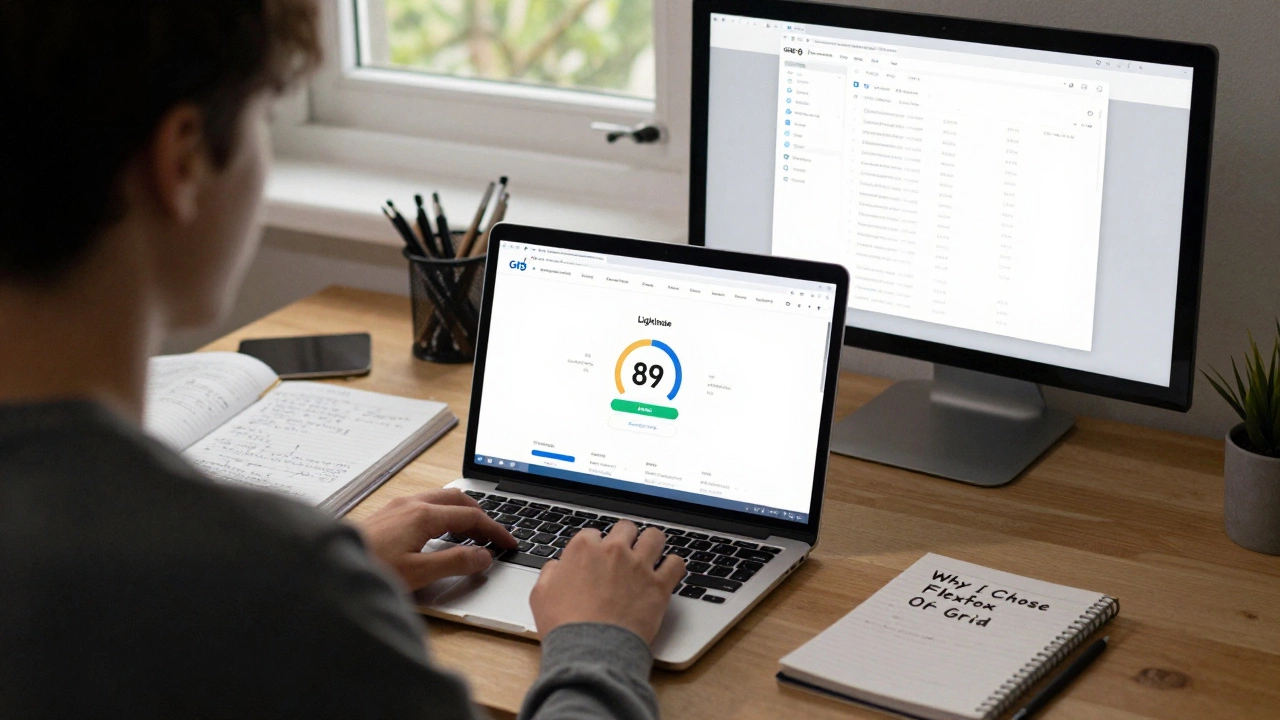
- A live site you built from scratch-with performance metrics (Lighthouse score above 85)
- A GitHub repo with clean commits, readable code, and a README that explains your choices
- Proof you’ve solved a real problem: "I reduced page load time by 40% by optimizing images and lazy-loading"
- Experience with at least one modern framework (React, Vue, or Svelte)
- Understanding of basic backend concepts (even if you’re a front-end dev)
One recruiter in Cork told me: "I don’t care if you went to college. I care if you can explain why you chose a flexbox over CSS Grid in your project. If you can’t, you’re just following tutorials. We need people who think."
Why most beginners get rejected (and how to fix it)
Most people applying for junior web dev jobs make the same mistakes:
- They built a clone of Apple’s homepage. No one cares.
- They list "HTML, CSS, JavaScript" on their resume like it’s a superpower. It’s the baseline now.
- They don’t explain their process. Why did you choose that color scheme? How did you test accessibility?
- They apply to 50 jobs at once with the same resume. Automated filters catch the copy-paste.
Here’s what works instead:
- Build something useful: a tool that helps local farmers track crop prices, a site for a small Irish bakery, a weather app for your neighborhood
- Write a short blog post about one thing you learned while building it
- Apply to 5 jobs a week-and tailor each application. Mention the company’s product. Say why you care about their mission.
- Learn how to use Chrome DevTools to audit performance. That’s a skill 80% of applicants don’t have.

The role of web development courses
Are coding bootcamps and online courses worth it? Yes-but only if you treat them like a starting point, not a finish line.
Platforms like freeCodeCamp, Codecademy, and Udemy taught you the syntax. Now you need to learn how to think like a developer. That means:
- Breaking down real problems before writing code
- Reading error messages instead of Googling the whole thing
- Asking "why?" instead of just copying code from Stack Overflow
One graduate from a Dublin bootcamp got hired at a fintech startup because she didn’t just complete the course. She built a budget tracker for her roommate, documented every bug she fixed, and shared it on LinkedIn. That’s the difference.
Where to look for jobs (and where to avoid)
Don’t waste time applying to job boards like Indeed or LinkedIn with 500+ applicants. Those are dead ends.
Instead, focus on:
- Local startups and small agencies (they need help and don’t have HR filters)
- Non-profits and public sector projects (they often need websites but can’t afford big agencies)
- Freelance gigs on Upwork or Fiverr (start small, build credibility, ask for referrals)
- Community events: meetups in Dublin, Galway, or Limerick. Talk to people. Bring a laptop and show your work.
Many junior roles aren’t even posted. They’re filled through word of mouth. Show up where developers hang out. Be helpful. Ask questions. People remember you.

Realistic timeline: How long does it actually take?
If you’re starting from zero and you’re consistent:
- Month 1-3: Learn fundamentals. Build one project.
- Month 4-6: Learn a framework. Build a second project with real data (APIs, databases).
- Month 7: Start applying. Get feedback. Revise.
- Month 8-12: Land your first role-or freelance gig.
That’s 8 to 12 months. Not six weeks. Not three months. Real skill takes time. But if you’re focused, you can do it.
What if you’re over 30? Or changing careers?
Age doesn’t matter. Experience does.
I’ve seen a former teacher, a nurse, and a mechanic all land web dev jobs in 2025. What they had in common? They didn’t compare themselves to 22-year-olds fresh out of university. They focused on their strengths: communication, problem-solving, patience.
One ex-nurse built a medical appointment scheduler for a local clinic. She didn’t know React. She learned it because she needed it. She got hired because she understood the user’s pain points better than any CS grad.
Final reality check
Is it hard to get hired as a web developer? Yes-if you’re treating it like a lottery ticket.
Is it possible? Absolutely-if you treat it like a craft.
Companies aren’t hiring coders anymore. They’re hiring people who solve problems with code. Build something real. Talk about it. Show your thinking. Learn to debug. Be persistent.
The door isn’t closed. You just need to knock the right way.
Do I need a degree to get hired as a web developer?
No. Most hiring managers in Ireland don’t require a degree for junior roles. What matters is your portfolio, your ability to solve problems, and how well you communicate your process. Many developers hired in 2025 came from non-tech backgrounds-retail, hospitality, even the military.
How much should I know before applying for my first job?
You don’t need to know everything. But you should be comfortable with HTML, CSS, JavaScript, and at least one framework like React. You should also be able to explain how you’d fix a broken layout on mobile, why you chose a specific color contrast, or how you’d improve page speed. Employers want problem-solvers, not memorizers.
Can I get hired without a portfolio?
It’s extremely unlikely. A portfolio isn’t optional anymore-it’s the resume. Even if you’ve done freelance work or contributed to open-source projects, you need to show it. If you don’t have one, build a simple site that explains who you are, what you’ve built, and how you think. It doesn’t need to be fancy. It just needs to be real.
What’s the average salary for a junior web developer in Ireland?
In 2026, junior web developers in Dublin earn between €32,000 and €40,000 per year. Outside the capital, salaries range from €28,000 to €35,000. Freelancers charge €30-€60 per hour. These numbers are based on data from Irish Tech Jobs Survey 2025.
Should I learn backend development to get hired faster?
Not necessarily-but it helps. Even front-end developers benefit from understanding how APIs work, how data flows, and what a database does. Learning the basics of Node.js, Python, or PHP gives you an edge. You don’t need to become a full-stack expert, but knowing how to connect your front end to a simple backend makes you 3x more likely to get an interview.