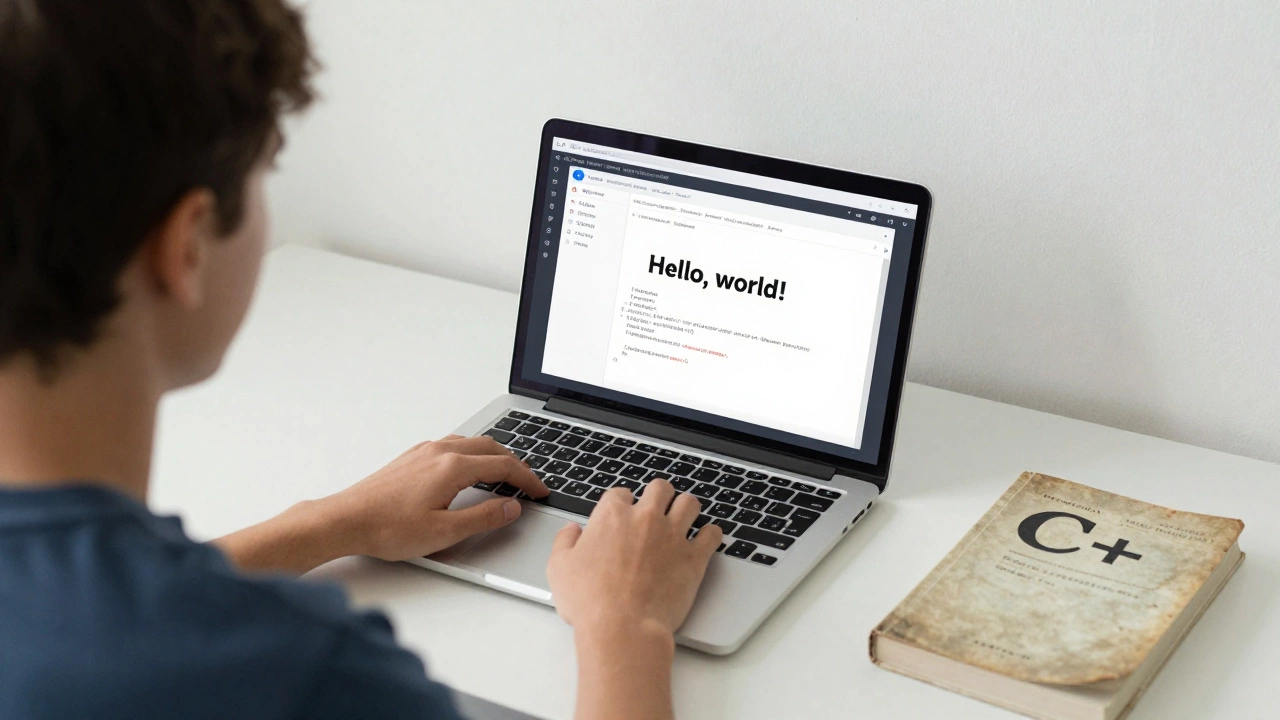
Let’s cut through the noise right away: no, you do not need to learn C++ to learn JavaScript. Not even a little bit. If you’ve been told otherwise-maybe by a well-meaning but misinformed mentor, a confusing forum post, or an outdated tutorial-you can stop worrying. You’re not missing out. You’re not behind. You’re not failing. You just need to start with JavaScript, and that’s it.
JavaScript is a language built for the web. It runs in your browser, powers interactive buttons, handles form validation, animates menus, and drives entire apps like Gmail or Netflix’s interface. C++, on the other hand, is a systems-level language used for building operating systems, video games, and high-performance software. The two don’t overlap in purpose, workflow, or real-world use. Trying to learn C++ before JavaScript is like learning how to build a car engine before learning how to drive.
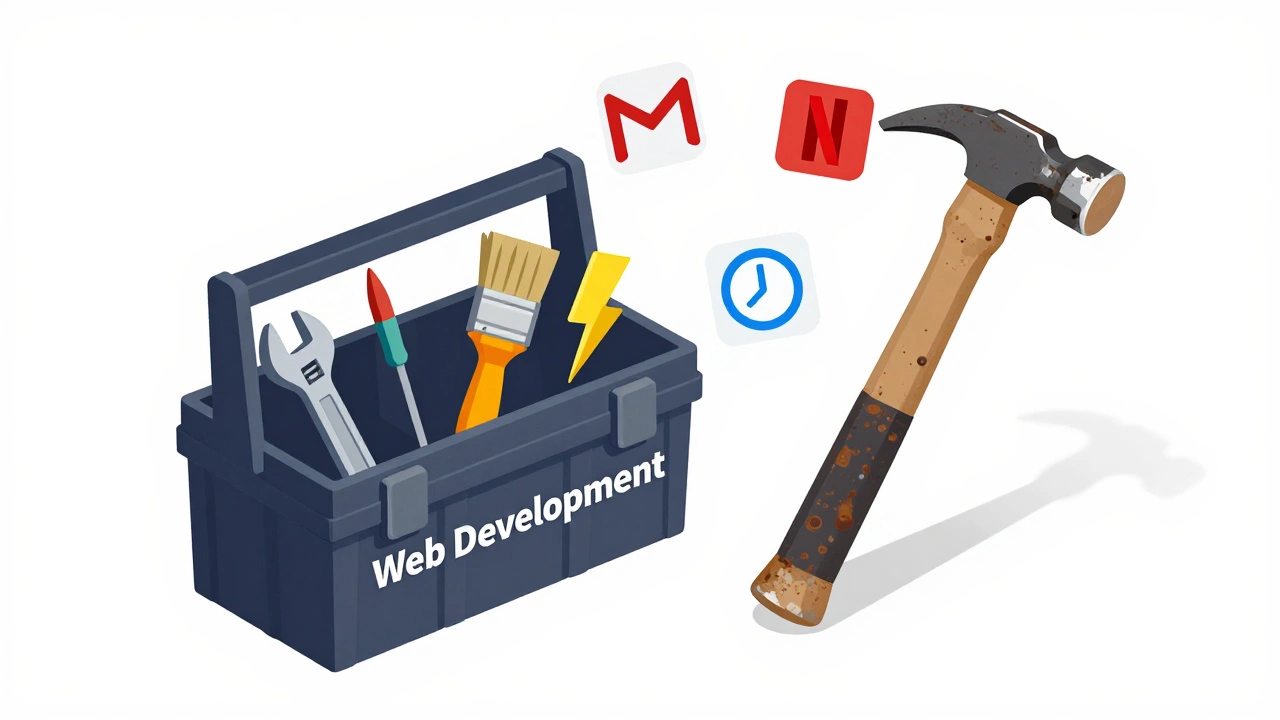
Here’s the truth most beginners don’t hear: programming languages are not a ladder you climb one by one. They’re tools in a toolbox. You don’t need a hammer to use a screwdriver. You don’t need C++ to understand variables, loops, or functions in JavaScript. Those concepts exist in every language, but they’re taught differently depending on context. JavaScript teaches them in a way that’s immediately useful-right in the browser, with instant feedback.
Why People Think You Need C++ First
There’s a myth floating around that if you want to be a "real" programmer, you have to start with C or C++. It comes from old-school computer science programs that taught C++ as the foundation. Back in the 90s and early 2000s, that made sense-most software was built from the ground up, and memory management mattered. But today? Most developers don’t touch C++ unless they’re working on game engines, embedded systems, or high-frequency trading platforms.
Meanwhile, JavaScript is the most widely used programming language in the world. According to Stack Overflow’s 2025 Developer Survey, over 63% of professional developers use JavaScript regularly. That’s more than Python, Java, or C#. And guess what? Almost none of them learned C++ first. They started with HTML, added JavaScript, and built something real-like a to-do list, a weather app, or a simple game-within days.
The idea that C++ "builds discipline" or "teaches you how computers work" sounds impressive, but it’s misleading. You can learn how computers work without writing low-level code. Understanding memory allocation in C++ won’t help you debug why your button isn’t responding in a web app. What will help? Knowing how the DOM works, how events bubble, and how to use fetch() to get data from an API. Those are JavaScript skills. And they’re learnable without touching a single C++ compiler.
What You Actually Need to Start Learning JavaScript
You need three things:
- A web browser (Chrome, Firefox, Edge-any of them)
- A text editor (VS Code is free and perfect)
- A simple project idea (like a countdown timer or a quiz game)
That’s it. No IDEs. No command-line tools. No C++ libraries. No setup that takes hours. You open your browser, open DevTools (F12), click the Console tab, and type:
console.log("Hello, world!");Press Enter. There it is. You just wrote and ran code. No compilation. No linking. No errors about missing semicolons or undefined references. Just instant feedback. That’s the power of JavaScript for beginners.
From there, you learn:
- How to change text on a webpage with
document.getElementById() - How to respond to clicks with
addEventListener() - How to store data with variables and arrays
- How to make decisions with if/else statements
- How to repeat actions with loops
All of these are taught with visual, interactive examples. You see the result immediately. That’s why people stick with JavaScript. It’s not magic. It’s design.
What Happens When You Try to Learn C++ First
Let’s say you decide to follow the "C++ first" path. Here’s what you’ll likely face:
- Installing a compiler (like GCC or Visual Studio) that takes 2GB of disk space and 30 minutes
- Dealing with linker errors because you forgot a semicolon or used the wrong file extension
- Writing a program that prints "Hello, world!" but takes 15 lines of code and 3 files
- Learning pointers, memory allocation, and manual garbage collection-all before you’ve written a single interactive webpage
By the time you finish your first C++ project, you’re exhausted. And you haven’t built anything useful for the web. You haven’t made a button that works. You haven’t created a form that validates. You haven’t even touched the internet.
Compare that to learning JavaScript: within 2 hours, you can build a webpage where clicking a button changes the background color. Within a day, you can make a simple calculator. Within a week, you can build a weather app that pulls live data from a public API. That momentum? That’s what keeps people learning.
Real-World Developers Don’t Use C++ for Web Work
Think about the companies that rely on JavaScript: Google, Facebook, Airbnb, Netflix, Uber, PayPal, Shopify. Do they use C++ in their front-end code? No. They use JavaScript-along with frameworks like React, Vue, or Svelte. Even when they need speed, they use WebAssembly (which can compile C++ to run in the browser), but that’s an advanced optimization-not a starting point.
Front-end developers don’t need to know C++. Back-end developers who use Node.js don’t need it either. Even full-stack developers who work with databases, APIs, and servers rarely touch C++. It simply isn’t part of the modern web stack.
If you’re learning JavaScript to build websites, apps, or tools for the internet, your focus should be on:
- HTML structure
- CSS styling
- JavaScript logic
- Browser APIs (fetch, localStorage, Canvas, etc.)
- Frameworks like React or Vue (later on)
Not C++. Not Java. Not Python (unless you’re doing back-end work). Just JavaScript and its ecosystem.
What About Learning Other Languages Later?
Of course, you’ll eventually want to learn more. Maybe Python for automation. Maybe SQL for databases. Maybe TypeScript for larger projects. Maybe even Rust or Go for performance-critical tools. But none of those require C++ first.
Learning JavaScript gives you the foundation: how to think like a programmer, how to break problems into steps, how to debug code, how to read documentation. Once you have that, picking up another language is just learning new syntax. It’s not starting over.
Think of it like learning to drive. You don’t need to know how an internal combustion engine works to get your license. You just need to know how to steer, brake, and shift. Once you’re driving, you can learn how the engine works-if you care. But you don’t need to.
What Should You Do Instead?
Here’s your roadmap:
- Start with HTML: Learn how to structure a webpage.
- Add CSS: Make it look good.
- Start JavaScript: Add interactivity. Use
console.log()to test everything. - Build tiny projects: A counter, a to-do list, a color picker.
- Learn about DOM manipulation and event handling.
- Use free resources: freeCodeCamp, MDN Web Docs, or JavaScript.info.
- After 2-3 weeks, try a simple framework like React.
That’s it. No C++. No extra steps. No detours. Just progress.
If you’re stuck, ask yourself: "Am I learning this because it’s useful for the web-or because someone told me I should?" If it’s the second one, drop it. Focus on what gets you results. JavaScript does. Every day. For millions of people.
Do I need to know C++ to become a web developer?
No. C++ is not used in web development at the beginner or even intermediate level. Web developers use HTML, CSS, and JavaScript. You might encounter C++ in rare cases like WebAssembly, but that’s advanced optimization, not a requirement. Focus on JavaScript and its ecosystem instead.
Is JavaScript easier than C++ for beginners?
Yes, by a wide margin. JavaScript runs directly in your browser with no setup. You get instant visual feedback. C++ requires compilers, linkers, and complex build systems. It also forces you to manage memory manually, which adds layers of complexity most beginners don’t need. JavaScript lets you focus on logic, not infrastructure.
Will learning C++ make me a better JavaScript developer?
Not really. While understanding low-level concepts like memory or performance can help in theory, they don’t translate directly to web development. JavaScript handles memory automatically. Its challenges are about DOM manipulation, asynchronous code, and user experience-not pointer arithmetic. Learning C++ won’t improve your React skills. Building more projects will.
Can I learn JavaScript without any programming experience?
Absolutely. JavaScript is one of the most beginner-friendly languages because of its forgiving nature and immediate results. You don’t need a computer science degree. You don’t need to know math. You just need curiosity and the willingness to try things, break them, and fix them. Millions of people have done it.
What should I build first in JavaScript?
Start with something small and visual: a button that changes the page color, a counter that increments when clicked, or a simple quiz with multiple-choice answers. These projects teach you variables, functions, events, and DOM manipulation-all core JavaScript skills. Once you’ve built three of these, you’ll have more confidence than most people who spent months learning C++.
If you’re serious about learning JavaScript, stop looking for shortcuts that don’t exist. Don’t chase languages that aren’t relevant. Start with what works. Build something today. Even if it’s tiny. Even if it’s ugly. Just make it work. That’s how real developers learn-not by studying theory, but by doing.