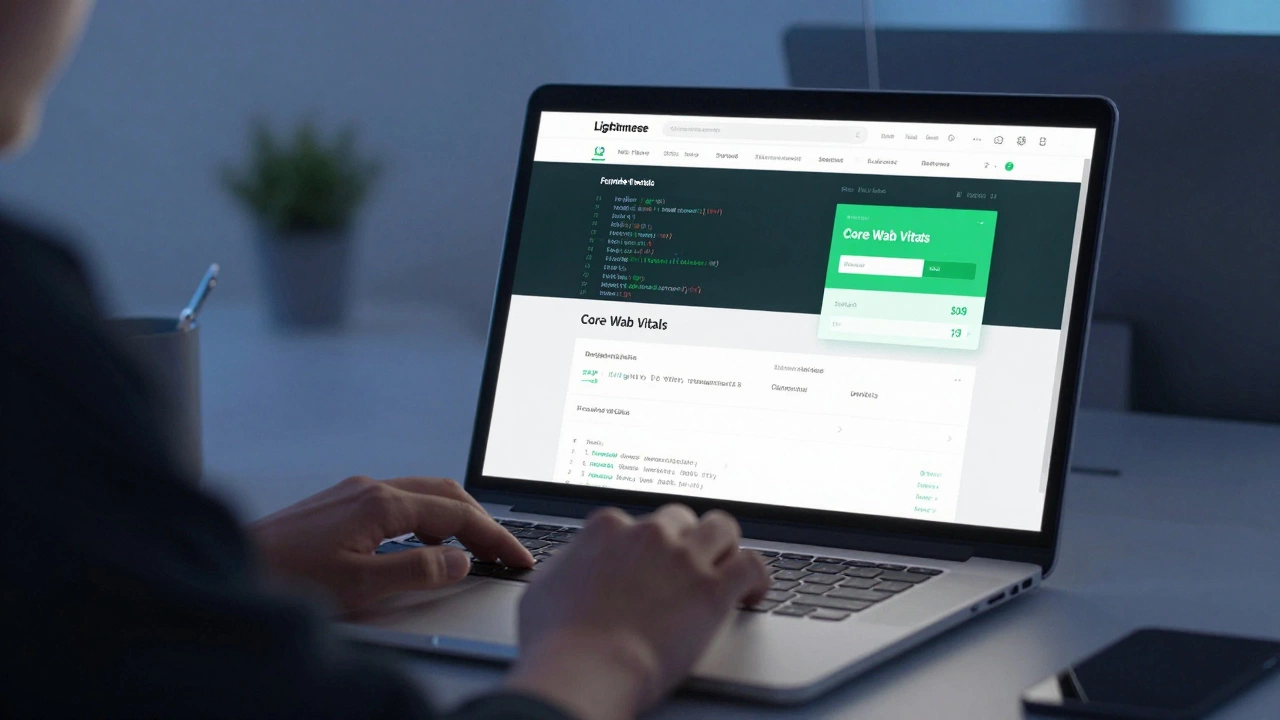
Core Web Vitals Impact Calculator
Improve Your SEO Ranking
Calculate how improving your site's Core Web Vitals can boost SEO rankings. According to 2023 research, top 3 ranking pages have 40% better CWV scores than pages in positions 4-10.
When you build websites, you care about speed, clean code, and user experience. But if no one finds your site, does any of that matter? That’s the question a lot of web developers are asking in 2024. With AI-generated content flooding search engines, social media pulling traffic away, and Google changing its algorithm every few months, it’s easy to wonder: Is SEO still relevant?
The short answer? Yes-but not the way it was ten years ago. SEO isn’t about stuffing keywords or buying backlinks anymore. It’s now baked into how you build websites from the ground up. If you’re a web developer who ignores SEO, you’re building a house with no door.
SEO Isn’t an Add-On-It’s Part of the Stack
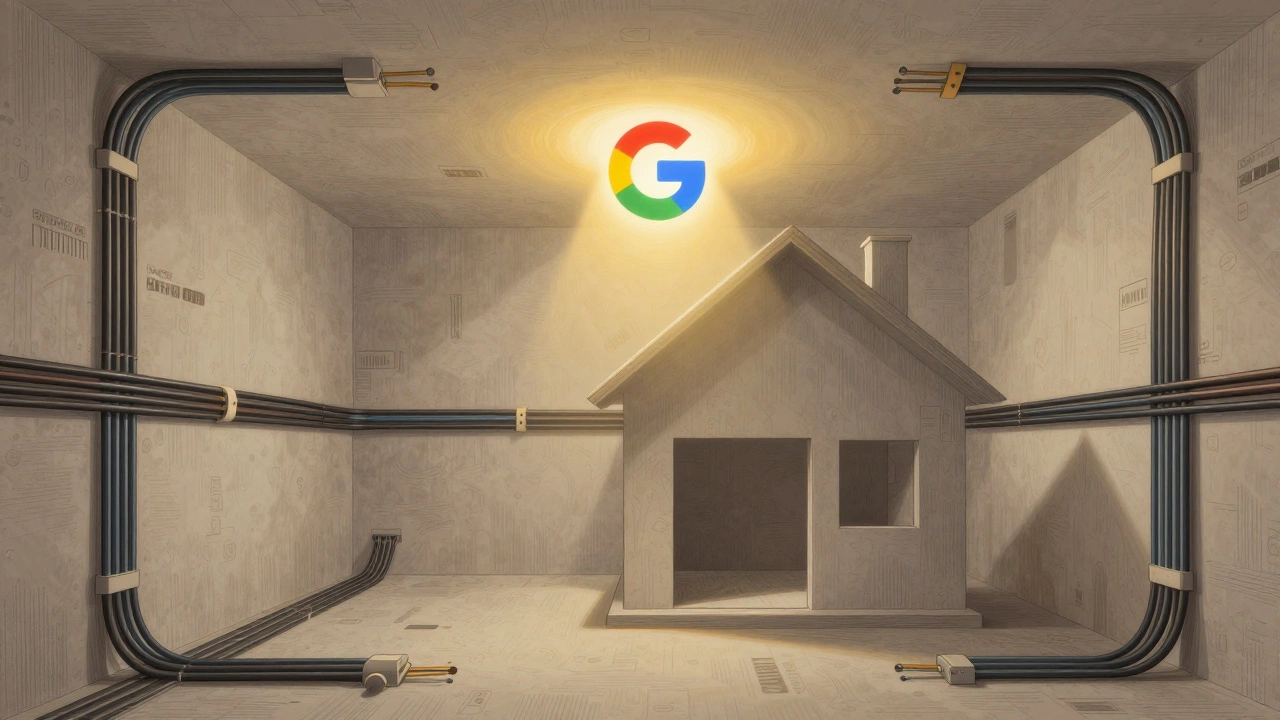
Think of SEO like electricity in a modern home. You don’t install it after the walls are up. You wire it in during construction. The same goes for SEO in web development. Core Web Vitals-loading speed, interactivity, visual stability-are now ranking factors. If your site takes more than 2.5 seconds to load on mobile, Google will penalize it. Period.
Google’s Page Experience Update in 2021 made this official. Since then, sites with poor performance metrics have dropped in rankings, even if they had great content. Developers who ignore this are handing traffic to competitors who optimized from day one.
Here’s what you need to build into every project:
- Proper image compression (WebP format, lazy loading)
- Minimal JavaScript bloat (avoid render-blocking scripts)
- Structured data markup for breadcrumbs, products, FAQs
- Clean URL structure (no session IDs, no random parameters)
- Mobile-first HTML and CSS (no desktop-only layouts)
These aren’t "nice-to-haves." They’re non-negotiable. A 2023 study by Ahrefs found that pages ranking in the top 3 had an average Core Web Vitals score 40% better than pages in positions 4-10. That’s not luck. That’s engineering.
Content Still Matters-But You Don’t Write It
Here’s where many developers get confused. You’re not supposed to write blog posts. You’re supposed to make sure the content that exists can be found, crawled, and understood.
AI tools like ChatGPT can spit out thousands of articles in minutes. But most of them are shallow, repetitive, and lack context. Google’s Helpful Content Update in 2022 specifically targets low-value content. So if your client’s site is full of AI-generated fluff, no amount of keyword optimization will save it.
Your job? Build a site that helps Google understand what the content is about. Use semantic HTML. Add h1, h2, and h3 tags in logical order. Use article, section, and aside elements correctly. Add schema.org markup for products, events, or FAQs. These signals tell Google: "This page is trustworthy. This is real information. Don’t treat it like spam."
For example, a developer building an ecommerce site for a local bakery should include Product schema with price, availability, and reviews. That’s not SEO magic-it’s just good structure.
Technical SEO Is Your Superpower
Most marketers don’t know how to fix a broken robots.txt file. They don’t understand canonical tags or hreflang implementation. That’s where you come in.
As a web developer, you have skills that content writers and marketers lack. You can:
- Fix crawl errors in Google Search Console
- Set up 301 redirects for migrated content
- Optimize XML sitemaps
- Prevent duplicate content with proper headers
- Implement hreflang for multilingual sites
These aren’t glamorous tasks. But they’re critical. A 2024 survey by Moz found that 68% of ranking drops in small business sites were caused by technical errors-not lack of content. You’re the one who can catch those before they go live.
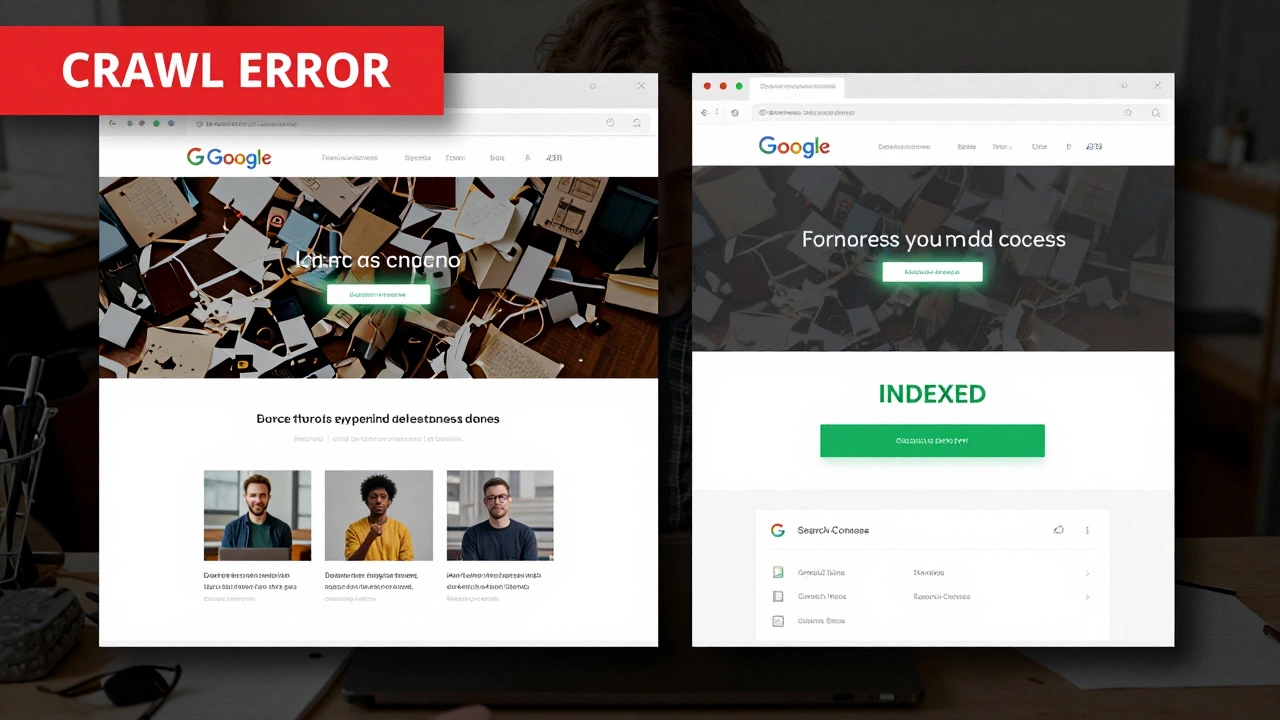
Here’s a real example: A client in Dublin switched hosting providers and forgot to update their DNS records. Their site was down for 72 hours. Google crawled it once during that time, marked it as "unavailable," and demoted every page. It took three weeks to recover. You could’ve prevented that.
SEO Tools Are Now Part of Your Workflow
You don’t need to be a SEO expert. But you do need to use the right tools. Here are the ones most developers actually use in 2024:
- Google Search Console-Check indexing status, mobile usability, and core web vitals
- Lighthouse-Built into Chrome DevTools. Run it on every page before deployment
- PageSpeed Insights-Get performance scores and actionable fixes
- Schema.org Markup Validator-Test your structured data
- SEMrush Site Audit-Find broken links, duplicate titles, missing alt tags
Integrate these into your build process. Make Lighthouse a required step in your CI/CD pipeline. If your site scores under 90 on mobile performance, don’t deploy. That’s not nitpicking. That’s professionalism.
What’s Changing in 2024?
SEO isn’t dead-it’s evolving. Here’s what’s new:
- AI Overviews: Google now shows AI-generated summaries at the top of search results. If your site doesn’t have clear, structured answers, you might not get clicks-even if you rank #1.
- Zero-click searches: Over 60% of searches now end without a click, thanks to featured snippets and AI answers. Your job is to be the source behind those answers.
- Video and image ranking: Google is pushing visual content. If you’re building a product page without high-quality images and video, you’re missing half the traffic.
- Local SEO is booming: "Near me" searches jumped 120% since 2022. If your client has a physical location, you need local schema, Google Business Profile integration, and reviews embedded in the site.
These aren’t trends. They’re structural shifts. The websites that win in 2024 are the ones that don’t just rank-they answer.
What Happens If You Ignore SEO?
Let’s say you’re building a website for a SaaS startup. You focus on sleek animations, custom interactions, and a beautiful dashboard. You skip alt text, lazy load images, and forget meta titles. The site looks amazing. But after six months, traffic flatlines.
Why? Because Google doesn’t care how pretty your site is. It cares if users find what they need quickly. If your site loads slowly, has no clear headings, or can’t be crawled, it vanishes.
Real-world result: A client of mine built a custom booking platform in React. It had a 5-star UI. But the backend generated URLs like /booking?id=12345&session=abc. Google couldn’t index it. Traffic was zero. We spent two weeks rewriting the routing system. Within 30 days, organic traffic jumped 300%.
SEO isn’t optional. It’s the foundation.
Final Thought: SEO Is Your Responsibility Now
Marketing teams used to handle SEO. Now, they’re overwhelmed. AI tools can’t fix broken HTML. They can’t optimize images. They can’t set up redirects. That’s your job.
If you’re a web developer, you’re not just a coder. You’re the gatekeeper of visibility. The person who decides whether a site gets seen-or buried.
Build fast. Build clean. Build with structure. And don’t let anyone tell you SEO doesn’t matter. It matters more than ever.
Is SEO dead because of AI?
No. AI changes how search results are delivered, but it doesn’t remove the need for well-structured, fast, and trustworthy websites. In fact, AI-generated summaries rely on high-quality source pages. If your site lacks proper markup, clean code, or clear answers, Google won’t pull content from it. SEO now means making your site the best possible source for AI to use.
Do I need to learn SEO if I’m a front-end developer?
Yes. Front-end developers control what users see and how fast it loads. If your JavaScript blocks crawling, your images have no alt text, or your site is slow on mobile, you’re hurting SEO. You don’t need to write blog posts, but you do need to understand Core Web Vitals, semantic HTML, and structured data. These are part of modern front-end development.
Can I outsource SEO instead of learning it?
You can hire someone, but you’ll still need to fix technical issues. Marketers can’t fix broken redirects or unoptimized images. If your site has crawl errors, slow load times, or missing schema, no SEO expert can fix that without your help. The best outcome? You handle the technical side, and they handle content and links. It’s a team effort.
What’s the #1 SEO mistake web developers make?
Assuming that if the site looks good, it’s SEO-ready. Many developers focus on design and functionality but ignore crawlability, indexing, and performance. A site can be beautiful and still be invisible to Google. Always test with Lighthouse and Google Search Console before launch.
Should I care about backlinks as a developer?
Not directly. You don’t need to pitch bloggers or build link campaigns. But you do need to make sure your site doesn’t block external links. Broken links on your site hurt credibility. Also, if your site has a clean, logical structure, other sites are more likely to link to it naturally. Your job is to remove barriers to linking-not create them.