
Website Development Time Calculator
Select Your Project Type
Your Hourly Rate
Your Project Estimate
Building a website doesn’t take a week. Or a month. Or even the 40 hours you thought it would. The real answer? It depends. Not on your skill level, not on the tools you use, but on what kind of website you’re actually building. A simple brochure site for a local plumber? That’s maybe 15 hours. A full e-commerce store with custom checkout flows and inventory sync? That’s 150+ hours. And no, you can’t rush it without paying for it later.
What kind of website are you building?
Most people ask, “How long does it take to build a website?” without saying what kind. That’s like asking, “How long does it take to build a car?” without saying if it’s a bicycle or a Tesla. The time changes completely based on scope.
Here’s what most freelancers actually see in the wild:
- Basic 5-page website (Home, About, Services, Contact, Blog) with a template theme and no custom features: 15-25 hours. This includes content layout, image optimization, basic SEO setup, and one round of client revisions.
- Small business website with contact forms and basic CMS (like WordPress): 30-50 hours. You’re adding form integrations, email notifications, maybe a simple gallery, and training the client to update posts.
- Portfolio site for a designer or photographer with animations and custom layout: 40-70 hours. This isn’t just dragging blocks. You’re coding custom scroll effects, optimizing image loading, testing on mobile, and making sure the site feels like an extension of their brand.
- Ecommerce store with 20-50 products (Shopify, WooCommerce): 80-120 hours. Product uploads, tax rules, shipping zones, payment gateways, SSL setup, abandoned cart tracking, and testing on multiple devices. Don’t forget the product photos. If the client didn’t provide them, you’re spending another 10-15 hours sourcing or shooting them.
- Custom web app or SaaS tool (user accounts, dashboards, data tables): 150-400+ hours. This isn’t a website anymore. It’s software. You’re writing backend logic, securing APIs, building user roles, and handling data storage. This often takes weeks, not days.
One client in Dublin asked me to build a website for her bakery in two weeks. She wanted online ordering, a menu with prices, a reservation system, and Instagram integration. I gave her a quote of 95 hours. She thought I was joking. Two weeks later, she was still waiting for her first draft. Turns out, she didn’t have product photos, didn’t know her tax ID, and changed her mind on the color scheme three times. That’s not the code slowing you down. That’s the process.
What eats up the most time?
Most freelancers will tell you the same thing: the code isn’t the hard part. The client is.
Here’s where the hours actually vanish:
- Content gathering - Clients think they’ll send you text and images. They don’t. You spend 10-20 hours chasing them for copy, pushing them to write more than “We’re the best!”, and fixing their Word docs that look like they were typed in 2003.
- Revisions - One client asked for 17 rounds of changes on a 5-page site. That added 30 hours. Most agencies charge extra for this. Freelancers often eat it because they don’t want to lose the client.
- Testing - You think you’re done? You’re not. You need to check it on iOS Safari, Android Chrome, Edge, Firefox, tablet, and mobile. You need to test form submissions, broken links, image loading on slow networks. That’s 5-10 hours minimum.
- Training - If the client is managing their own site, you need to show them how to update a blog post, upload an image, or change a phone number. That’s 1-2 hours of screen sharing, and then you’ll still get a message two weeks later: “How do I delete this?”
And don’t forget the hidden hours: emails, calls, Slack messages, invoice chasing, and waiting for the client to reply. That’s another 10-15 hours on average, buried in your calendar like unpaid overtime.
Can you build a website faster?
Yes - but only if you cut corners. And you shouldn’t.
Tools like Wix, Squarespace, or Elementor can get you a live site in a few hours. But here’s the catch: those sites are templates with locked-in limitations. You can’t add custom features later without starting over. They’re slow. They’re not optimized for SEO. And if you want to move away from them? Good luck exporting your content.
One client tried Wix for six months, then came to me because his site wouldn’t rank on Google. He spent 12 hours trying to fix it himself. I spent 40 hours rebuilding it on WordPress. He saved $1,200 by using Wix - but lost 18 months of traffic. That’s not a win.
Speed isn’t about tools. It’s about preparation. If the client gives you all their content upfront, has clear goals, and approves designs quickly? You can cut 30% off the timeline. But that’s rare.
What’s the average freelance rate per hour?
Freelance web developers in Europe charge between €35 and €120 per hour, depending on experience and location. In Dublin, the average is around €65-€85/hour.
So if your website takes 50 hours:
- At €65/hour: €3,250
- At €85/hour: €4,250
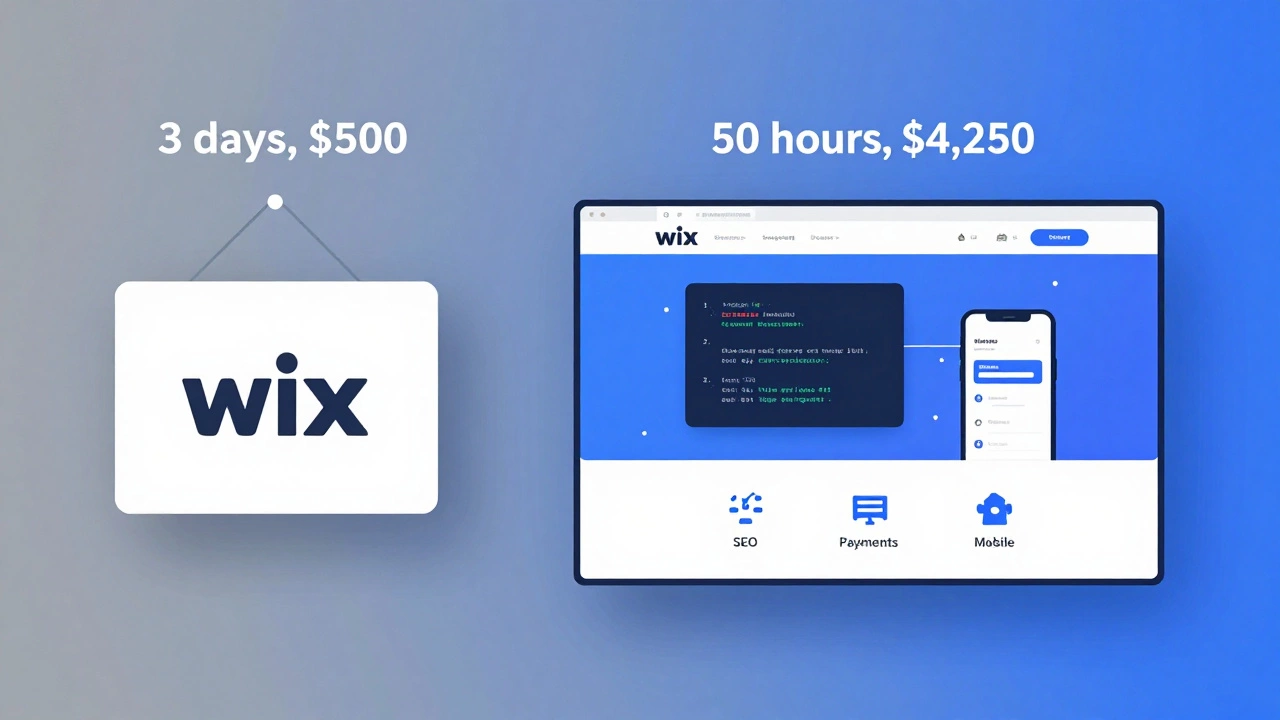
That’s why clients say, “I just need a simple website.” They hear $500. You hear 50 hours of work. That gap is where misunderstandings happen.
Always give a range. Say: “A basic site usually takes 30-50 hours, which comes to €2,000-€3,500.” That sets expectations. It also protects you when they ask for “just one more change.”
How to estimate your own projects
Here’s a simple system I use for every new client:
- Break the project into parts: Design, Development, Content, Testing, Training.
- Estimate hours for each part based on past projects. Don’t guess - look at your last three similar jobs.
- Add 20% buffer for revisions and delays.
- Don’t forget admin time: emails, calls, invoicing. Add 5-10 hours.
- Quote a range, not a fixed price.
Example: A client wants a 6-page site with a blog and contact form.
- Design: 10 hours
- Development: 20 hours
- Content: 15 hours (you’re writing and editing)
- Testing: 8 hours
- Training: 3 hours
- Admin: 7 hours
- Buffer: 10% of 63 = 6 hours
- Total: 69 hours
That’s €4,500-€5,500 at €65-€80/hour. Now you’re not guessing. You’re calculating.

What happens when you undercharge?
I took a job once for €1,500 to build a 10-page site. I thought, “It’s just WordPress. I’ll knock it out in 20 hours.” It took 68 hours. I lost €3,500 in time. I didn’t make a profit. I didn’t even cover my coffee.
Undercharging doesn’t help the client. It hurts you. And it devalues the whole industry. Clients start thinking websites should cost €500. Then they hire someone overseas who charges €10/hour and gets a broken, slow site that crashes on mobile.
Good web development isn’t cheap. It’s an investment. And if you’re not pricing it right, you’re not being taken seriously.
Final takeaway: It’s not about speed. It’s about value.
A website isn’t a poster. It’s a salesperson. It’s a brand. It’s your digital storefront. If you want it to work - to bring in leads, to convert visitors, to look professional - it needs time.
Don’t ask, “How fast can you build it?” Ask, “How well can you build it?”
And if someone promises you a full website in three days for €500? Walk away. They’re not building a website. They’re building a template with your logo slapped on it. And you’ll be the one paying for it later.