
Full Stack Developer Future-Proof Score Calculator
Select all the technologies and concepts you're comfortable with to see how prepared you are for the evolving full stack landscape in 2026.
Frontend Mastery
React, Vue, or Svelte with state management
React Vue SvelteBackend Runtime
Node.js, Deno, or Python/Django
Node.js Deno PythonDatabase Skills
PostgreSQL, MongoDB, or Firebase
SQL NoSQLCloud & DevOps
Docker, Kubernetes, AWS/GCP/Azure
Docker K8sAI Integration
LangChain, API wrappers, prompt engineering
LLMs AI APIsSystem Design
Microservices, caching, message queues
Architecture ScalabilitySecurity Knowledge
OWASP Top 10, secure coding practices
OWASP AuthIt is June 2026. If you have been watching the tech news, you know the landscape has shifted dramatically. Artificial intelligence tools like Copilot and advanced generative coding assistants that write entire functions from natural language prompts can now generate boilerplate code in seconds. Some voices in the industry claim the role of the full stack developer is a software engineer proficient in both front-end and back-end technologies is dead. They argue that if an AI can build a CRUD application in five minutes, why do we need humans who understand everything from HTML to database queries?
The short answer is no, the role is not dead. But it is evolving faster than any other job in tech. The future of full stack development isn't about memorizing syntax; it's about architecture, integration, and solving complex business problems. Here is what you need to know about where this career path is heading and how to stay relevant.
The Shift from Coding to Engineering
In 2015, being a full stack developer meant you could handle a project from start to finish because you knew enough JavaScript for the frontend and enough Python or PHP for the backend. Today, the definition has expanded. The "stack" is no longer just two layers. It includes cloud infrastructure, DevOps pipelines, security protocols, and AI integration.
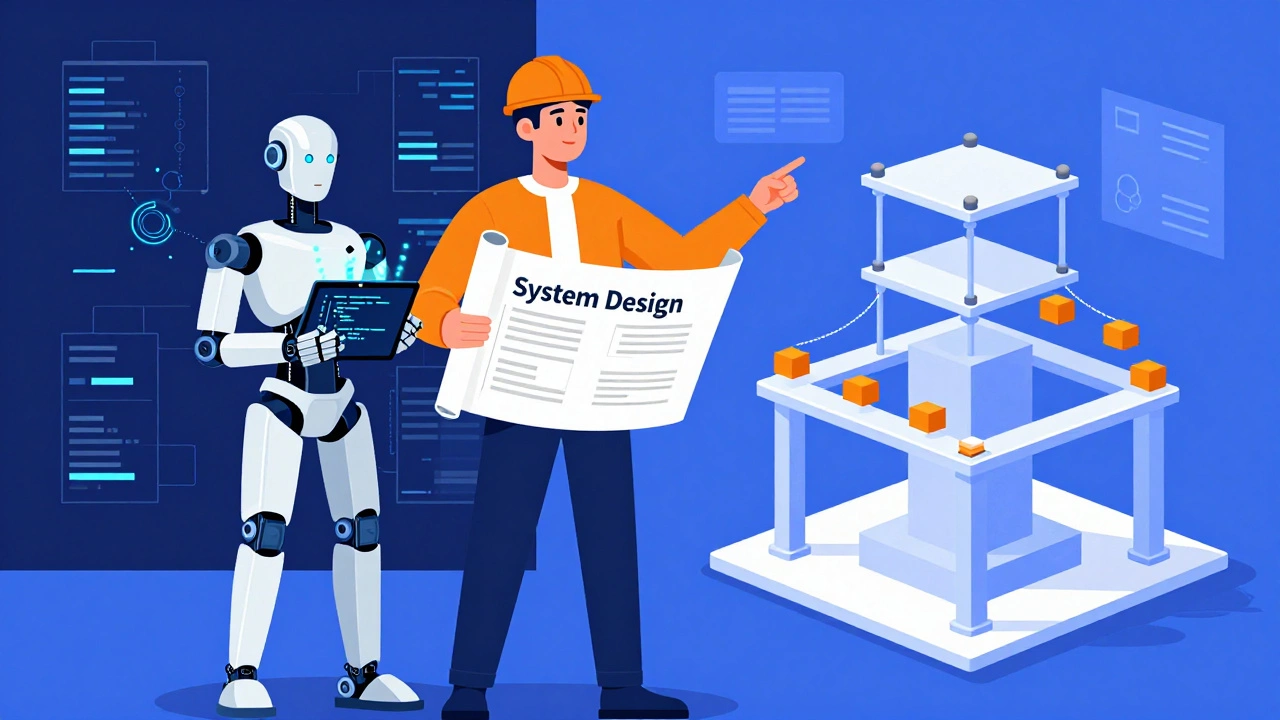
The core change is that AI-assisted coding handles the repetitive task of writing standard code structures and logic. This means your value as a developer is no longer measured by how fast you can type out a React component. It is measured by how well you can design the system that holds those components together. You are moving from being a bricklayer to being an architect. The bricks (code) are being laid by machines, but someone still needs to decide where the walls go, ensure the foundation is solid, and make sure the building doesn't collapse under load.
Why Companies Still Need Generalists
You might wonder why companies haven't just replaced full stack developers with specialized teams plus AI. The truth is, small to mid-sized businesses still crave the efficiency of generalists. A startup cannot afford ten specialists. They need one person who can spin up a MERN stack application using MongoDB, Express.js, React, and Node.js, deploy it to AWS, and debug why the payment gateway is failing.
Here is why the full stack role remains critical:
- Holistic Problem Solving: When a bug occurs, a specialist might blame the database or the frontend. A full stack developer understands the data flow across the entire application. You see the big picture.
- Rapid Prototyping: In a market that moves quickly, the ability to build a minimum viable product (MVP) without waiting on three different teams is invaluable. Full stack developers bridge the gap between idea and execution.
- Cost Efficiency: For many clients, hiring one versatile developer is more sustainable than maintaining a large team of narrow experts.
The New Tech Stack: What You Must Learn
If you want a future in this field, your toolkit needs an update. The old days of just knowing jQuery and MySQL are long gone. In 2026, the modern full stack developer needs to be comfortable with several new paradigms.
| Skill Area | Key Technologies | Why It Matters |
|---|---|---|
| Frontend Frameworks | React, a JavaScript library for building user interfaces, Svelte, a compiler that converts components into efficient vanilla JavaScript | These frameworks manage state and UI complexity better than traditional DOM manipulation. |
| Backend Runtimes | Node.js, a JavaScript runtime built on Chrome's V8 engine, Deno, a secure runtime for JavaScript and TypeScript | JavaScript dominance continues, but Rust-based backends are gaining traction for performance. |
| Database Management | PostgreSQL, an open-source relational database management system, Firebase, a Backend-as-a-Service platform by Google | Understanding SQL is non-negotiable for data integrity, while NoSQL offers flexibility for rapid scaling. |
| Cloud & DevOps | Docker, a platform for developing, shipping, and running applications in containers, Kubernetes, an open-source system for automating deployment and scaling | You must know how to deploy and maintain your code in production environments. |
| AI Integration | LangChain, a framework for developing applications powered by large language models, API wrappers | Integrating AI features into apps is now a standard requirement, not a novelty. |
The Rise of Low-Code and No-Code Platforms
Another threat often cited is the rise of platforms like Webflow or a visual web development platform and Bubble, a low-code platform for building web applications. These tools allow non-developers to build functional websites and apps. Does this kill the full stack developer?
Not quite. Low-code tools are great for simple marketing sites or internal dashboards. However, they hit a ceiling when complexity increases. Custom integrations, unique performance requirements, and specific security compliance standards usually break low-code solutions. This is where the full stack developer steps in. You become the expert who builds the custom plugins, APIs, and complex logic that these platforms cannot handle natively. Instead of competing with low-code, you complement it by handling the heavy lifting that drag-and-drop interfaces simply cannot touch.
Soft Skills Are Your New Superpower
As technical barriers lower due to AI, soft skills become the primary differentiator. In 2026, a senior full stack developer is hired for their ability to communicate, lead, and strategize. You need to translate business requirements into technical specifications. You need to explain to a client why a certain feature will take three weeks instead of three days. You need to mentor junior developers who are learning to work alongside AI tools.
Consider this scenario: A client wants to add a chatbot to their e-commerce site. An AI can write the basic chat script in minutes. But who decides what the bot should say? Who ensures the bot doesn't hallucinate false product information? Who integrates the bot with the inventory database so it knows what's in stock? That is you. The technology is easy; the context is hard.

How to Future-Proof Your Career
If you are worried about staying relevant, here is a practical checklist to keep your skills sharp:
- Master One Frontend and One Backend Deeply: Don't try to learn every new framework. Pick one robust frontend (like React or Vue) and one reliable backend (like Node.js or Python/Django). Master them thoroughly.
- Learn System Design: Study how large-scale applications are structured. Understand microservices, message queues, and caching strategies. This knowledge is harder for AI to replicate because it requires architectural judgment.
- Embrace AI Tools: Stop fighting AI and start mastering it. Learn how to prompt effectively, how to review AI-generated code for security vulnerabilities, and how to integrate AI models into your applications.
- Focus on Security: With more code being generated automatically, security holes are becoming more common. Understanding OWASP top ten vulnerabilities and secure coding practices makes you indispensable.
- Build Real Projects: Theory is fine, but building end-to-end applications teaches you the messy reality of debugging, deployment, and maintenance. Keep a portfolio of live projects.
The Verdict: Yes, There Is a Future
The title of "full stack developer" might eventually fade away, replaced by terms like "software engineer" or "product technologist." But the core function-building complete digital products-will always be needed. The barrier to entry has lowered, which means there is more competition at the junior level. However, the demand for experienced professionals who can navigate complexity, integrate diverse systems, and deliver high-quality software remains high.
The future belongs to those who adapt. If you view yourself merely as a coder, you are right to be worried. But if you see yourself as a problem solver who uses code as a tool, your career is safer than ever. The tools change, but the need for human ingenuity in technology does not.
Is it too late to become a full stack developer in 2026?
No, it is not too late. While the entry-level market is competitive due to AI tools, there is a growing shortage of mid-to-senior level developers who understand system architecture and complex integration. Starting now allows you to learn with the benefit of advanced AI assistants, potentially accelerating your learning curve compared to previous years.
Will AI replace full stack developers completely?
AI is unlikely to replace full stack developers entirely. Instead, it will automate routine coding tasks. Developers will shift their focus to higher-level responsibilities such as system design, security auditing, performance optimization, and integrating AI capabilities into applications. Human oversight is still required for quality assurance and ethical decision-making.
What is the best programming language to learn for full stack development in 2026?
JavaScript (and its superset TypeScript) remains the most versatile choice because it works on both the frontend and backend. Learning the MERN stack (MongoDB, Express, React, Node.js) provides a comprehensive foundation. However, adding Python for backend services or AI integration is highly recommended for broader opportunities.
How important is DevOps knowledge for full stack developers?
DevOps knowledge is increasingly critical. Modern full stack developers are expected to handle deployment, monitoring, and infrastructure management. Familiarity with Docker, Kubernetes, and CI/CD pipelines distinguishes a competent developer from an exceptional one, as it ensures applications run smoothly in production environments.
Can I transition from frontend to full stack development easily?
Yes, transitioning from frontend to full stack is a common and logical career move. Since you already understand user interfaces and data consumption, learning a backend framework like Node.js or Python will feel natural. Focus on understanding databases, server-side logic, and API design to complete the transition.