
Self-Taught UX Readiness Checker
Hiring managers look for evidence of process, not just pixels. Check off the elements you have actively demonstrated in your recent work or portfolio to see where you stand.
Can you show how you conducted interviews or surveys and synthesized messy notes into actionable insights?
Do you have sitemaps or user flows that prove you think structurally about content organization?
Have you shown both low-fidelity sketches (speed/iteration) and high-fidelity prototypes (polish)?
Have you documented real users struggling with your designs and how you fixed those failures?
Do you understand components, tokens, and consistency for large-scale projects?
Have you handled client deadlines, scope negotiations, or conflicting stakeholder feedback?
Your Readiness Score
You don't need a Master's degree in Human-Computer Interaction to land a UX job. In fact, some of the most effective designers I've worked with in Dublin came from backgrounds in psychology, journalism, or even retail management. The question isn't whether you can get hired; it's whether you can prove you belong in the room when hiring managers are making tough decisions.
The tech industry has shifted. While bootcamps and university programs still exist, companies care less about where you learned your craft and more about what you can actually do. But here is the catch: being self-taught means you have to build your own credibility from scratch. You don't have an alumni network handing you referrals, and you don't have a transcript to vouch for your discipline. You have to earn that trust through evidence. This guide breaks down exactly how to bridge the gap between 'I taught myself' and 'hire me.'
Why Hiring Managers Doubt Self-Taught Designers
Let’s be honest about the skepticism. When a recruiter sees 'Self-taught' on a resume, they aren't necessarily thinking you're lazy. They’re worried about three things: consistency, collaboration, and process. Did you skip the boring parts? Can you work within constraints? Do you understand why we test designs before shipping them?
In my experience reviewing portfolios at agencies here in Ireland, the biggest red flag isn't a lack of fancy tools like Figma or Adobe XD. It's a lack of clear reasoning. Bootcamp graduates often suffer from the same issue-they have polished visuals but no story. If you are self-taught, you must overcompensate by showing your thinking process explicitly. You need to demonstrate that you didn't just pick colors because they looked nice, but because data suggested a specific user behavior.
The Core Skills You Must Prove
If you haven't taken a formal course, you might feel like you're missing a checklist. You aren't. There are five pillars of UX competency that every junior designer needs to display, regardless of their educational background. If you can hit these marks, your degree status becomes irrelevant.
- User Research: Can you conduct interviews? Can you synthesize messy notes into actionable insights? You don't need a PhD in anthropology, but you need to know how to ask open-ended questions without leading the witness.
- Information Architecture: How do you organize content so users don't get lost? Show us your sitemaps and user flows. This proves you think structurally, not just visually.
- Wireframing and Prototyping: Low-fidelity sketches show speed and iteration. High-fidelity prototypes show polish. You need both. Tools like Figma are industry standards because they allow for real-time collaboration, which mirrors actual workplace dynamics.
- Usability Testing: Have you ever watched someone struggle with your design? That pain is valuable. Documenting those failures and how you fixed them is gold dust for recruiters.
- Design Systems: Understanding components, tokens, and consistency shows you are ready for large-scale projects, not just one-off landing pages.
Building a Portfolio That Overcomes Bias
Your portfolio is your diploma. For self-taught designers, this is the single most critical asset. Most junior portfolios fail because they are too short or too focused on final UI screens. A hiring manager spends about two minutes on average scanning a case study. If all they see is pretty buttons, they move on.
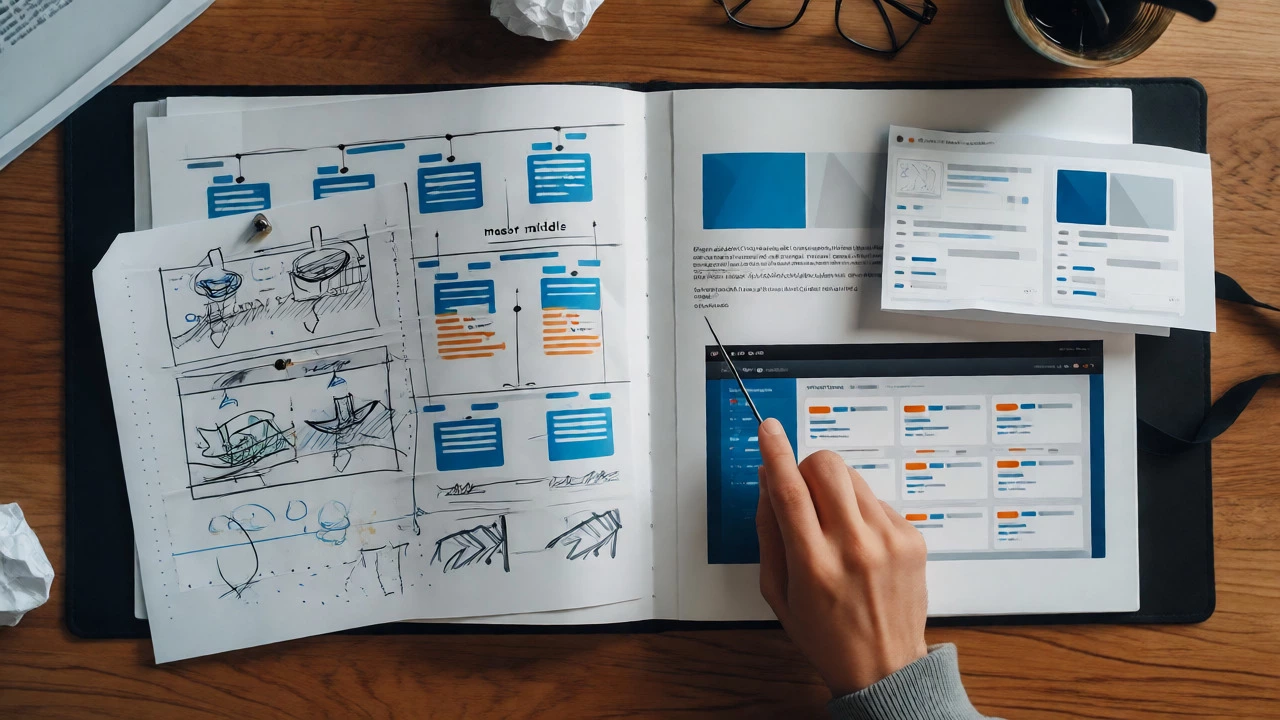
To beat the bias, structure your case studies like scientific reports. Start with the problem statement. Who was the user? What was the business goal? Then, walk through your process. Show the messy middle-the discarded wireframes, the conflicting feedback, the pivot points. End with the outcome. Did conversion rates improve? Did support tickets drop? Even if you did a redesign project (which is fine), quantify your hypothetical impact or explain the logic behind your improvements.
| Aspect | Bootcamp Graduate | Self-Taught Designer |
|---|---|---|
| Project Volume | 3-5 guided projects | 1-2 deep-dive personal projects + freelance work |
| Process Visibility | Standardized templates | Must manually document unique workflows |
| Certification | Recognized certificate | No formal cert (rely on GitHub/Behance) |
| Networking | Strong peer cohort | Requires active community engagement |
Leveraging Freelance Work as Proof
One of the fastest ways to silence doubts is real-world experience. You don't need to wait for a full-time offer to gain professional credibility. Take on small freelance gigs or volunteer for non-profits. These projects provide two crucial elements: client constraints and deadlines.
Academic or practice projects rarely have hard deadlines or angry stakeholders. When you design for a real client, you learn to negotiate scope and handle feedback that contradicts your initial vision. Mentioning 'collaborated with a marketing team to launch a campaign' carries significantly more weight than 'designed a mock app.' It signals that you can operate in a business environment, not just a creative bubble.
Navigating the Interview Process
When you finally get that interview, expect questions designed to test your self-discipline. 'How did you stay motivated?' 'Who gave you feedback?' 'How did you learn accessibility standards?' Prepare specific stories. Don't say, 'I watched YouTube videos.' Say, 'I followed the Nielsen Norman Group articles on heuristic evaluation and applied them to my checkout flow redesign.'
Be ready for whiteboard challenges. Since you didn't go through a structured curriculum, they want to see if you can think on your feet. Practice solving problems out loud. Explain your assumptions. If you don't know something, admit it and explain how you would find the answer. Honesty combined with resourcefulness is highly valued in senior teams who mentor juniors.

Where to Find Your First Role
Don't limit yourself to 'UX Designer' titles. Look for adjacent roles that value your skill set. Titles like 'Product Designer,' 'Web Designer,' 'UI Developer,' or even 'Content Strategist' often overlap with UX duties. Smaller startups and agencies are generally more open to self-taught talent than massive corporate entities with rigid HR policies. They care about output, not pedigree.
Also, consider contract-to-hire positions. Many companies prefer to trial a candidate for three months before committing to a permanent salary. This lowers the risk for them and gives you a chance to prove your worth in a live environment. Once you have six months of commercial experience under your belt, the 'self-taught' label matters far less.
Frequently Asked Questions
Do I need a certification to get hired as a self-taught UX designer?
No, certifications are optional. While they can help fill gaps in your knowledge, hiring managers prioritize a strong portfolio and demonstrable problem-solving skills over certificates. However, completing a recognized course can provide structure and networking opportunities if you struggle with self-discipline.
Is coding required for a UX design job?
Generally, no. Most UX roles focus on research, wireframing, and prototyping. However, having a basic understanding of HTML, CSS, and JavaScript helps you communicate better with developers and design feasible solutions. It makes you a more collaborative partner, but you won't be writing production code daily.
How many projects should be in my portfolio?
Quality beats quantity. Three to four detailed case studies are sufficient. Each project should clearly outline the problem, your process, the solution, and the results. Avoid filling your portfolio with ten superficial mockups; depth demonstrates your ability to handle complex challenges.
What is the biggest mistake self-taught designers make?
The most common mistake is hiding the process. Many self-taught designers only show the final high-fidelity UI. Recruiters want to see the sketches, the user flows, the failed iterations, and the rationale behind design decisions. Showing the 'messy' work proves you are a thinker, not just a decorator.
Can I transition from a different industry?
Absolutely. Backgrounds in psychology, sociology, journalism, and customer service are highly valued in UX. These fields teach empathy, communication, and analytical thinking-core UX skills. Highlight transferable skills in your resume, such as stakeholder management or data analysis, to strengthen your application.