
Full Stack Learning Timeline Estimator
Based on the article's realistic guide, this tool estimates how long it will take you to reach a job-ready level (Phase 5) depending on your commitment.
Enter your details and click "Estimate" to see your projected journey.
You see the job postings: "Hiring Full Stack Developer, $80k starting salary." You look at your laptop, where you just managed to make a button change color when clicked, and think, Is this actually possible for me?
The short answer is yes. But the longer, more honest answer is that it’s not about talent-it’s about stamina. Learning full stack development is the practice of building both the client-side (front end) and server-side (back end) components of a website or application is a marathon, not a sprint. I’ve watched plenty of people in Dublin’s tech scene start with zero coding knowledge and land junior roles within 12 to 18 months. They didn’t have magic genes; they had a plan.
The Myth of the "Natural Coder"
Let’s kill this right now. There is no such thing as a natural coder who understands HTTP requests by osmosis. When I started, I spent three days trying to figure out why my CSS wasn’t applying to a specific div. It was a typo. That’s it. The barrier isn’t intelligence; it’s frustration tolerance.
A beginner can absolutely learn full stack because the tools today are designed for humans, not just computers. Frameworks like React handle complex UI logic so you don't have to write raw JavaScript for every interaction abstract away much of the pain. If you can follow a recipe, you can write code. The difference is that the kitchen changes every six months, so you need to be comfortable learning new appliances.
What Does "Full Stack" Actually Mean?
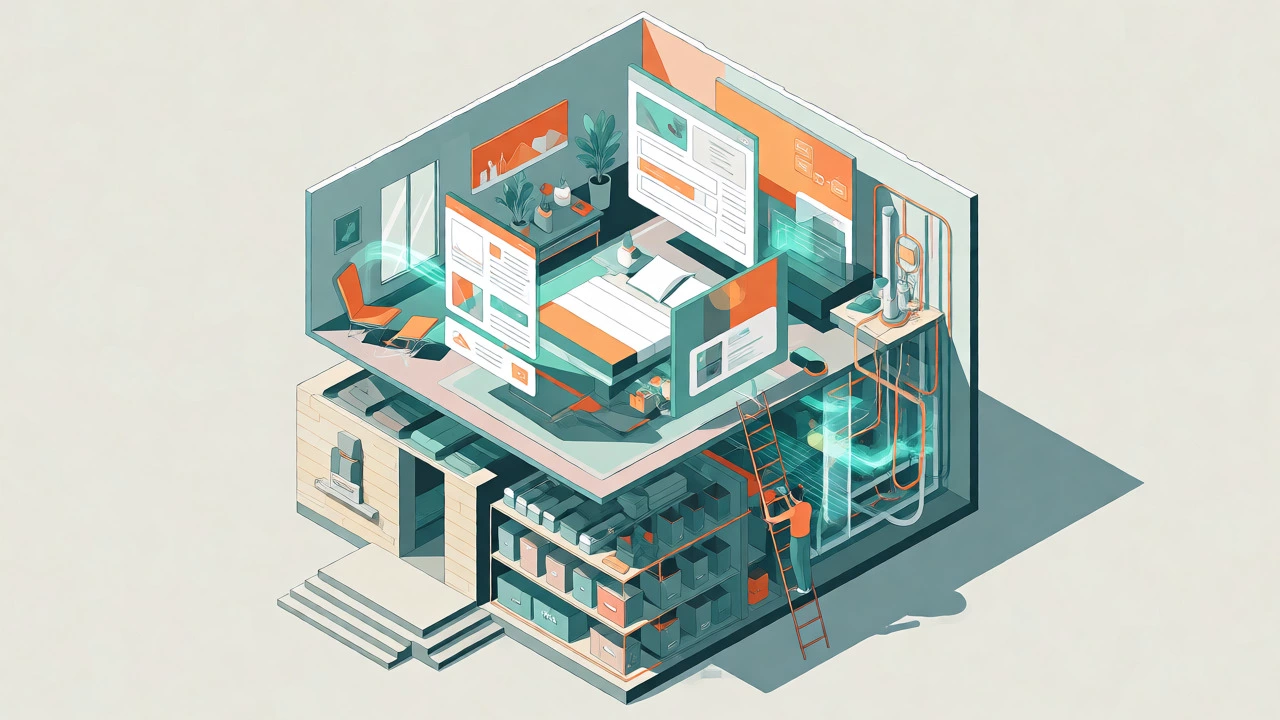
Before you buy a course, you need to know what you’re signing up for. Being full stack doesn’t mean you’re an expert in everything. It means you understand how the pieces fit together. Think of it like building a house:
- Front End: This is the interior design. It’s what users see and interact with. You’ll use HTML, CSS, and JavaScript. Tools like Vue.js or React help you build interactive interfaces.
- Back End: This is the plumbing and electrical work. Users don’t see it, but if it breaks, the whole house floods. You’ll use languages like Python, Node.js, or PHP to process data.
- Database: This is the storage closet. You need to know how to save user data securely using systems like PostgreSQL or MongoDB.
You don’t need to master all three simultaneously. In fact, trying to do so is the fastest way to burnout. Most beginners succeed by going vertical: learn enough front end to build a page, then learn enough back end to save data from that page.
The 6-Month Reality Check
How long does it take? Forget the "learn to code in 3 weeks" ads. For a true beginner working part-time (10-15 hours a week), here’s a realistic timeline based on current industry standards in 2026:
| Phase | Duration | Focus Area | Expected Outcome |
|---|---|---|---|
| 1. Foundations | Months 1-2 | HTML, CSS, Basic JS | Build static landing pages that look good on mobile. |
| 2. Interactivity | Month 3 | Advanced JS, DOM Manipulation | Create dynamic forms, sliders, and simple games. |
| 3. Front End Framework | Months 4-5 | React or Vue | Build a single-page application (SPA) with routing. |
| 4. Back End Basics | Months 6-7 | Node.js/Express or Python/Django | Create a simple API that returns JSON data. |
| 5. Integration | Months 8-9 | Databases & Authentication | Connect your frontend to your backend with user login. |
Notice that you aren’t touching databases until month six. Why? Because you need something to connect to. If you try to learn SQL before you understand what a variable is, you’ll quit. Sequence matters more than speed.
Choosing Your Tech Stack
This is where beginners get paralyzed. Should you learn Java? Ruby? Go? For a beginner in 2026, stick to one of these two paths. They have the most jobs, the best documentation, and the largest community support.
Path A: The JavaScript Monolith (MERN)
MERN stands for MongoDB, Express, React, Node.js. The biggest advantage? You only learn one language: JavaScript. Yes, you run it on the browser (React) and on the server (Node). This reduces cognitive load significantly. If you already know some basic JS, this is your fastest route to being "full stack."
Path B: The Python Powerhouse
If you find JavaScript’s syntax weird (and many do), go with Python. Use Django or Flask for the back end. Pair it with a front end framework like React or even simple HTMX for interactivity. Python reads like English, which makes debugging less painful for newcomers. Plus, Python opens doors to data science later if you decide web dev isn’t for you.
Pro Tip: Don’t switch stacks halfway through. Pick one, stick with it for at least six months, and finish a project. Switching frameworks while still struggling with basics is procrastination disguised as productivity.
The Trap of Tutorial Hell
You watch a YouTube video. The instructor builds a To-Do app. You copy their code line-by-line. It works! You feel like a genius. Then you close the video, open a blank file, and stare at the cursor. What now?
This is "tutorial hell." You’re consuming content without creating. To escape it, you must follow the 20/80 rule: spend 20% of your time watching tutorials and 80% building things yourself. Start small. Break the tutorial. Change the colors. Add a feature the instructor didn’t show. If you can’t rebuild the app from memory after watching it once, you haven’t learned it-you’ve just memorized it.
I recommend building three specific projects during your first year:
- A Personal Portfolio: Not fancy. Just clean HTML/CSS and a contact form that actually sends an email via a backend service.
- A CRUD App: Create, Read, Update, Delete. Build a simple blog or task manager where users can log in and manage their own posts.
- A Data Fetcher: Use a public API (like weather or movie data) to display live information. This teaches you how servers talk to each other.

Do You Need a Degree?
In Ireland and across Europe, hiring managers care about two things: Can you solve problems? And can you communicate those solutions? A degree helps with communication, but a portfolio proves problem-solving.
Bootcamps are popular, but they’re expensive ($10k-$15k). Self-taught routes are cheaper but require more discipline. I’ve seen self-taught developers outperform bootcamp grads because they had to struggle through bugs alone. That struggle builds muscle memory. If you choose the self-taught path, join communities like Reddit’s r/learnprogramming or local Dublin meetups. Isolation kills motivation faster than difficult code.
Common Pitfalls for Beginners
Here are the mistakes I see most often in new learners:
- Ignoring Git: Version control isn’t optional. Learn Git early. Commit daily. If you break your code, you want to roll back, not rewrite from scratch.
- Over-engineering: Don’t set up Kubernetes for a To-Do list. Keep it simple. Deploy your first app on free tiers like Vercel or Render. Seeing your code live on the internet is a huge dopamine hit.
- Neglecting Soft Skills: Coding is technical, but getting hired is social. Practice explaining your code in plain English. Interviewers love candidates who can say, "I chose this library because..." rather than just showing code.
Final Thoughts: Start Before You’re Ready
You will never feel "ready." The ecosystem moves too fast. By the time you master React 18, React 19 will be out. The key is to embrace the discomfort. Learning full stack is hard, but it’s a solvable puzzle. Every bug you fix makes you sharper. Every deployed project makes you hireable.
So, can a beginner learn full stack? Absolutely. But you have to stop reading articles about learning and start writing bad code today. Make it ugly, make it buggy, but make it yours.
How many hours a day should I study?
Consistency beats intensity. Two focused hours every day is better than ten hours on Sunday. Your brain needs sleep to consolidate what you've learned. Burnout is real, so listen to your body.
Is math required for full stack development?
No advanced math is needed for standard web apps. You need basic logic and arithmetic. If you can handle percentages and basic algebra, you're fine. Complex algorithms come later, and you rarely write them from scratch in modern web dev.
Which is easier: Front End or Back End?
Front end is visually rewarding immediately, which keeps motivation high. Back end is more logical and abstract. Many beginners prefer front end initially because they can see results instantly. However, back end concepts are often more stable over time.
Can I get a job without a portfolio?
It's very difficult. Employers need proof you can build things. A GitHub profile with three solid projects is worth more than a certificate. If you lack experience, contribute to open source or build clones of popular apps to show initiative.
Is AI replacing junior developers?
AI is changing the role, not eliminating it. Juniors now need to be proficient at prompting and reviewing AI-generated code. Understanding fundamentals is crucial because you need to debug what the AI writes. Adaptability is the new skill.