
Web Dev Path & ROI Calculator
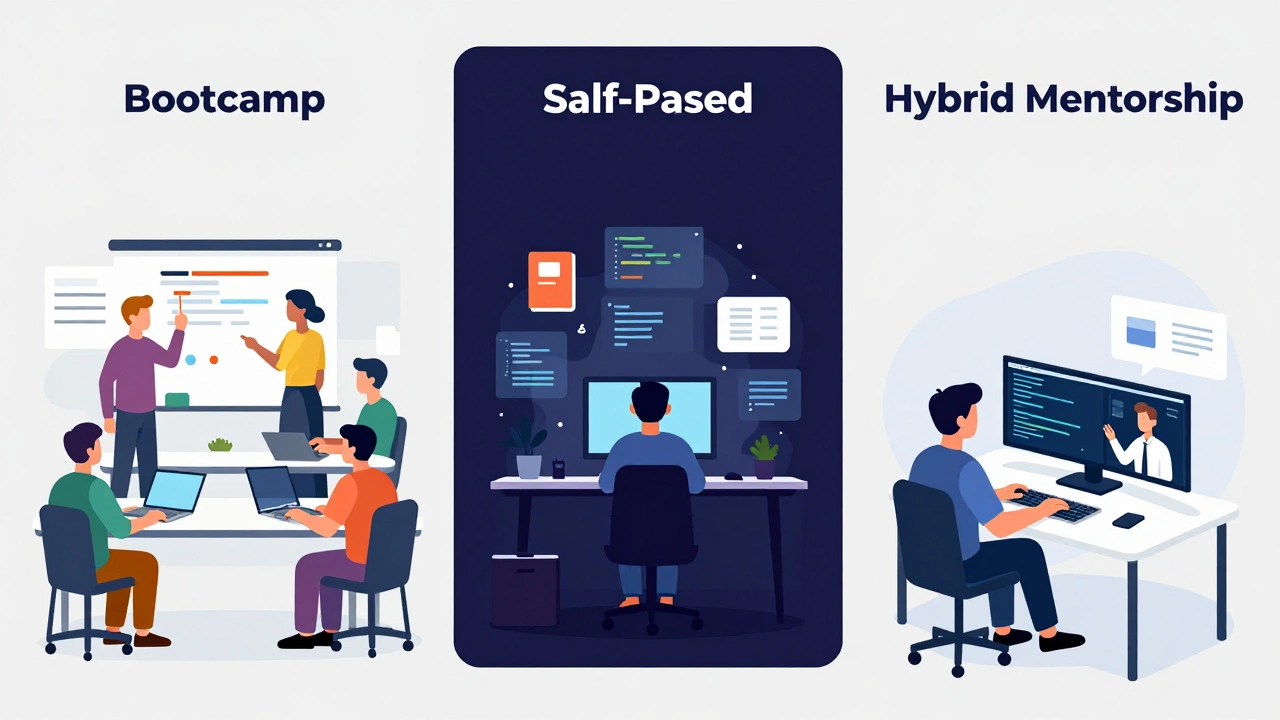
Immersive Bootcamp
High structure, mentorship, and career support.
€5k - €15kSelf-Paced Online
Low cost, high discipline, flexible schedule.
$0 - $100Hybrid Mentorship
Subscription model with interactive environments.
~€30/moEstimated Timeline
--
--
Total Estimated Cost
--
Based on current market rates for 2026.
There is no single "best" course. That’s the first thing you need to hear if you are serious about breaking into tech in 2026. The market has shifted. AI tools like GitHub Copilot and Cursor handle the boilerplate code now. If your course still teaches you how to write a basic HTML tag from scratch without context, it is wasting your time.
The real question isn't which course is best globally. It is which course fits your current skill level, your budget, and the specific job role you want. Are you aiming for a junior frontend role at an agency? Or do you want to build SaaS products as a freelancer? The path differs completely.
Define Your Target Role First
Before you spend a dime or a weekend, look at job boards in your region. In Dublin, London, or New York, the demand for Full Stack Developers remains high, but the definition of "full stack" has evolved. It used to mean knowing PHP and MySQL. Today, it usually means React (or Vue) on the front end, Node.js or Python on the back end, and familiarity with cloud services like AWS or Vercel.
- Frontend Focus: You love design, user interaction, and visual feedback. You want to master HTML, CSS, JavaScript, and frameworks like React or Next.js.
- Backend Focus: You prefer logic, databases, and server architecture. You care less about how a button looks and more about how data moves securely.
- Full Stack: You want the ability to build an entire application alone. This is the most versatile path for freelancers and startups.
If you pick a course that doesn’t align with this goal, you will finish feeling qualified for nothing. For example, taking a pure backend Java course when every local startup uses JavaScript/TypeScript is a mismatch.
The Three Main Learning Paths
In 2026, learning web development falls into three distinct buckets. Each has pros, cons, and hidden costs.
1. Structured Bootcamps (High Cost, High Support)
Bootcamps like General Assembly, Le Wagon, or Flatiron School offer immersive experiences. They typically last 12 to 24 weeks. You pay between €5,000 and €15,000. The value here is not just the curriculum-it is the accountability and the career services.
You get a cohort of peers, daily stand-ups, and often a dedicated career coach who helps polish your LinkedIn and prepares you for technical interviews. If you struggle with self-discipline, this structure can be the difference between quitting and finishing.
2. Self-Paced Online Platforms (Low Cost, High Discipline)
Platforms like Udemy, Coursera, or freeCodeCamp allow you to learn at your own speed. You might spend $20 on a bundle or nothing at all. The downside? There is no one to check your work. Many students watch videos for months but never build a deployable project. The gap between watching a tutorial and writing original code is where most learners fail.
3. Hybrid Mentorship Programs (Medium Cost, Medium Support)
Newer models like Scrimba or Codecademy Pro sit in the middle. They offer interactive coding environments and some community support. You pay a monthly subscription. This works well if you have a day job and can only study five hours a week.
| Path Type | Avg. Cost (2026) | Time Commitment | Best For |
|---|---|---|---|
| Immersive Bootcamp | €8,000 - €15,000 | 12-24 Weeks Full-Time | Career changers needing structure |
| Self-Paced (Udemy/freeCodeCamp) | $0 - $100 | 3-9 Months Part-Time | Budget-conscious, disciplined learners |
| Hybrid Platform (Scrimba) | €30/month | 6+ Months Part-Time | Working professionals upskilling |
What to Look for in a Curriculum
Don’t just read the marketing copy. Ask for the syllabus. A modern, relevant web development course must include these core technologies in 2026:
- JavaScript (ES6+): The language of the web. If they teach jQuery as a primary tool, run away. It is legacy tech.
- TypeScript: Almost all professional teams now use TypeScript over plain JavaScript for better error handling. Ensure your course covers interfaces and types.
- A Modern Framework: React is still the industry standard for jobs. Next.js is increasingly important for full-stack capabilities. Vue and Angular are valid but have smaller job markets in many regions.
- APIs and Data Fetching: You must understand RESTful APIs and GraphQL. Learn how to connect a frontend to a backend using Axios or Fetch.
- Version Control (Git): Not just saving files. You need to know branching, merging, pull requests, and resolving conflicts. This is non-negotiable for team work.
- Deployment: How to put your site on the internet. Learn Vercel, Netlify, or AWS Amplify. Knowing how to configure DNS and SSL certificates is a huge plus.
Ignore courses that focus heavily on outdated tools like Bootstrap 3 or jQuery. While understanding legacy code is useful, spending 40% of your time on it is a mistake for a beginner.
The Project Portfolio: Your Real Resume
In 2026, employers rarely care about the certificate you earned. They care about what you can build. The best courses force you to build projects that solve real problems.
Avoid "todo list" apps or weather apps that everyone builds. Instead, aim for:
- An E-commerce Store: Integrate Stripe for payments. Handle cart state management. Show product filtering.
- A Dashboard: Pull data from a public API (like Spotify or GitHub) and visualize it with charts. Use authentication so users can save preferences.
- A SaaS MVP: Build a simple tool, like a URL shortener or a markdown editor, and deploy it. Add a landing page and a contact form.
Your GitHub profile should show commit history. Green squares matter. They prove you coded consistently, not just copied code during a hackathon.
Free vs. Paid: Is Free Enough?
You can become a developer for free. Resources like freeCodeCamp, The Odin Project, and MDN Web Docs are exceptional. However, free resources lack curation. You often don’t know what to learn next. This leads to "tutorial hell," where you consume content but cannot create independently.
Paid courses provide a roadmap. They tell you, "Learn this, then this, then build this." If you are highly self-motivated, start with free resources. If you find yourself stuck after two weeks, consider investing in a structured program or a mentor.

Red Flags to Avoid
Be skeptical of any course that promises:
- "Get Hired in 30 Days": Unless you already have a CS degree, this is a lie. Entry-level hiring cycles take 3-6 months.
- "No Coding Experience Needed" for Advanced Topics: You cannot skip fundamentals. Understanding variables, loops, and functions is mandatory before touching React.
- Outdated Tech Stacks: If the instructor mentions PHP 5 or jQuery as the future, the course is obsolete.
Next Steps for Your Journey
Start by auditing your current skills. Can you build a static website with HTML and CSS? If not, begin there. Once comfortable, move to JavaScript. Do not rush into frameworks until you understand vanilla JS.
Choose one path-bootcamp, self-paced, or hybrid-and stick to it for at least three months. Consistency beats intensity. Coding for one hour every day is far better than coding for ten hours once a week.
Join communities. Discord servers, Reddit forums, and local meetups in cities like Dublin or Berlin provide support. When you get stuck, asking for help is part of the job. Learning to debug and communicate errors is as important as writing code.
Is a computer science degree necessary for web development?
No. Most web developers enter the field through bootcamps, self-study, or associate degrees. Employers prioritize practical skills and portfolio projects over academic credentials. However, a CS degree can help if you aim for large enterprise companies or roles involving complex algorithms.
How long does it take to learn web development?
It varies. With full-time immersion (40+ hours/week), you can reach job-ready status in 6-9 months. Part-time study (10-15 hours/week) typically takes 12-18 months. The key factor is building projects, not just watching videos.
Should I learn React or Vue first?
React generally offers more job opportunities globally and in major hubs like Dublin and London. Vue is easier to learn initially but has a smaller ecosystem. If your goal is maximum employability, start with React and Next.js.
Are web development certifications worth it?
Most certifications from bootcamps or platforms like Udemy hold little weight with employers. Your GitHub portfolio and live demo projects are far more valuable. Exceptions include cloud certifications (AWS, Azure) if you pursue backend or DevOps roles.
Can I learn web development with AI tools?
AI tools can accelerate learning by explaining concepts and debugging code, but they cannot replace foundational understanding. Relying solely on AI will leave you unable to fix complex issues or architect applications. Use AI as a tutor, not a crutch.