Platform Decision Guide: Wix vs. Alternatives
Answer the following questions to find out if the "Wix Controversy" actually affects your specific situation.
Calculating...
You've probably seen the heated debates on Reddit or X. One person swears by the ease of a drag-and-drop builder, while a seasoned developer claims that using one is a recipe for disaster. Most of this friction centers around a few specific "controversies" that have trailed the platform for years. If you're deciding where to host your business, you need to know if these warnings are actual deal-breakers or just outdated gripes from people who prefer coding from scratch.
The Core Issues: What's Actually Happening?
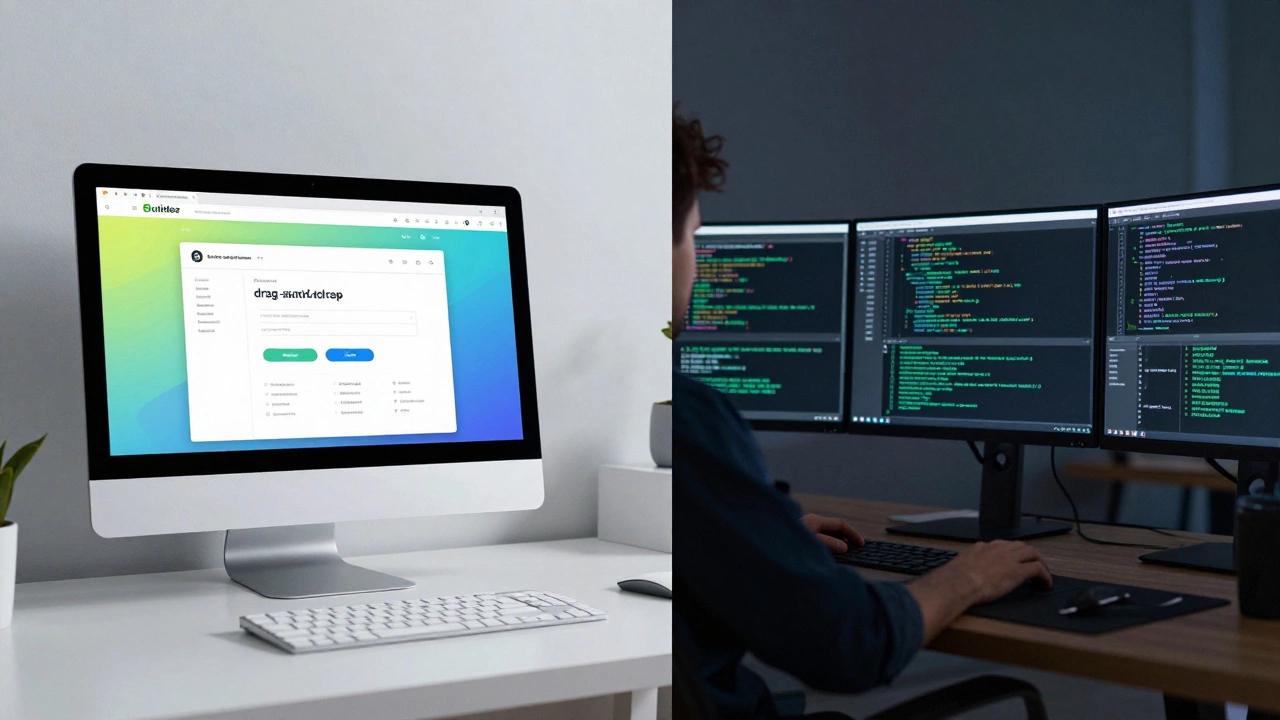
Most of the noise comes from three main areas: search engine visibility, what happens when you want to leave, and how the sites actually load. Let's start with the big one. Wix is a cloud-based development platform that allows users to create HTML websites and storefronts through drag-and-drop tools. Because it handles everything from hosting to the editor, it's a "closed ecosystem." That's where the trouble starts for some people.
The SEO Myth and Reality
For years, the biggest Wix controversy was the claim that the platform was "bad for SEO." Early critics pointed to messy code and slow load times that supposedly made Google Search ignore Wix sites. In the early 2010s, this was partly true. The way the editor handled content meant that search engines sometimes struggled to index pages correctly.
But things changed. Wix shifted its infrastructure to support better indexing and introduced the "SEO Wiz." They moved away from outdated Flash-based elements and embraced modern web standards. Now, if you look at the data, Wix sites rank just as well as others, provided the content is good. The "controversy" here is mostly a ghost of the past, though some purists still hate the lack of granular control compared to a manual setup.
The "Hotel California" Problem: Site Portability
This is where the controversy is still very much alive and valid. In the world of Website Hosting, portability is the ability to move your site from one server to another. With an open-source tool like WordPress, you can export your database and move to any host in the world in an afternoon.
Wix doesn't work that way. Because your site is built using their proprietary technology, you cannot simply "export" your website and upload it to a different provider. If you decide you've outgrown the platform, you essentially have to start from scratch on a new platform and manually copy-paste your text and images. For a small blog, that's a nuisance. For a massive e-commerce store with thousands of pages, it's a nightmare. This "vendor lock-in" is the primary reason developers warn against it.
Performance and Page Speed
Speed is a critical factor for user experience and rankings. Because Wix uses a heavy layer of JavaScript to enable that easy drag-and-drop movement, the resulting pages can be "bloated." If you add too many heavy images or complex animations, your Core Web Vitals scores might take a hit.
Imagine a professional athlete wearing a heavy winter coat during a race. They can still run, but they aren't as efficient as someone in streamlined gear. That's the trade-off: you get extreme ease of design, but you pay for it with a slightly heavier page weight. For most local businesses, this is negligible. For a high-traffic news site, it's a problem.
How It Compares to the Competition
To understand why people argue about this, you have to see where Wix sits in the landscape. It's not just "Wix vs. the world"; it's a choice between different philosophies of web ownership.
| Feature | Wix (SaaS) | WordPress (Self-Hosted) | Custom Code (React/Next.js) |
|---|---|---|---|
| Ease of Setup | Instant / Very Easy | Moderate | Difficult / High Skill |
| Ownership | Rented Space | Full Ownership | Full Ownership |
| Portability | None (Locked) | High | Total |
| Maintenance | Handled by Platform | You handle updates | You handle everything |
| SEO Control | Guided/Automated | Extremely Deep | Absolute |

The "Developer Hate" Factor
Why do web developers love to hate Wix? It's not always about the tech. There's a psychological element here. For a professional who spent years learning CSS and HTML, seeing a tool that lets anyone "cheat" the process can be frustrating. More importantly, developers often get hired to "fix" Wix sites that have been ruined by non-professionals who over-designed their pages into a slow, unreadable mess.
When a developer tells you "Wix is a scam," they are often talking about the lack of clean code and the inability to scale the architecture. If your goal is to build the next Airbnb or a complex web app, Wix is the wrong tool. But if you need a portfolio for your photography business by tomorrow morning, the developer's concerns are mostly irrelevant to your needs.
Is the Controversy a Deal-Breaker for You?
Whether these issues matter depends entirely on your "Job to be Done." Let's look at a few real scenarios to clear the air.
- The Solo Entrepreneur: You need a professional presence, you don't want to touch a line of code, and you don't plan on changing your site architecture every six months. In this case, the "controversy" is noise. The speed of launch outweighs the risk of lock-in.
- The Growing Agency: You're building sites for clients. Here, the portability issue is a huge red flag. If a client decides they want to move to a different host in three years, you can't just move the files. You'll have to bill them for a total rebuild.
- The SEO Power-User: You're in a hyper-competitive niche (like insurance or law) where every millisecond of load time equals thousands of dollars. The overhead of a drag-and-drop builder might actually hurt your bottom line. You'd be better off with a lean, custom-built site.

Avoiding the Common Pitfalls
If you decide to use Wix despite the debates, you can avoid the common traps that lead to the "performance" part of the controversy. First, stop using oversized images. Run every photo through a compressor before uploading. Second, be careful with too many third-party apps; each one adds a new script that slows down your page load.
Also, be aware of the "Editor X" or "Wix Studio" options. These are designed for more professional designers and offer better responsive control, which helps solve some of the layout issues that early critics complained about. They bridge the gap between "too simple" and "too restrictive."
Does Wix actually hurt my Google rankings?
No. Modern Wix sites are fully crawlable and indexable by Google. While they might have slightly more "code bloat" than a hand-coded site, Google cares more about content quality, mobile-friendliness, and actual page load speed than whether you used a builder. If your content is valuable, you will rank.
Can I move my Wix site to WordPress later?
Not automatically. There is no "magic button" to export a Wix site to WordPress because the underlying code is different. You would need to manually copy your text, download your images, and rebuild the layout in WordPress. This is the core of the "portability controversy."
Is Wix too expensive compared to other hosts?
It depends on how you count. Wix is a bundled service (Hosting + Editor + Security). If you compare it to a basic shared hosting plan for WordPress, it's more expensive. However, if you factor in the cost of a designer or the time spent managing your own server updates, Wix often ends up being cheaper for non-technical users.
Why do developers call Wix "bloated"?
"Bloat" refers to unnecessary code. Because Wix allows you to drag elements anywhere on a page, it has to generate a lot of complex CSS and JavaScript to make that look right across all browsers. A developer writing clean HTML would achieve the same look with 10% of the code.
Is Wix safe for e-commerce?
Yes, it's very safe. Wix handles the SSL certificates and payment gateway integrations, which means you don't have to worry about the technical side of PCI compliance. For a small to medium shop, it's a great starting point.
Next Steps: Choosing Your Path
If you're still on the fence, ask yourself: "Do I value my time or my total control more?" If you want a site up today without worrying about server crashes or plugin updates, ignore the controversy and go with Wix. If you are building a long-term digital asset that you might want to sell, move, or heavily customize in five years, look into WordPress.org or a static site generator.
The "controversy" is rarely about whether the tool works-it works. It's about the philosophy of ownership. Once you decide which side of that fence you're on, the choice becomes obvious.