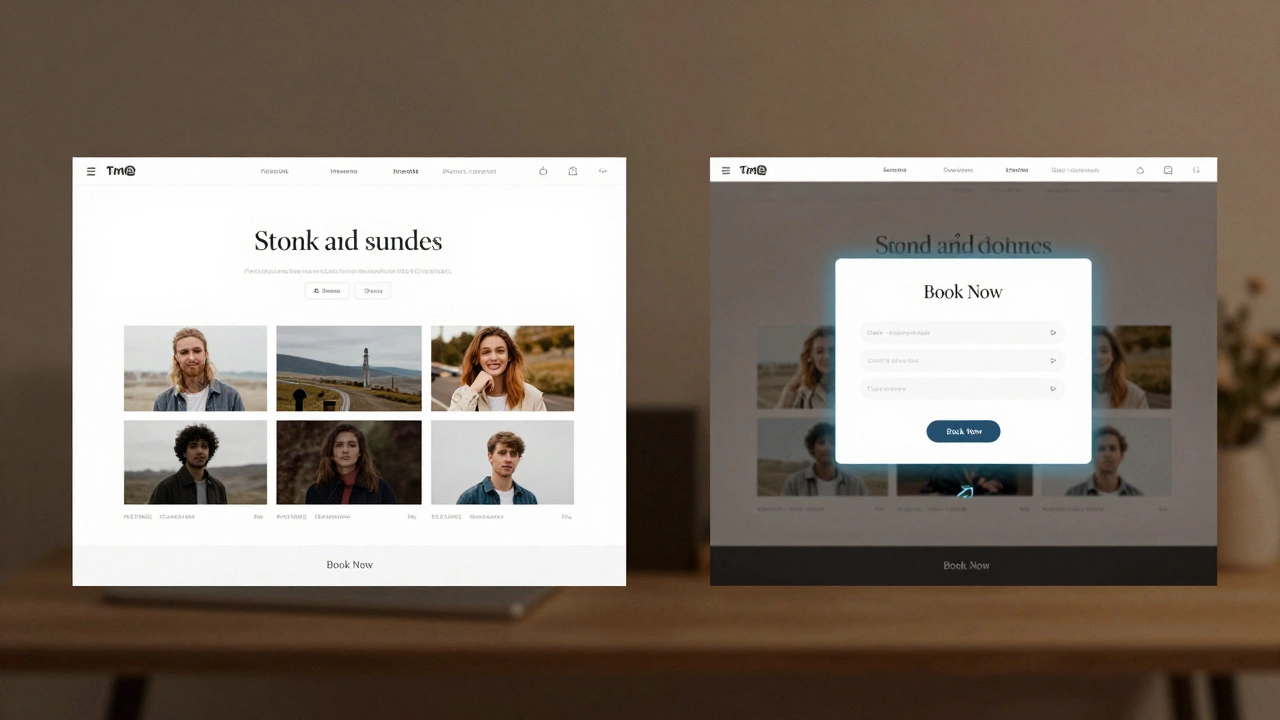
Website Functionality Assessment Tool
What Features Do You Need?
Key Insights
Static websites with just HTML/CSS are limited to:
- Personal portfolios
- Simple informational pages
- Event listings
- Basic business sites
You’ve learned HTML and CSS. You can build a clean,漂亮-looking page. You’ve even made it responsive on mobile. Now you’re wondering: is HTML and CSS enough to create a website? The short answer? Yes - but only if you want a brochure. If you want something that works, grows, or earns money, you’re missing half the tools.
What HTML and CSS Can Actually Do
HTML gives you structure. It’s the skeleton of your site: headings, paragraphs, buttons, images. CSS adds style - colors, spacing, fonts, animations. Together, they make a website look like a website. No JavaScript? No problem. You can build a fully visual, pixel-perfect landing page that looks great on any screen.
Think of it like a restaurant. HTML is the plates, forks, and tables. CSS is the tablecloths, lighting, and napkin folds. Everything looks perfect. But there’s no kitchen. No chef. No food being served. You can’t order. You can’t pay. You can’t even get a drink without walking out the door.
Static websites built with just HTML and CSS still exist. Small businesses, personal portfolios, event pages - they use them. The Irish photographer in Galway who shows her work with a gallery and contact form? That’s HTML and CSS. The local bakery in Cork with a menu and opening hours? Same thing.
Where HTML and CSS Fall Short
Here’s what you can’t do with just HTML and CSS:
- Let users log in or sign up
- Accept payments through a form
- Send an email when someone submits a contact form
- Display real-time data like weather, stock prices, or live inventory
- Update content without editing code
- Track visitors or show personalized content
Every time someone says, “I just need a website,” they usually mean: “I need people to contact me, book a service, or buy something.” HTML and CSS can’t make that happen. You can put a button that says “Book Now,” but clicking it does nothing. No form submission. No confirmation. No record. Just a dead button.
Freelancers who only know HTML and CSS often get stuck. They deliver beautiful sites - then clients ask, “Why isn’t my form working?” or “How do I add a new product?” They’re forced to hand it off to someone else, or lose the client because they can’t deliver what was implied.
What You Need to Add
Once you move past static pages, you need JavaScript. It’s the glue that makes HTML and CSS come alive. With JavaScript, you can:
- Validate form inputs before submission
- Show or hide content based on user actions
- Load new data without reloading the page
- Build interactive menus, sliders, and modals
But JavaScript alone isn’t enough. To handle form submissions, you need a backend. That means either:
- Using a third-party service like Formspree, Netlify Forms, or EmailJS - which lets you send form data without writing server code
- Learning a backend language like Node.js, PHP, or Python to process data on your own server
For example, if you’re building a website for a Dublin-based yoga studio, you’ll want a booking form. With HTML and CSS, you can make it look great. With JavaScript, you can check if the date is already taken. With a backend, you can save that booking to a database and email the client a confirmation.

Static Sites Are Still Valid - But They’re Limited
Platforms like GitHub Pages, Netlify, and Vercel make it easy to host HTML/CSS sites for free. Many developers use them for portfolios, blogs, or documentation. But those sites are static. They don’t change based on who’s viewing them. They don’t store data. They don’t react.
If you’re a freelance web developer, you can charge $500-$1,500 for a static site. But you’ll never scale. You’ll be stuck doing the same thing over and over. Clients who need dynamic features will walk away.
Compare that to a site built with HTML, CSS, JavaScript, and a simple backend. You can charge $2,500-$6,000. You can offer maintenance. You can add new features later. You become the person they call when things break - not just the person who made the pretty page.
What Freelancers Actually Get Paid For
Here’s what clients pay for - not what they say they want:
- They don’t want a website. They want customers.
- They don’t want a contact form. They want responses.
- They don’t want a gallery. They want sales.
HTML and CSS deliver the look. But the value comes from functionality. A contact form that works is worth 10x more than one that looks perfect but does nothing. A booking system that auto-sends confirmations is worth more than a static page with a phone number.
Freelancers who stick to HTML and CSS often compete on price. They’re forced to undercharge because their work is easy to replicate. Once you add JavaScript and backend skills, you’re no longer competing with beginners. You’re solving real problems.

How to Level Up Without Getting Overwhelmed
You don’t need to learn React, Django, and WordPress overnight. Start small:
- Learn JavaScript basics: variables, functions, event listeners, DOM manipulation
- Use a simple form handler like Formspree - no server needed
- Build one dynamic project: a product filter, a live search, or a modal booking form
- Then learn how to connect a form to a Google Sheet or Airtable
- Finally, try Node.js + Express to handle your own backend
One freelancer I know in Dublin started with just HTML and CSS. He built a site for a local plumber. The client asked, “Can people book appointments online?” He said yes - then spent two weeks learning JavaScript and Formspree. He delivered the same site, now with working booking. He doubled his fee. The client still uses it two years later.
The Bottom Line
HTML and CSS are the foundation. They’re necessary. But they’re not enough. If you’re serious about freelancing, you need to go further. The market doesn’t reward pretty pages. It rewards functional solutions.
You can build a website with just HTML and CSS. But you can’t build a business on it.
Can I build a website with just HTML and CSS?
Yes, you can build a static website with just HTML and CSS. It will look good and work on all devices. But it won’t have interactive features like contact forms, user logins, or product purchases. It’s perfect for simple portfolios or informational pages - but not for anything that needs to respond to user input or store data.
Is HTML and CSS enough for a freelance web developer?
Not if you want to grow. Clients expect more than static pages. They want forms that work, booking systems, and content that updates without code. Freelancers who only use HTML and CSS often get stuck doing low-paying jobs. Adding JavaScript and basic backend tools lets you charge more, solve real problems, and keep clients long-term.
What’s the next step after HTML and CSS?
Start with JavaScript. Learn how to make buttons do things, validate forms, and show/hide content. Then use a no-code tool like Formspree to handle form submissions. Once you’re comfortable, try a simple backend like Node.js or PHP. You don’t need to master everything at once - just add one new skill at a time.
Do I need to learn WordPress if I know HTML and CSS?
Not necessarily. WordPress is great for clients who want to update their own content without coding. But if you’re building custom sites and want full control, you can skip WordPress entirely. Many modern websites are built with HTML, CSS, JavaScript, and a headless CMS like Contentful or Sanity - no WordPress needed.
Can I make money with just HTML and CSS?
Yes - but you’ll be limited. You can charge $300-$1,000 for simple static sites. But you’ll compete with templates and AI tools. To earn $2,000+, you need to solve problems, not just make pages. Adding JavaScript and backend skills lets you offer real functionality - and charge accordingly.