
Key Takeaways for Your Career Path
- Versatility beats specialization in early-stage startups and freelance gigs.
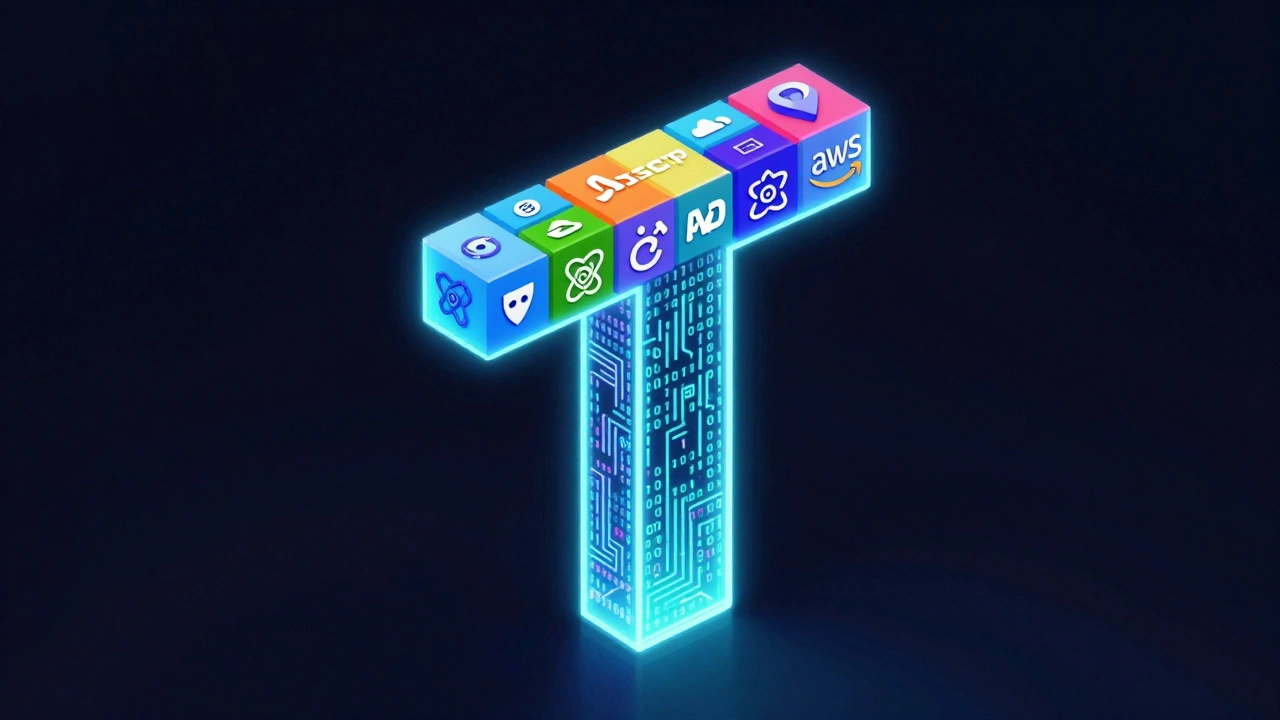
- The 'T-shaped' skill set (broad knowledge, deep expertise in one area) is the gold standard.
- AI is automating boilerplate code, making the architectural 'big picture' more valuable than syntax knowledge.
- Salary premiums exist, but they come with the expectation that you can jump into any part of the codebase.
The Shift from Specialist to Generalist
A few years ago, the industry was obsessed with hyper-specialization. You were either a CSS wizard or a database architect. But as JavaScript took over the entire stack, the walls between the front and back ends crumbled. Now, with a single language powering everything from the UI to the server, the cost of becoming a generalist has dropped.
Think about a typical project today. You aren't just writing a function; you're thinking about how that function impacts the User Experience (UX), how it affects the Latency of the API response, and whether the database query is optimized. When you understand the full loop, you stop guessing and start designing. You don't have to wait for a backend developer to tell you why an API call is failing; you can just open the database logs and find the culprit yourself.
Breaking Down the Modern Tech Stack
To be an effective full stack developer, you can't just 'know a bit of everything.' You need a coherent stack where the tools talk to each other efficiently. Most professionals gravitate toward a specific ecosystem to avoid mental burnout.
The most common approach is the MERN Stack, which is a collection of four powerhouse technologies: MongoDB, Express.js, React, and Node.js. This combination is popular because it uses JavaScript throughout, meaning you don't have to switch mental contexts between a frontend framework and a backend language.
| Stack | Frontend | Backend | Database | Best For |
|---|---|---|---|---|
| MERN | React | Node.js | MongoDB | Real-time apps, SPAs |
| LAMP | HTML/CSS/JS | PHP | MySQL | CMS, E-commerce (WordPress) |
| T3 Stack | Next.js | tRPC / Node | PostgreSQL | Type-safe, scalable SaaS |
| Django/React | React | Python | PostgreSQL | Data-heavy, AI-integrated apps |
Is the Salary Actually Higher?
There is a common myth that full stack developers automatically earn more than specialists. In reality, the pay gap depends on the company size. In a massive corporation like Google or Amazon, specialists (e.g., a dedicated Frontend Engineer) often earn more because they are expected to solve incredibly deep, niche problems-like optimizing a rendering engine for millions of users.
However, in the startup world, the full stack developer is king. If a founder only has the budget for one engineer, they aren't going to hire someone who says, 'I only do the API.' They want the person who can build the landing page, set up the AWS bucket, and handle the user authentication. In these environments, your value isn't tied to how well you know a specific library, but to your ability to ship a complete product independently.
The Impact of AI on the Full Stack Role
With the rise of AI coding assistants, the 'grunt work' of full stack development is disappearing. Writing a basic CRUD (Create, Read, Update, Delete) API or centering a div is now a five-second task. This might make some people think the role is becoming obsolete, but it's actually the opposite. AI has shifted the value from coding to architecting.
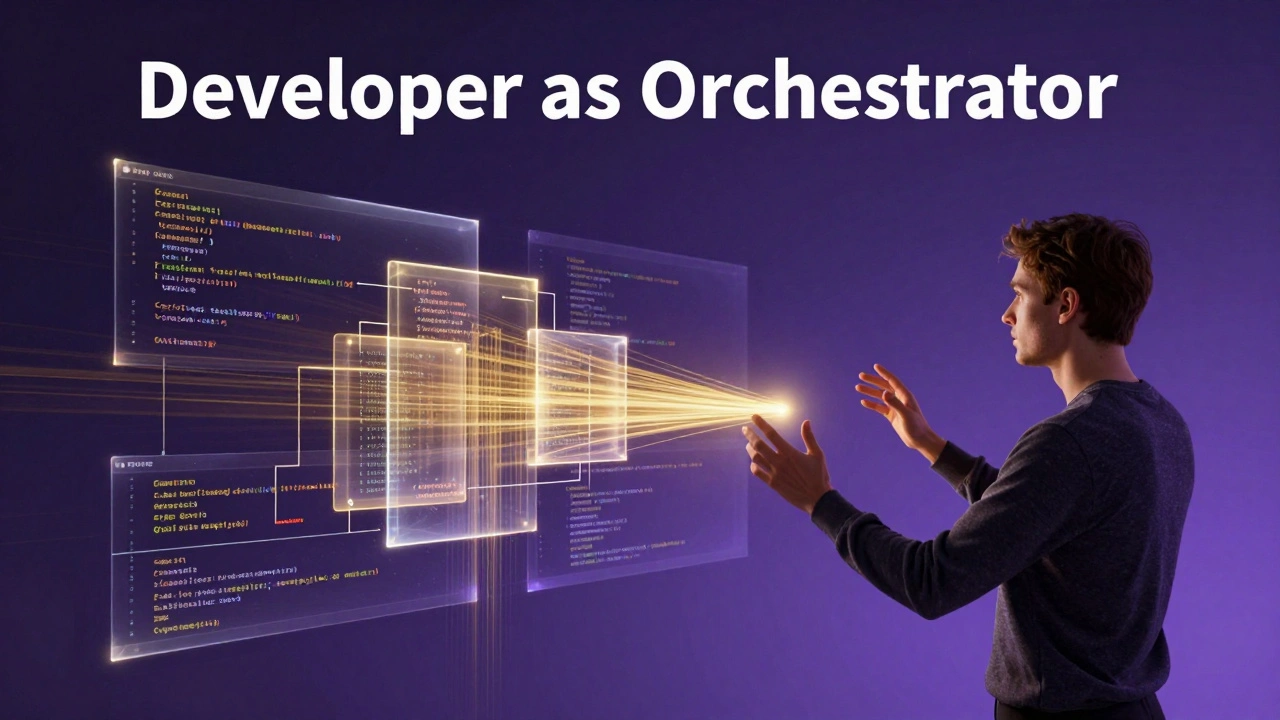
When the AI generates the code, someone still needs to know if the Schema design is scalable or if the authentication flow has a security loophole. The full stack developer is the one who can oversee the entire pipeline. You become the 'orchestrator' who ensures the frontend and backend are perfectly synced. The ability to prompt an AI to build a feature is useless if you don't understand how that feature fits into the overall system architecture.
Common Pitfalls to Avoid
The biggest mistake newcomers make is trying to learn every single tool. You'll see a roadmap with 50 different logos-Docker, Kubernetes, Redis, GraphQL, Tailwind, TypeScript-and feel like you're failing if you don't know them all. This is a recipe for burnout. Instead, focus on the fundamentals of the Client-Server Model.
Don't chase the 'flavor of the week' framework. If you understand how a request moves from a browser to a server and how that server interacts with a database, you can pick up any new tool in a weekend. The specific syntax of a framework is trivial; the logic of how data flows is what actually matters. Avoid the 'tutorial hell' where you follow a 20-hour course but can't build a simple app without a guide. The only way to truly become full stack is to build a project that breaks, and then figure out why it's breaking.
Your Roadmap to Becoming a Versatile Developer
- Master the Core: Don't skip vanilla JavaScript. Understand the DOM, event bubbling, and closures before jumping into React.
- Build a Backend: Start with Node.js and Express. Learn how to handle routes, middleware, and HTTP status codes.
- Understand Data Persistence: Move beyond local storage. Learn a relational database like PostgreSQL to understand how tables and joins work.
- Deploy and Automate: Don't just run it on localhost. Use platforms like Vercel or Netlify, and learn the basics of Git for version control.
- Iterate: Build a real-world application-like a task manager or a small e-commerce store-and intentionally add a new feature every week that forces you to learn a new part of the stack.
Can I be a full stack developer without knowing a lot of math?
Yes. For the vast majority of web development, you only need basic algebra and a strong grasp of logic. Unless you are building complex 3D graphics engines or heavy data-science algorithms, your ability to solve problems and organize data is far more important than calculus.
Is it better to specialize first and then go full stack?
Usually, yes. Most successful developers start by mastering one side-either frontend or backend-until they are comfortable. Once you have a 'home base' of expertise, expanding into the other side is much easier and prevents you from feeling overwhelmed by too many new concepts at once.
Will AI replace full stack developers?
AI replaces tasks, not jobs. It replaces the task of writing boilerplate CSS or basic API endpoints. However, it cannot replace the high-level decision-making, user empathy, and complex system architecture that a human developer provides. AI is a tool that makes full stack developers 10x faster, not obsolete.
Which is harder to learn: frontend or backend?
It depends on how your brain works. Frontend is often seen as 'easier' to start because you can see your changes instantly, but mastering CSS layout and cross-browser compatibility is surprisingly difficult. Backend requires more abstract thinking and a deeper focus on security, performance, and data integrity.
How long does it take to become a full stack developer?
There is no fixed timeline, but typically it takes 6 to 18 months of consistent study and building projects to reach a professional level. The key is to focus on the 'Job-to-be-Done'-can you take a product idea and turn it into a working website? Once you can do that, you've arrived.
What's Next?
If you've decided that the full stack path is for you, don't get bogged down in theory. Pick one stack-like MERN or T3-and build something that solves a problem in your own life. If you find yourself enjoying the database design more than the UI, you can always pivot toward backend specialization later. The beauty of this career is that nothing you learn is ever truly wasted; every single line of CSS or SQL you write is just another tool in your belt for the next project.