Amazon Business Model Analyzer
Calculate Your Amazon Seller Potential
Compare revenue from Amazon Marketplace versus direct sales to understand which model suits your business best.
Your Business Input
Amazon Marketplace Details
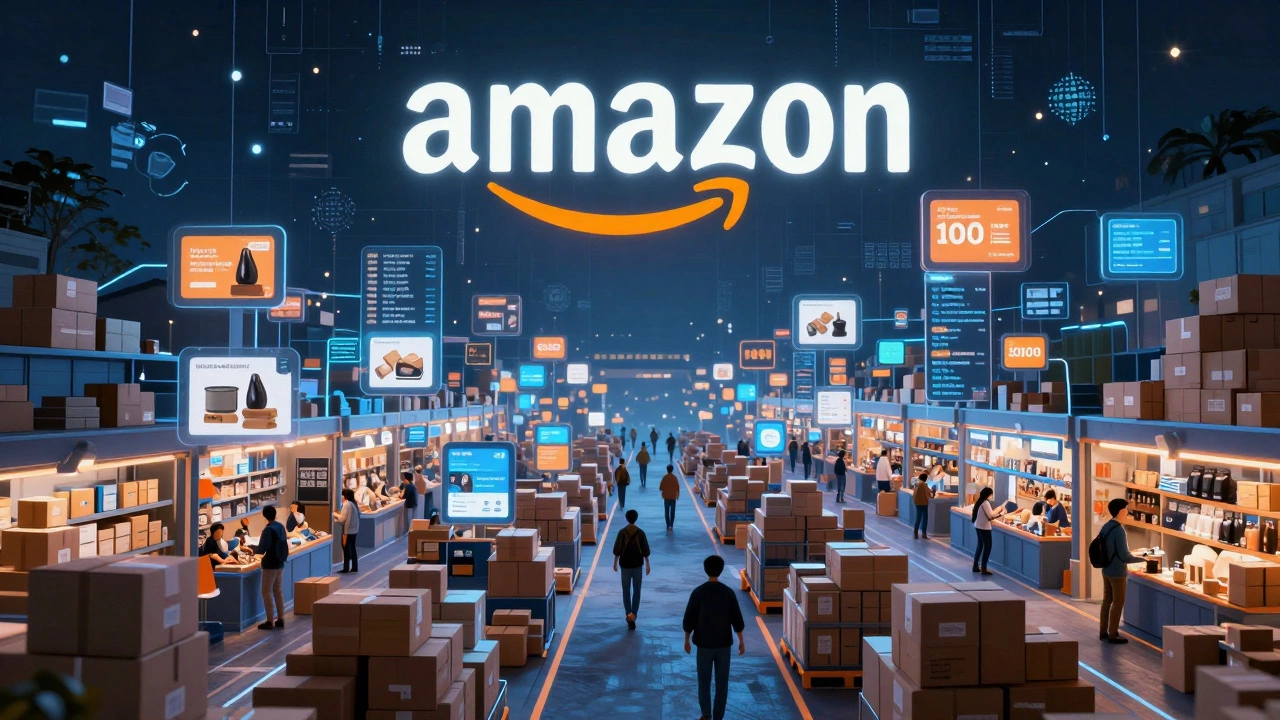
When you think of Amazon, what comes to mind? Free two-day shipping? That weird robot in your hallway? Or maybe just the endless scroll of stuff you didn’t know you needed? But here’s the real question: Is Amazon an eCommerce company?
At first glance, yes. You browse products, click "Add to Cart," and get a package delivered in two days. It looks like every other online store. But if you dig deeper, you’ll find Amazon isn’t just selling stuff-it’s running an entire ecosystem that makes traditional eCommerce look like a small-town market stall.
What Exactly Is eCommerce?
Let’s start simple. eCommerce is a business model where goods or services are bought and sold over the internet. That’s it. No fancy jargon. No corporate fluff. If you’re buying something online from a website, you’re using eCommerce.
Think of Etsy, Shopify stores, or even your local bakery’s website selling cookies. They all fit the definition. They list products, take payments, and ship orders. Simple. Straightforward. Clean.
Now, Amazon does all of that too. You can buy a book, a toaster, or a pair of socks directly from Amazon.com. So why do people hesitate to call it "just" eCommerce?
Amazon Isn’t Just a Store-It’s a Marketplace
Here’s where things get interesting. Amazon doesn’t own most of what you buy on its site. In fact, over 60% of Amazon’s sales come from third-party sellers. That’s not retail. That’s a marketplace.
Marketplace is a platform that connects buyers with independent sellers. Think of it like a digital version of a farmers market. Amazon provides the stalls (product listings), the cash registers (payment processing), and the foot traffic (millions of daily visitors). But the goods? Mostly not theirs.
That’s why Amazon’s business model is so powerful. They don’t need to stock shelves, manage warehouses for every product, or hire truck drivers for every shipment. They let others do the heavy lifting-while taking a cut. And that’s not how traditional eCommerce works.
The Amazon Retail Side: Yes, They Sell Too
But here’s the twist: Amazon also sells its own inventory. You’ll find "Shipped from Amazon" labels on tons of products. That’s Amazon Retail. They buy in bulk, store it in their warehouses, and ship it themselves.
They’ve built a massive supply chain-over 1,100 fulfillment centers worldwide-just to handle their own stock. That’s more than most national retailers. So yes, Amazon is a retailer. But they’re also a platform. And a logistics company. And a cloud provider.
This layered approach makes Amazon hard to label. It’s not just one thing. It’s multiple business models rolled into one giant machine.
Amazon Web Services: The Hidden Giant
Most people don’t realize it, but Amazon’s biggest profit driver isn’t selling shoes or TVs. It’s AWS (Amazon Web Services) is a cloud computing platform that powers websites, apps, and even government systems.
AWS runs everything from Netflix to NASA. It’s the backbone of the modern internet. In 2025, AWS brought in over $90 billion in revenue. That’s more than the entire revenue of Walmart’s e-commerce division.
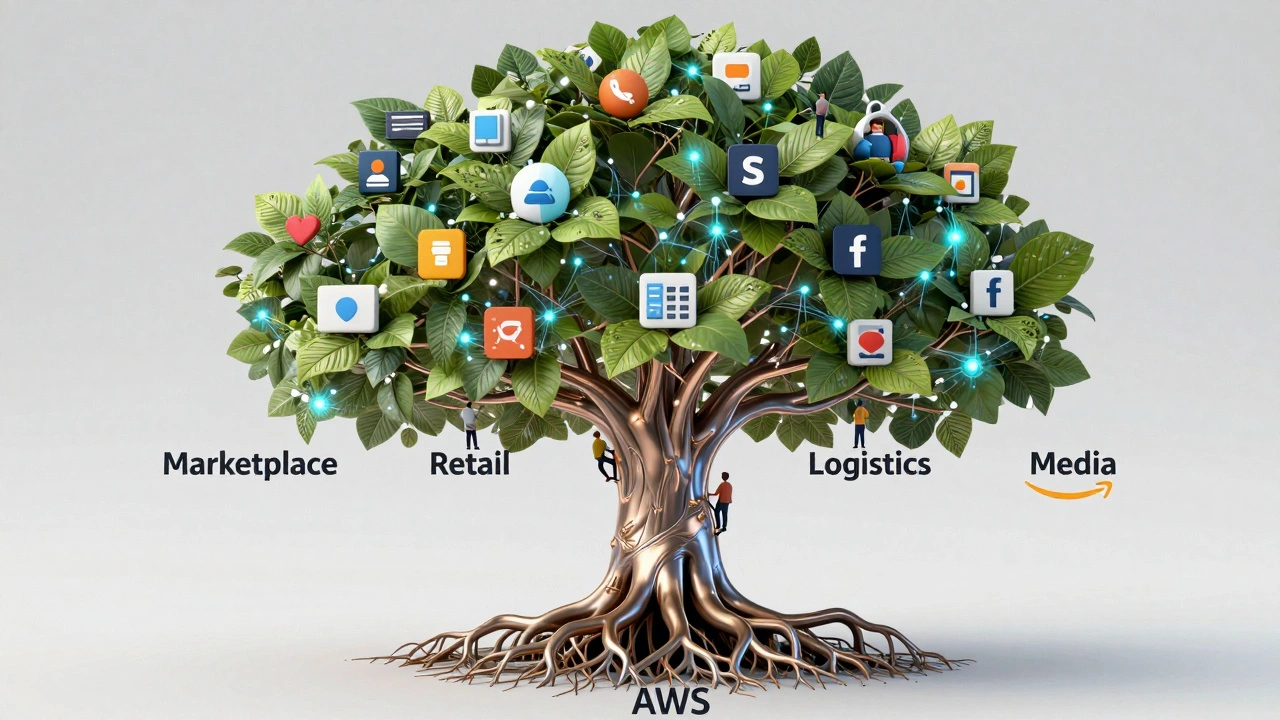
So now we’re talking about a company that makes money from:
- Selling products directly (retail)
- Letting others sell on its site (marketplace)
- Hosting the internet’s infrastructure (cloud)
- Streaming movies and music (media)
- Even delivering groceries in some cities (logistics)
That’s not eCommerce. That’s a conglomerate.
Why the Confusion? Because Amazon Redefined the Game
Before Amazon, eCommerce meant small websites selling niche products. Amazon didn’t just join the game-they rewrote the rules.
They made shipping fast, cheap, and reliable. They turned customer reviews into a trust system. They used data to predict what you’d buy before you even searched for it. They turned the online store into a personalized experience.
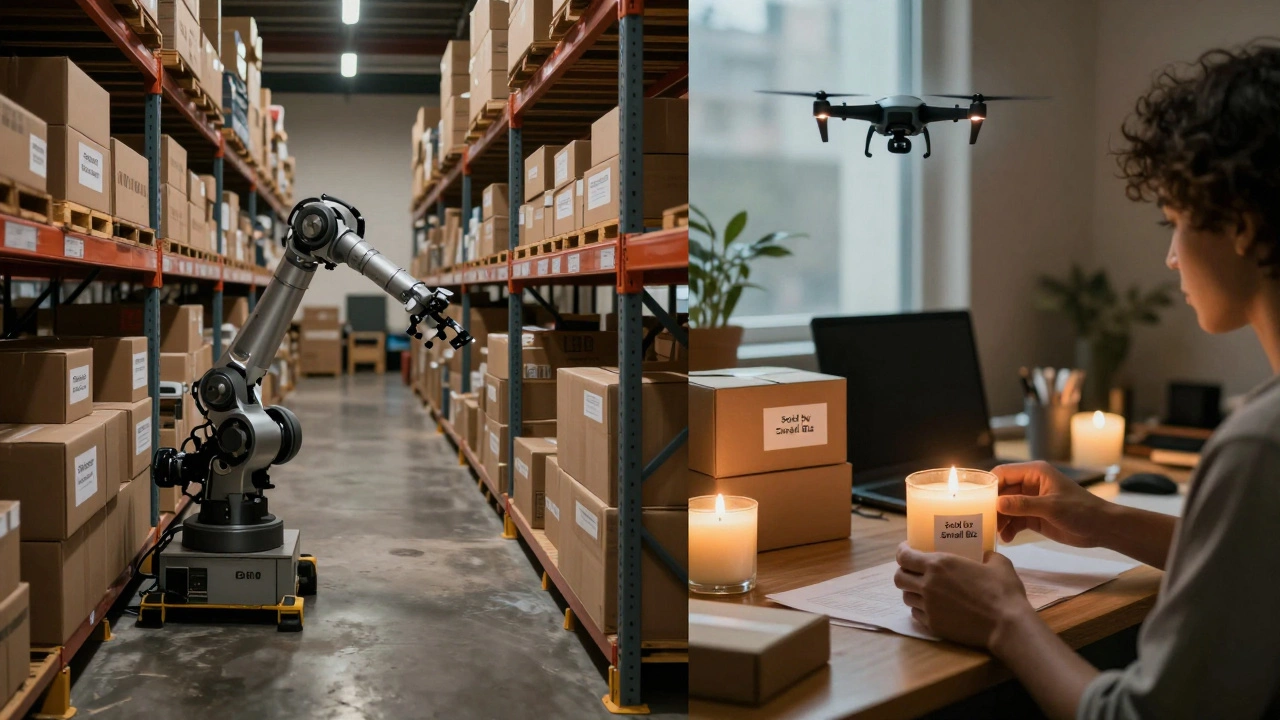
And then they opened the doors to everyone else. Suddenly, a teenager in Ohio could sell handmade candles to someone in Tokyo. That’s not just eCommerce-it’s a global economic engine.
So when someone asks, "Is Amazon an eCommerce?" the answer isn’t yes or no. It’s:
Amazon is the reason we even have modern eCommerce.
How Amazon Compares to Traditional eCommerce Platforms
Let’s break it down. Here’s how Amazon stacks up against a typical online store:
| Feature | Amazon | Traditional eCommerce Store |
|---|---|---|
| Ownership of Inventory | Both owned and third-party | Only owned |
| Customer Base | Over 400 million active users | Typically thousands to hundreds of thousands |
| Shipping Network | Owns global fulfillment centers | Uses third-party carriers like FedEx or UPS |
| Payment Processing | Integrated Amazon Pay | Uses Stripe, PayPal, or Square |
| Advertising | Massive ad platform for sellers | Minimal or no advertising tools |
| Primary Revenue Source | Marketplace fees + AWS | Product markup |
See the difference? Amazon doesn’t just sell-it enables, powers, and profits from the entire system around selling.
So, Is Amazon an eCommerce Company?
Technically? Yes. It fits the textbook definition. You buy stuff online. That’s eCommerce.
But realistically? It’s like calling the ocean a puddle. Amazon uses eCommerce as one tool in a toolkit that includes cloud computing, logistics, advertising, and AI-driven personalization.
If you’re a small business owner trying to sell online, Amazon is a marketplace. If you’re a developer building a website, Amazon is a competitor and a cloud provider. If you’re a shopper, Amazon is your one-stop shop.
The truth? Amazon isn’t just an eCommerce company. It’s the reason eCommerce exists in its modern form.
Is Amazon considered an online retailer?
Yes, Amazon is an online retailer because it sells products directly to consumers under its own brand. But that’s only part of the story. Amazon also operates as a marketplace where millions of third-party sellers list their products. So while it functions as a retailer, it’s more accurately described as a hybrid model.
Can I sell on Amazon without being an eCommerce business?
Absolutely. Many individuals and small businesses sell on Amazon without having their own website. Amazon provides the storefront, payment processing, and customer service tools. If you’re sourcing products and shipping them to Amazon’s fulfillment centers-or shipping directly to customers-you’re using Amazon as your eCommerce platform, even if you don’t run a standalone online store.
Does Amazon compete with other eCommerce platforms like Shopify?
Yes, but indirectly. Shopify helps businesses build their own online stores, while Amazon offers a ready-made marketplace. Many Shopify merchants use both: they sell on their own site and also list products on Amazon to reach more customers. Amazon doesn’t replace Shopify-it gives sellers another channel to reach buyers.
Why do some people say Amazon isn’t "real" eCommerce?
Some people use "real" eCommerce to mean a brand-owned online store with full control over branding, pricing, and customer experience. Amazon doesn’t give sellers that control. So if you’re comparing Amazon to a boutique Shopify store, it feels different. But from a technical standpoint, any online transaction counts as eCommerce-Amazon just scales it differently.
Is Amazon’s business model sustainable long-term?
Amazon’s model thrives on scale, data, and network effects. The more sellers join, the more buyers come. The more buyers come, the more sellers want to join. This loop keeps growing. While profit margins on retail are thin, AWS and advertising drive massive profits. As long as they keep innovating in logistics and AI, their model remains strong. Competitors struggle to match their infrastructure.
What’s Next for Amazon and eCommerce?
Amazon is already experimenting with AI-powered product recommendations, drone deliveries, and cashier-less stores. Meanwhile, smaller platforms are doubling down on niche markets-think eco-friendly goods, handmade crafts, or local artisan products.
The future of eCommerce isn’t about who has the biggest warehouse. It’s about who understands the customer best. Amazon’s edge? They know you better than you know yourself. And that’s not just retail. That’s intelligence.
So yes-Amazon is eCommerce. But it’s also so much more. And that’s why it’s still growing, even when everything else slows down.