
eCommerce Salary Calculator
Calculate Your eCommerce Salary
Your Estimated Salary
Want to know how much you can actually make working in eCommerce? It’s not just about selling stuff online. The money you earn depends on what you do, where you are, and how much experience you have. In 2026, the average person working in eCommerce doesn’t just get a paycheck-they get a whole career path with clear earning stages. Let’s break it down, real numbers, no fluff.
Entry-Level eCommerce Jobs: What You’ll Actually Earn
If you’re just starting out, you’re probably looking at roles like eCommerce assistant, order processor, or customer service rep for an online store. These jobs don’t need a degree-just basic computer skills and patience. In the U.S., you’re looking at $15-$18 an hour. That’s about $31,000-$37,000 a year before taxes.
In Ireland, where the minimum wage is €12.70/hour, entry-level roles pay between €13-€16/hour. That’s roughly €27,000-€33,000 annually. Not bad for a first job, but don’t expect to live lavishly. Most people in these roles are still paying off student loans or saving for rent.
Here’s the catch: if you’re working for a big brand like Amazon or Zalando, you might get benefits-health insurance, paid time off, even stock options. But if you’re working for a small Shopify store with 3 employees? You’re likely on a contract with no perks. Pay doesn’t always reflect effort.
Mid-Level Roles: The Real Money Starts Here
Once you’ve been in the game for 2-4 years, you move into mid-level positions. Think eCommerce specialist, digital marketing coordinator, or inventory planner. These roles need real skills: Google Ads, Shopify analytics, email automation, maybe even basic SEO.
In the U.S., these jobs pay $55,000-$75,000 a year. In Dublin, the range is €45,000-€60,000. Why the gap? Because Dublin’s cost of living is high, but salaries haven’t fully caught up to U.S. levels. Still, €55,000 here buys you a decent apartment, a car, and a few vacations a year.
One person I know in Cork runs Facebook and Google ads for a skincare brand. She handles everything from ad creatives to retargeting pixels. She’s been at it for three years. Her salary? €58,000. No title like “manager,” no team under her-but she’s the reason the store hits €2 million in sales annually. That’s the kind of role that pays well without needing a fancy title.
Senior and Leadership Roles: Six Figures Are Real
Move into senior roles-eCommerce manager, head of digital sales, or director of online operations-and you’re in the six-figure zone. In the U.S., these roles pay $90,000-$140,000. In Ireland, €75,000-€110,000 is typical.
What do these people actually do? They don’t answer emails. They set budgets. They hire teams. They decide which platforms to use-Shopify, BigCommerce, Magento-and how much to spend on paid ads. They track customer lifetime value, cart abandonment rates, and return on ad spend like it’s their job. Because it is.
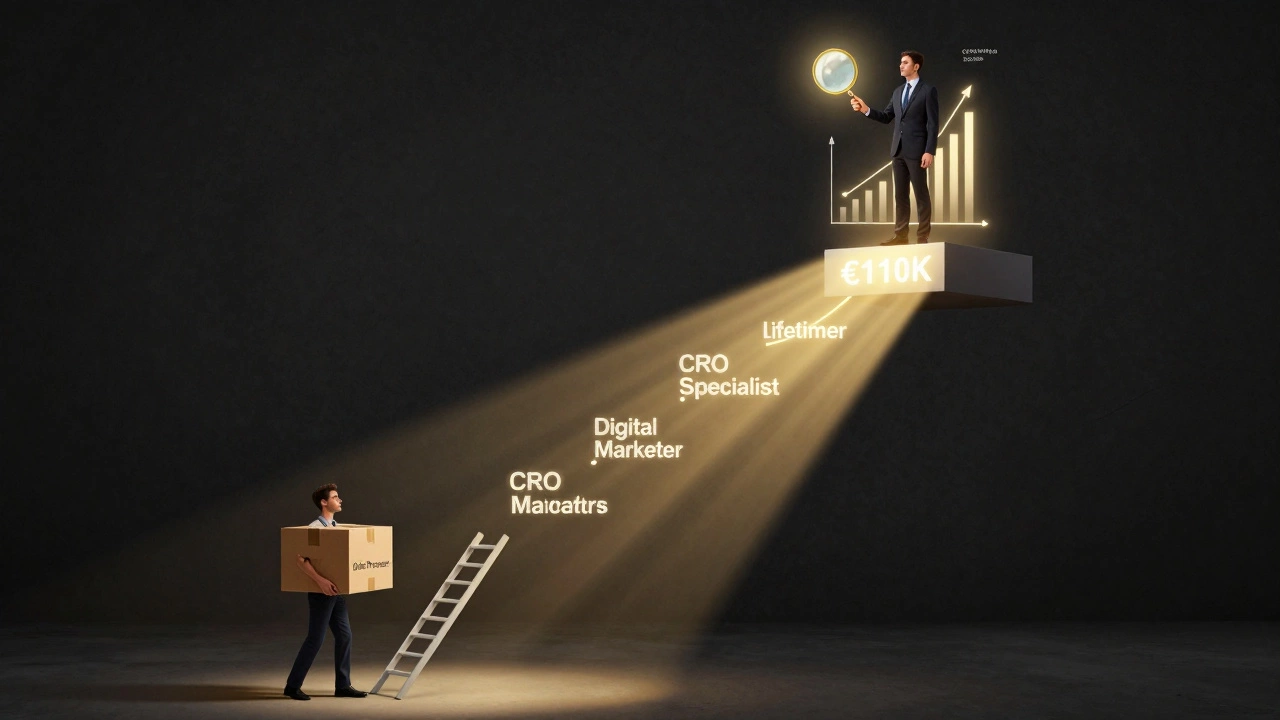
A friend of mine runs eCommerce for a mid-sized Irish fashion brand. He manages 8 people, a €1.2 million annual ad budget, and a team of freelancers for photography and copywriting. His salary? €98,000. Plus a 10% bonus if they hit their sales target. Last year, he made €110,000 total.
These roles don’t come easy. You need proof you’ve grown revenue. If you can show you increased sales by 40% in 12 months, companies will pay top euro for that.

Freelancers and Contractors: High Risk, High Reward
Not everyone wants a 9-to-5. Freelancers in eCommerce charge by the hour, by project, or by retainer. A Shopify store setup? That’s €2,000-€5,000. Running paid ads for a month? €1,500-€4,000. Consulting on conversion rate optimization? €100-€150/hour.
Top freelancers in Dublin make €80,000-€120,000 a year. But here’s the truth: they don’t work 40 hours a week. They work 60. They chase clients. They deal with late payments. They pay their own taxes, insurance, and software subscriptions.
One guy I know in Galway runs a one-person agency. He builds Shopify stores and handles all the marketing. He has 12 clients. He charges €3,500 per store and €1,200/month per client for ongoing ads. That’s €42,000 in setup fees and €14,400 in monthly retainers. He nets €70,000 after expenses. No boss. No office. No vacation days unless he takes them.
What Skills Pay the Most in eCommerce?
Not every skill is created equal. Here’s what employers are willing to pay extra for in 2026:
- Conversion rate optimization (CRO) - If you can turn 1% of visitors into buyers, you’re golden. Companies pay €70,000+ for people who know how to test buttons, headlines, and checkout flows.
- Shopify Plus or BigCommerce expertise - These platforms handle high-volume stores. Knowing how to customize them without breaking them? That’s rare. Pay goes up 20-30%.
- Multi-channel selling - Selling on Amazon, eBay, TikTok Shop, and your own website at the same time? That’s advanced. Few people do it well. Those who do earn €85,000+.
- Data analysis - Google Analytics 4, Looker Studio, Klaviyo reports. If you can turn numbers into decisions, you’re indispensable.
- International logistics - Managing shipping, taxes, and returns across the EU and U.S.? That’s a niche. Salaries jump to €90,000+ for people who understand VAT, customs, and cross-border fulfillment.
Learn one of these well, and you’ll out-earn people with degrees in business.
Where Are the Best Paying eCommerce Jobs?
Location matters. Here’s a quick breakdown of average salaries for mid-level roles in 2026:
| Region | Annual Salary (USD) | Annual Salary (EUR) |
|---|---|---|
| San Francisco, USA | $95,000 | €88,000 |
| New York, USA | $88,000 | €81,000 |
| Dublin, Ireland | $75,000 | €69,000 |
| Berlin, Germany | $72,000 | €66,000 |
| London, UK | $70,000 | €64,000 |
| Warsaw, Poland | $45,000 | €41,000 |
| Manila, Philippines | $30,000 | €27,000 |
Remote jobs are changing the game. A lot of U.S. companies now hire eCommerce specialists in Eastern Europe or Latin America. You can earn $50,000-$65,000 working from Romania or Colombia for a U.S.-based brand. That’s 3-4x what you’d make locally.
How to Get Paid More in eCommerce
Here’s how people actually move up the pay ladder:
- Track your impact. Don’t say “I ran ads.” Say “I increased ROAS from 2.1 to 4.3 in 6 months.” Numbers get you raises.
- Learn one tool deeply. Master Klaviyo, Shopify Flow, or Google Tag Manager. Become the go-to person.
- Build a portfolio. Even if you worked for a small store, show before-and-after sales graphs. People trust proof.
- Ask for a raise after hitting a goal. Don’t wait for review season. If you just grew sales by 30%, go in and say, “I delivered X. What’s my next step?”
- Switch jobs every 2-3 years. The biggest pay jumps come from changing companies, not promotions.
One person I know started as a customer service rep at a local online store. Two years later, she learned Klaviyo on YouTube. She automated abandoned cart emails. Sales jumped 22%. She asked for a raise. Got it. Six months later, she got poached by a bigger brand for 40% more pay. No degree. Just results.
Final Reality Check
Yes, you can make good money in eCommerce. But it’s not magic. It’s not about having a “cool” job. It’s about solving problems: Why are people leaving the cart? Why is the return rate so high? Why do ads cost €5 per sale when they should cost €2?
If you’re willing to learn the numbers, test everything, and take ownership of results, you’ll earn more than most people in traditional office jobs. If you’re just clicking buttons and hoping for the best? You’ll stay stuck at €28,000.
The best-paid people in eCommerce aren’t the loudest. They’re the quiet ones who check analytics every morning, fix broken links before anyone notices, and know exactly how much each customer is worth.
Is eCommerce a good career in 2026?
Yes, if you’re willing to learn data, tools, and customer behavior. eCommerce isn’t just about setting up a store. It’s about growing sales through strategy. Jobs are growing fast, especially in logistics, marketing automation, and international sales. The field rewards people who solve real problems, not just those with degrees.
Can you make six figures without a degree in eCommerce?
Absolutely. Most high-paying roles don’t require a degree. What matters is proof you can increase sales, reduce costs, or improve customer retention. People with certifications in Google Ads, Shopify, or Klaviyo often earn more than those with business degrees but no hands-on results.
What’s the easiest way to start earning in eCommerce?
Start with a freelance gig: help small businesses set up Shopify stores or run Facebook ads. Charge €500-€1,500 per project. Build a portfolio of 5-10 clients. Then raise your rates. Many people make €40,000+ in their first year freelancing, even without prior experience.
Do remote eCommerce jobs pay less than in-office ones?
No, not anymore. Many U.S. companies pay the same for remote workers in Europe as they do for local hires. Some even pay more to attract talent in lower-cost countries. The key is proving you deliver results on time, regardless of location.
Are there high-paying eCommerce jobs that don’t involve tech?
Yes. Roles like customer experience manager, returns specialist, or international compliance officer don’t require coding or analytics. But they still need deep knowledge of processes, regulations, and customer behavior. These roles pay €50,000-€75,000 and are in high demand as global sales grow.
If you’re serious about making money in eCommerce, stop asking “How much do people make?” and start asking, “What problem can I solve better than anyone else?” That’s the real salary multiplier.